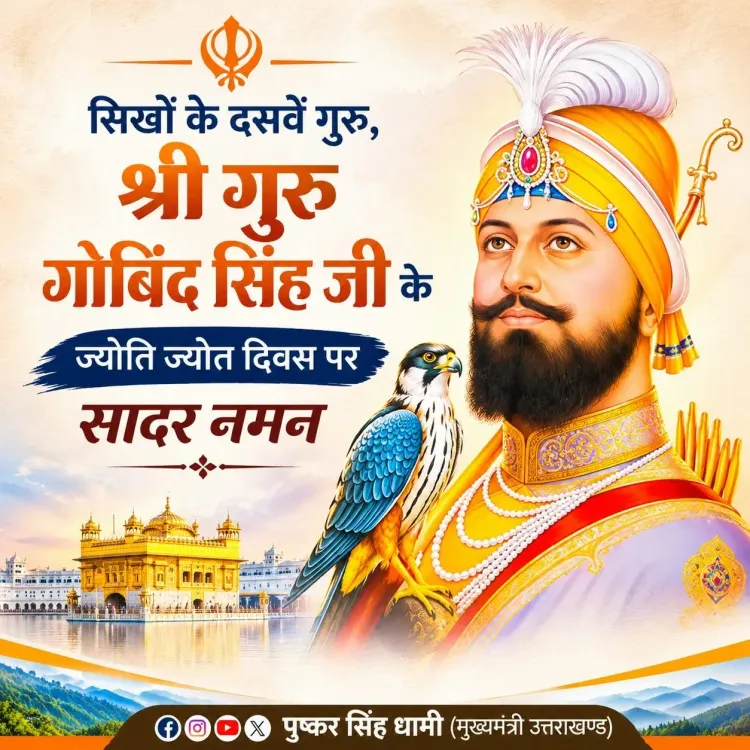
CM Dhami pays tribute to Guru Gobind Singh on Jyoti-Jot Divas
Synopsis
Uttarakhand Chief Minister Pushkar Singh Dhami marked Jyoti-Jot Divas on November 14, 2026, with a heartfelt tribute to Guru Gobind Singh Ji, the tenth Sikh Guru, honouring his sacrifice, valour and lifelong devotion to dharma and human dignity.
Key Takeaways
CM Pushkar Singh Dhami posted a tribute on November 14, 2026 marking Jyoti-Jot Divas , the passing anniversary of Guru Gobind Singh Ji.
Guru Gobind Singh Ji was the tenth Guru of the Sikhs and founded the Khalsa Panth in 1699 .
Dhami described the Guru's life as an example of struggle for dharma, truth, justice and humanity.
He stated that the Guru's valour and sacrifice would inspire humanity towards righteousness for centuries.
Tributes to Sikh Gurus on their anniversaries are a standard feature of Indian political communication across party lines.
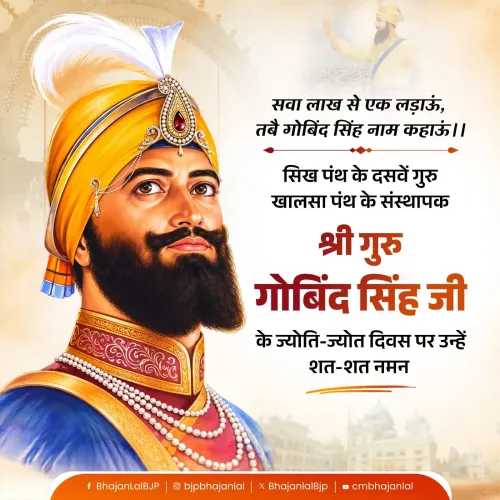
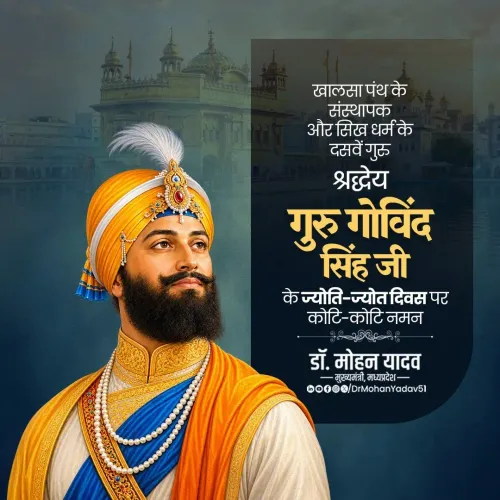
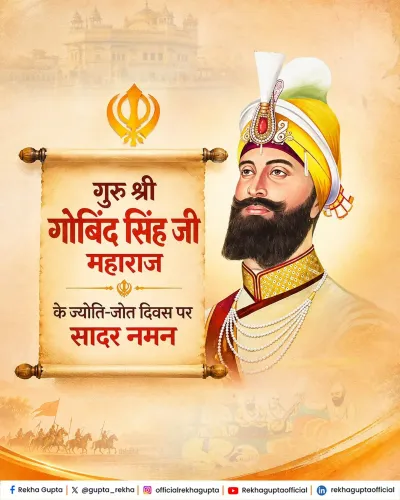
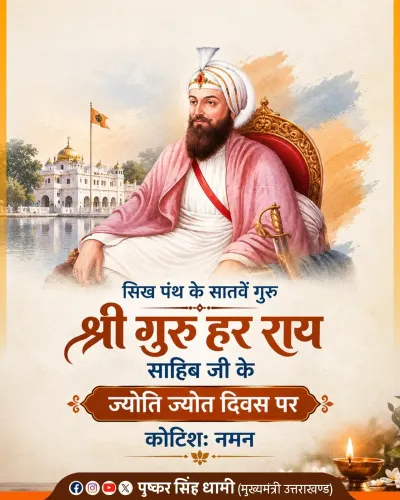
On the solemn occasion of Jyoti-Jot Divas — the martyrdom anniversary of Guru Gobind Singh Ji, the tenth and final human Guru of the Sikhs — Uttarakhand Chief Minister Pushkar Singh Dhami offered his reverential tribute on Saturday, November 14, 2026, honouring a life defined by an unbroken commitment to dharma, justice, and humanity.
In his post, CM Dhami wrote: 'अद्वितीय शौर्य, अदम्य साहस और अतुलनीय त्याग के प्रतीक' — 'a symbol of unparalleled valour, indomitable courage and incomparable sacrifice' — invoking the essence of Guru Gobind Singh Ji's legacy with reverence. He described the Guru's entire life as 'an extraordinary example of struggle and dedication for the protection of dharma, truth, justice and humanity,' and affirmed that his sacrifice, penance, and valour would continue to inspire humanity towards the path of truth and righteousness for centuries to come.
Who was Guru Gobind Singh — and why this day matters
Guru Gobind Singh Ji (1666–1708) stands as one of the most towering figures in Indian spiritual and martial history. As the tenth Guru of the Sikhs, he founded the Khalsa Panth in 1699 — a community of initiated Sikhs bound by a shared code of conduct and a fearless commitment to defending the vulnerable against religious persecution. His life was marked by extraordinary personal sacrifice: he lost his father Guru Tegh Bahadur Ji, who was martyred for protecting the right to religious freedom, and saw all four of his sons give their lives in the struggle against Mughal tyranny. Jyoti-Jot Divas commemorates the day Guru Gobind Singh Ji merged with the eternal light — a passing that did not diminish his influence but rather cemented his place as a symbol of resistance, pluralism, and spiritual fortitude across generations.A routine tribute — and a deliberate political language
Tributes from Indian political leaders on the anniversaries of Sikh Gurus are a well-established part of official communication, particularly in states with significant Sikh populations or BJP-governed administrations seeking to signal inclusive governance. CM Dhami's words draw on the standard vocabulary of such messaging — valour, sacrifice, dharma — but the choice to post on Jyoti-Jot Divas specifically underscores the importance the BJP places on acknowledging Sikh religious tradition in its public calendar. Uttarakhand, while not a state with a large Sikh majority, is home to several significant Sikh pilgrimage sites, and the state government has consistently maintained outreach to the Sikh community as part of its broader governance posture. Guru Gobind Singh Ji's message — that truth and righteousness are worth defending at any cost — resonates far beyond any single faith. That a Chief Minister pauses to say so, in public, on a day of quiet mourning, is itself a small act of solidarity.Point of View
Dhami aligns his government with values that resonate broadly — across the Sikh community and beyond. Such messaging rarely occurs in isolation; it is part of a sustained outreach that seeks to position the BJP as a steward of India's diverse spiritual heritage. The language of dharma and sacrifice, central to Guru Gobind Singh Ji's story, also maps comfortably onto the party's broader cultural nationalism narrative — making these tributes politically purposeful as well as genuinely reverential.
NationPress
14 Nov 2026
Frequently Asked Questions
What is Jyoti-Jot Divas?
Jyoti-Jot Divas marks the day Guru Gobind Singh Ji, the tenth Sikh Guru, departed from the physical world and merged with the eternal divine light. It is observed as a solemn day of remembrance within the Sikh community.
Who was Guru Gobind Singh Ji?
Guru Gobind Singh Ji (1666–1708) was the tenth and final human Guru of the Sikhs. He founded the Khalsa Panth in 1699 and is revered for his extraordinary personal sacrifice, spiritual leadership, and defence of religious freedom against Mughal persecution.
What did CM Pushkar Singh Dhami say about Guru Gobind Singh Ji?
CM Dhami described Guru Gobind Singh Ji as a symbol of unparalleled valour, indomitable courage and incomparable sacrifice, adding that his life was an extraordinary example of dedication to dharma, truth, justice and humanity.
Why do Indian political leaders pay tribute to Sikh Gurus?
Tributes on Sikh Guru anniversaries are a well-established part of official political communication in India, reflecting the importance of acknowledging minority religious traditions and maintaining outreach to the Sikh community.
What was Guru Gobind Singh Ji's contribution to Sikhism?
Guru Gobind Singh Ji founded the Khalsa in 1699, institutionalising a community of initiated Sikhs bound by a shared code of conduct. He also compiled the final version of the Guru Granth Sahib and declared it the eternal Guru after him.