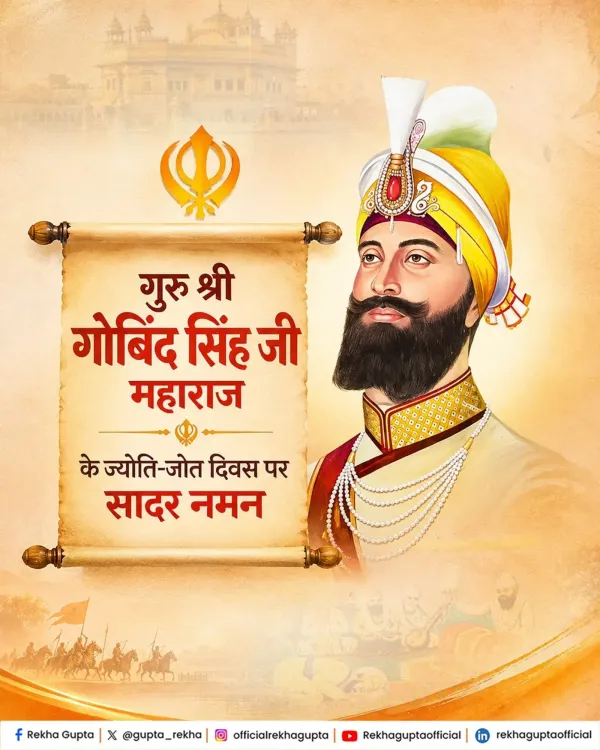
CM Rekha Gupta pays tribute on Guru Gobind Singh's Jyoti Jot Diwas
Synopsis
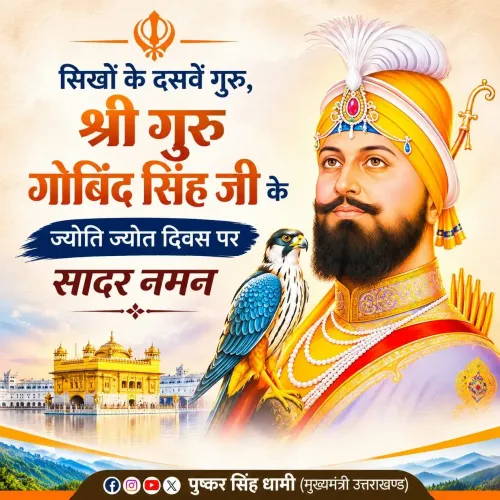
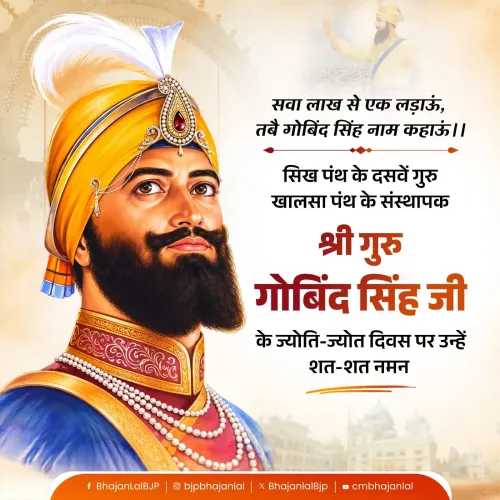
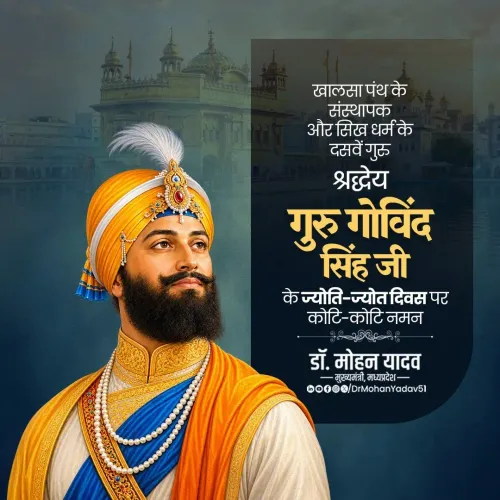
Delhi Chief Minister Rekha Gupta paid tribute to Guru Gobind Singh Ji on his Jyoti Jot Diwas, invoking the Guru's ideals of sacrifice, justice, and 'Sarbat da Bhala' as a guiding spirit for service and harmony in the capital.
Key Takeaways
Delhi CM Rekha Gupta posted a tribute to Guru Gobind Singh Ji on his Jyoti Jot Diwas on 14 November 2026 .
She described the tenth Sikh Guru as a symbol of sacrifice, penance, and indomitable valour who gave everything in defence of dharma .
The CM invoked 'Sarbat da Bhala' — the Sikh ideal of universal wellbeing — as an inspiration for service, equality, and harmony in Delhi.
Guru Gobind Singh Ji (1666–1708) founded the Khalsa in 1699 and is revered for resisting tyranny and championing the weak.
Indian political leaders across parties regularly issue tributes on Sikh Guru anniversaries, reflecting the community's deep historical and civic significance.
On the solemn occasion of Guru Gobind Singh Ji's Jyoti Jot Diwas — the day marking the passing of the tenth Sikh Guru — Delhi Chief Minister Rekha Gupta offered her reverence on Saturday, 14 November 2026, invoking the Guru's timeless call of 'Sarbat da Bhala' (wellbeing of all) as a guiding light for the capital.
In her message posted in Hindi, CM Gupta described Guru Gobind Singh as a symbol of tyag, tapasya aur adamya shaurya — sacrifice, penance, and indomitable valour — who devoted everything in defence of dharma. She wrote that the Guru taught humanity that true religion means becoming a support for the weak, standing firm against injustice, and living for the welfare of all.
Closing with the Sikh salutation — 'Waheguru Ji Ka Khalsa, Waheguru Ji Ki Fateh' — the Chief Minister expressed hope that the Guru's sacred message would continuously strengthen the spirit of service, equality, and harmony in Delhi.
Who was Guru Gobind Singh and why does Jyoti Jot Diwas matter
Guru Gobind Singh Ji (1666–1708) was the tenth and last living Sikh Guru, one of the most towering figures in Indian religious and military history. In 1699, he founded the Khalsa — the community of initiated Sikhs — establishing a tradition that bound spiritual discipline to the defence of the vulnerable. His entire family sacrificed their lives resisting Mughal tyranny, earning him the title Dasmesh Pita, father of the tenth.
Jyoti Jot Diwas marks the anniversary of his passing, observed each year by Sikhs and devotees at gurdwaras across Delhi and the country with prayers, kirtan, and community service. The concept of Sarbat da Bhala — a phrase embedded in the Ardas, the Sikh daily prayer — translates as a collective prayer for the good of all humanity, cutting across caste, faith, and status.
Delhi's Sikh community and the politics of remembrance
Delhi is home to one of the largest urban Sikh populations in India, with landmark gurdwaras including Gurdwara Bangla Sahib and Gurdwara Sis Ganj Sahib serving as focal points for religious observance and community life. Political leaders across party lines regularly issue formal tributes on Sikh Guru anniversaries — a reflection of both the community's deep historical contribution to Indian nationhood and its significant electoral weight in the capital.
CM Gupta's invocation of Sarbat da Bhala as a framework for governance — linking it explicitly to 'service, equality, and harmony' in Delhi — follows a well-established pattern of connecting Guru Gobind Singh's philosophy to contemporary themes of inclusive administration. The Guru's teaching that strength must protect the weak, not dominate it, carries a resonance that leaders of all persuasions find politically and morally grounding.
On this Jyoti Jot Diwas, the question the Guru's legacy poses to every generation of leaders remains the same: not merely whether the salutation is offered, but whether the ideal of Sarbat da Bhala finds its way from prayer into policy.
Point of View
But her explicit framing of Sarbat da Bhala as a blueprint for 'service, equality, and harmony' in Delhi signals an effort to anchor BJP governance in a universalist, morally grounded idiom. The move is consistent with a broader BJP pattern of reclaiming Sikh heritage as national heritage, positioning the party not merely as an ally of the community but as a carrier of its values. For a Chief Minister governing a city still marked by the memory of the 1984 anti-Sikh riots, such tributes carry particular resonance — and particular scrutiny. The gap between the Guru's ideal and the city's lived history is precisely where the political stakes of remembrance are highest.
NationPress
14 Nov 2026
Frequently Asked Questions
What is Jyoti Jot Diwas for Guru Gobind Singh?
Jyoti Jot Diwas marks the death anniversary of Guru Gobind Singh Ji, the tenth Sikh Guru, who passed away in 1708. It is observed by Sikhs and devotees with prayers, kirtan, and community service at gurdwaras across India.
What does 'Sarbat da Bhala' mean?
'Sarbat da Bhala' is a Punjabi phrase meaning 'wellbeing of all' or 'welfare of everyone.' It is embedded in the Ardas, the daily Sikh prayer, and stands as a core Sikh principle of universal compassion without distinction of caste, faith, or status.
Who is Guru Gobind Singh and what did he do?
Guru Gobind Singh Ji (1666–1708) was the tenth Sikh Guru who founded the Khalsa in 1699, uniting Sikhs as a community of initiated warriors bound by spiritual discipline. He championed resistance to Mughal oppression and his entire family sacrificed their lives for the cause.
Why did Delhi CM Rekha Gupta post about Guru Gobind Singh?
CM Rekha Gupta posted a tribute on Guru Gobind Singh Ji's Jyoti Jot Diwas on 14 November 2026 to honour the Guru's legacy of sacrifice and justice, and to invoke his teachings as an inspiration for governance in Delhi, which has a large Sikh population.
What is the significance of 'Waheguru Ji Ka Khalsa, Waheguru Ji Ki Fateh'?
It is the traditional Sikh salutation meaning 'The Khalsa belongs to God, Victory belongs to God.' Established by Guru Gobind Singh Ji, it is used as a greeting and affirmation of faith among Sikhs and during religious gatherings.