CM Rekha Gupta Marks Jana Sangh Foundation Day, Honours BJP's Roots
Synopsis
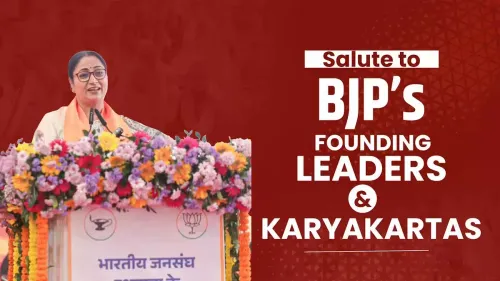
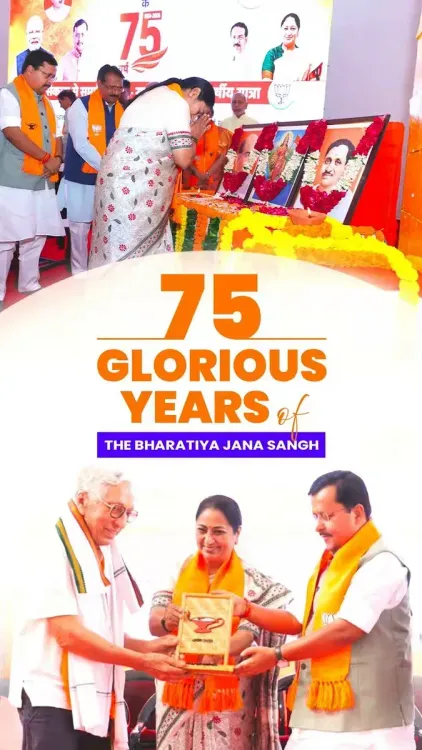
On the 75th anniversary of Jana Sangh's founding, Delhi CM Rekha Gupta paid tribute to BJP karyakartas, invoking Antyodaya and Rashtra Pratham — the ideological pillars of Deendayal Upadhyaya — to trace the party's journey from Syama Prasad Mookerjee's 1951 nationalist venture to present-day national power.
Key Takeaways
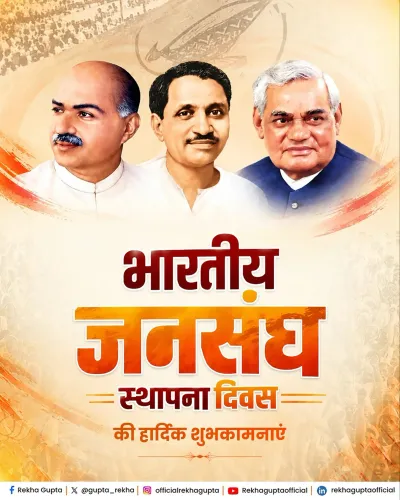
The Bharatiya Jana Sangh was founded on 21 October 1951 by Syama Prasad Mookerjee as a nationalist alternative to Congress.
The BJP was formally launched in April 1980 after Jana Sangh members exited the Janata Party coalition.
Antyodaya — upliftment of the last person — is the social philosophy of Deendayal Upadhyaya that remains central to BJP's official ideology.
CM Gupta's post honoured generations of unpaid karyakartas , calling their service Tapasya (devoted sacrifice).
Foundation Day messaging on 21 October is a recurring BJP tradition used to reinforce grassroots cadre loyalty.
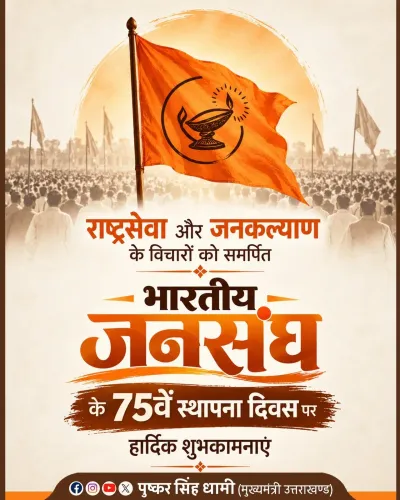
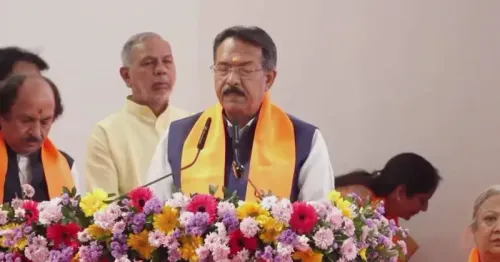
Seventy-five years after Syama Prasad Mookerjee planted a nationalist flag with a small but determined organisation, Delhi Chief Minister Rekha Gupta paused on Wednesday, 21 October 2026 to trace the unbroken thread from that founding moment to the party that now governs India.
In a post on X carrying the hashtag #जनसंघ_से_जनजन_तक ('From Jana Sangh to every person'), CM Gupta offered her 'heartfelt Pranam to every devoted Karyakarta,' framing the BJP's rise as the collective fruit of generations of unpaid, unglamorous groundwork — what she called Tapasya, or devoted sacrifice.
The founding moment: Mookerjee's bet on grassroots nationalism
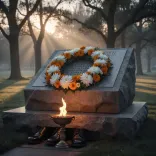
The Bharatiya Jana Sangh was established on 21 October 1951 by Syama Prasad Mookerjee, a former Union minister who broke with the ruling Congress to build a nationalist alternative rooted in cultural continuity. Mookerjee died in detention in 1953 while protesting restrictions on entry into Jammu and Kashmir — a martyrdom that became part of the party's foundational mythology.
The organisation never achieved national power in its Jana Sangh form, but it cultivated the cadre discipline and ideological rigour that would later power a far larger machine. When the Janata Party experiment collapsed, Jana Sangh members regrouped and formally launched the Bharatiya Janata Party in April 1980.
Antyodaya and Rashtra Pratham: the philosophy that survived the merger
CM Gupta's invocation of Antyodaya — 'upliftment of the last person in line' — is a direct echo of Deendayal Upadhyaya, the Jana Sangh leader whose doctrine of Integral Humanism gave the movement its social conscience. Upadhyaya argued that economic progress was meaningless unless it reached society's most marginalised members. That principle has remained a fixture of official BJP literature across every decade of the party's evolution.
Rashtra Pratham, or 'Nation First,' completes the ideological pair — the belief that individual and partisan interests must yield to national interest. Together, the two phrases compress the party's self-image into a bumper-sticker clarity that resonates equally with a first-time booth worker in a small town and a senior cabinet minister.
Why foundation day messaging matters inside the BJP machine
Commemorative posts on 21 October are a consistent feature of BJP political culture. Leaders at every level use the anniversary to reinforce cadre loyalty, signal continuity with a pre-independence nationalist tradition, and remind the volunteer base that its labour — not just money or media — built the organisation. In a party whose electoral machine depends heavily on unpaid booth-level workers, that acknowledgement carries genuine organisational weight.
CM Gupta's tribute, accompanied by a video, lands at a moment when the BJP's grassroots model is studied as one of the most effective political mobilisation networks in democratic history — a network whose origins trace directly back to the small rooms where Jana Sangh karyakartas met in the early 1950s.
From a single founder's defiance in 1951 to a national governing machine in 2026 — the karyakarta, the post insists, was always the real story.
Point of View
Not just electoral machinery, are the party's claimed inheritance. The dual invocation of Antyodaya and Rashtra Pratham is a signal to both the welfare-focused and nationalist wings of the party that the founding philosophy remains undivided. For a party whose booth-level mobilisation is its most formidable electoral asset, public gratitude to karyakartas is also quiet organisational maintenance. The gesture carries added resonance in Delhi, where the BJP has historically relied on intensive ground-level organising to compete in a city-state with a complex social profile.
NationPress
21 Oct 2026
Frequently Asked Questions
When was the Bharatiya Jana Sangh founded?
The Bharatiya Jana Sangh was founded on 21 October 1951 by Syama Prasad Mookerjee as a nationalist political alternative to the dominant Congress party.
What is the connection between Jana Sangh and the BJP?
Jana Sangh members joined the Janata Party coalition in the late 1970s. When that coalition broke down, they reconstituted themselves as the Bharatiya Janata Party in April 1980 , carrying forward Jana Sangh's cadre, ideology, and organisational culture.
What does Antyodaya mean in BJP's ideology?
Antyodaya means 'upliftment of the last person' and was articulated by Deendayal Upadhyaya as part of his Integral Humanism philosophy — the principle that development must reach the most marginalised in society before it can be considered complete.
Why do BJP leaders post tributes on 21 October every year?
21 October is Jana Sangh Foundation Day, and BJP leaders use the anniversary to stress organisational continuity, honour grassroots workers, and reinforce the ideological lineage that connects the 1951 founding to the present-day party.
Who was Syama Prasad Mookerjee?
Syama Prasad Mookerjee was the founder-president of the Bharatiya Jana Sangh. He died in detention in 1953 while protesting movement restrictions in Jammu and Kashmir , and is remembered as a founding martyr of the Hindu nationalist political tradition.