CM Yogi Claims Zero Riots in UP vs 815 in Pre-2017 Era
Synopsis
Chief Minister Yogi Adityanath says Uttar Pradesh saw 815 riots in the five years before 2017 but has since become riot-free, declaring the state transformed 'from unrest to celebration' — a claim that sets up the government's own public benchmark for scrutiny.
Key Takeaways
The Chief Minister's Office of Uttar Pradesh quoted CM Yogi Adityanath on October 21, 2026 claiming 815 riots occurred in the state in the five years before 2017 .
The Chief Minister stated that today no one can even imagine a riot in Uttar Pradesh .
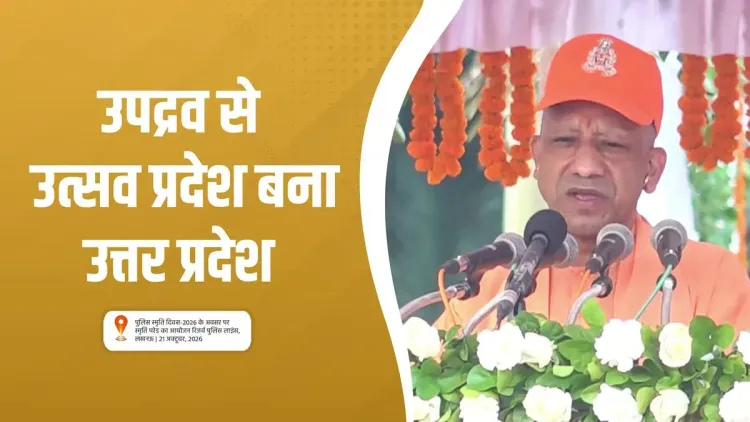
He described the state's transformation with the phrase 'उपद्रव से उत्सव प्रदेश' — 'from a state of unrest to a state of celebration.' Yogi Adityanath has governed Uttar Pradesh since March 2017 , with law and order as a central policy priority.
The specific figure of 815 riots is the administration's own data point and has not been independently verified against national crime records.
Annual National Crime Records Bureau reports remain the key independent benchmark for assessing the claim.
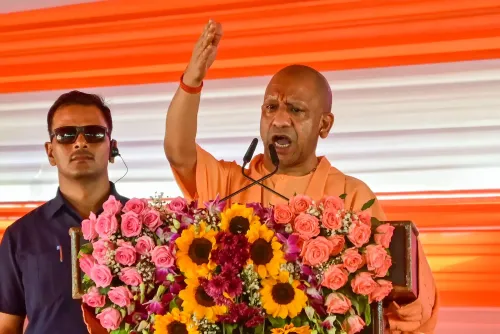
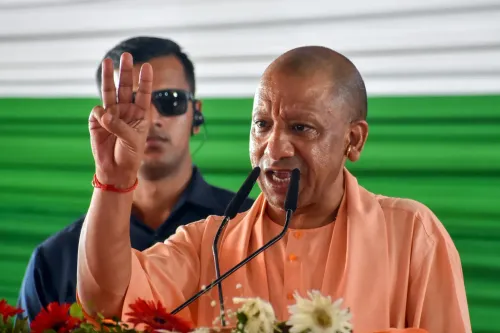
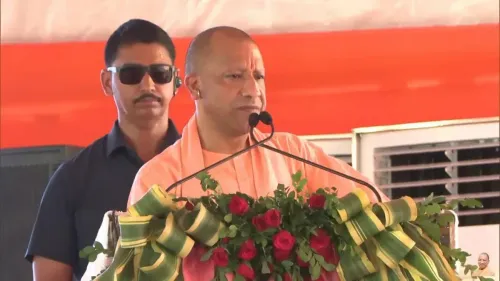
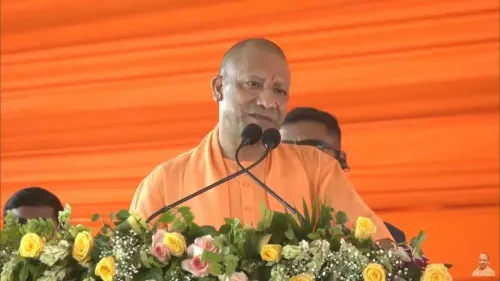
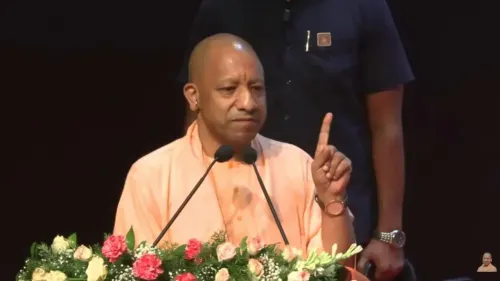
From 815 riots in five years to a state where, in the words of its Chief Minister, nobody can even imagine a riot — that is the transformation Uttar Pradesh Chief Minister Yogi Adityanath placed before the public on Wednesday, October 21, 2026. The Chief Minister's Office of Uttar Pradesh quoted him directly on X, framing the state's law-and-order journey as a complete break from its past.
The post, shared by the official CMO account, carried the Chief Minister's words: 'वर्ष 2017 से पूर्व के 5 वर्षों में उत्तर प्रदेश में 815 दंगे हुए थे' — 'In the five years before 2017, there were 815 riots in Uttar Pradesh.' He added that today, no one can even think of a riot in the state, and declared: 'उत्तर प्रदेश अब उपद्रव से उत्सव प्रदेश बन चुका है' — 'Uttar Pradesh has now transformed from a state of unrest to a state of celebration.'
The 2017 Turning Point: What Changed in Policing and Governance
Yogi Adityanath took office as Chief Minister in March 2017, after the Bharatiya Janata Party swept the Uttar Pradesh assembly elections. One of the administration's earliest and loudest commitments was restoring law and order in India's most populous state — a state long associated in public discourse with communal flare-ups, organised crime, and weakened policing infrastructure.
The government moved to tighten policing, launch anti-gangster operations, and signal zero tolerance toward communal disturbances. Officials pointed repeatedly to a decline in reported incidents of communal violence as evidence that the strategy was working. The 'riots to celebration' framing has since become a recurring signature line in the Chief Minister's public communications.
A Number Under Scrutiny: The '815 Riots' Claim
The figure of 815 riots in the five years before 2017 is a precise, consequential number — and one that deserves context. It is the administration's own data point, cited as a baseline for comparison. Independent verification against comprehensive national crime data, such as annual reports from the National Crime Records Bureau, would be the appropriate test. Those data releases remain the benchmark to watch as this governance claim circulates.
What is not in dispute is the political and policy intent of the messaging. The BJP government in Uttar Pradesh has consistently positioned improved internal security as its most tangible governance dividend — a direct answer to critics who questioned whether a state of 240 million people could be held to account on law and order.
Why This Framing Resonates — and Why It Invites Scrutiny
The 'unrest to celebration' arc is more than a slogan. It serves a specific political function: converting abstract governance metrics into a felt reality for voters. When a Chief Minister says 'no one can even imagine a riot,' he is not filing a statistical report — he is asking citizens to measure their daily lived sense of safety against a remembered past.
That appeal is powerful. It is also precisely why independent data — from the NCRB, from state police disclosures, from civil-society monitoring — matters as a check. The next annual crime data cycle will either corroborate or complicate the narrative. Until then, the claim stands as the government's own benchmark, publicly stated and publicly accountable.
Point of View
The administration invites data-based scrutiny it clearly believes the record can withstand. The genuine political risk lies in the gap between claimed outcomes and independently verified crime statistics: if the NCRB data or civil-society monitoring diverges significantly from the government's baseline, the very specificity of the number becomes a liability. For now, the statement functions as a public commitment that Uttar Pradesh residents — and opposition parties — can hold to account.
NationPress
21 Oct 2026
Frequently Asked Questions
How many riots did Uttar Pradesh have before 2017 according to CM Yogi?
According to Chief Minister Yogi Adityanath, Uttar Pradesh recorded 815 riots in the five years before 2017. This figure is the state government's own stated data point and has not been independently verified against national crime records.
What did CM Yogi Adityanath say about law and order in UP in 2026?
On October 21, 2026 , the Chief Minister's Office quoted CM Yogi Adityanath saying that today no one can even imagine a riot in Uttar Pradesh, declaring the state transformed 'from unrest to celebration.'
When did Yogi Adityanath become Chief Minister of Uttar Pradesh?
Yogi Adityanath became Chief Minister of Uttar Pradesh in March 2017 after the BJP won the state assembly elections. Law and order has been a defining focus of his administration since day one.
Is the claim of 815 riots in UP before 2017 verified?
The figure of 815 riots in the five years before 2017 is cited by the UP government as its own data. Independent verification would require cross-referencing with National Crime Records Bureau annual reports, which remain the authoritative public benchmark.
What does 'Uttar Pradesh from unrest to celebration' mean?
The phrase 'उपद्रव से उत्सव प्रदेश' is a slogan used by CM Yogi Adityanath to contrast the alleged high incidence of communal riots before 2017 with what his government claims is a riot-free, peaceful Uttar Pradesh today.