CM Yogi Contrasts Pre-2017 UP Riots With Current Order
Synopsis
Uttar Pradesh Chief Minister Yogi Adityanath claimed on 17 June 2026 that UP witnessed a riot every two to three days and months-long curfews before 2017, drawing a sharp contrast with his government's law-and-order record ahead of the 2027 state elections.
Key Takeaways
CM Yogi Adityanath posted on 17 June 2026 claiming Uttar Pradesh averaged one riot every two to three days before 2017 .
He also alleged that curfews in the state lasted for months at a stretch under the pre-2017 administration.
The most significant communal incident of that era was the Muzaffarnagar riots of September 2013 , which caused widespread displacement.
The Yogi Adityanath government has maintained a zero-tolerance policy on communal violence since taking office in March 2017 .
The exact figures cited in the post are not independently verified by established public records, according to available research.
The post is seen as part of early political positioning ahead of the 2027 Uttar Pradesh assembly elections .
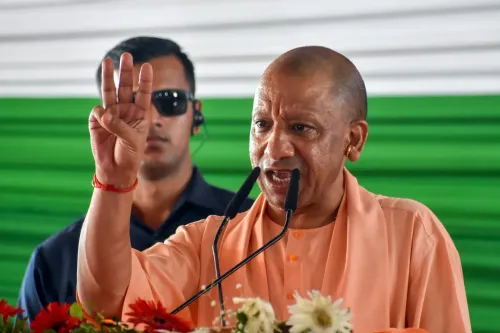
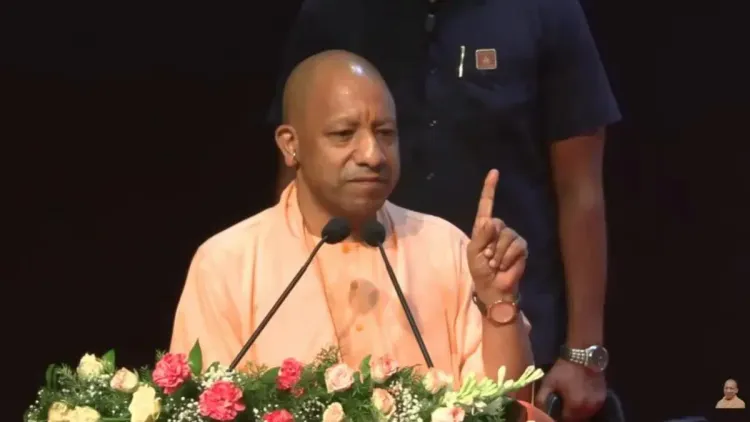
Uttar Pradesh Chief Minister Yogi Adityanath on Wednesday, 17 June 2026, invoked the law-and-order conditions that prevailed in Uttar Pradesh before 2017, asserting that the state witnessed a riot roughly every two to three days and endured curfews stretching for months under the previous administration.
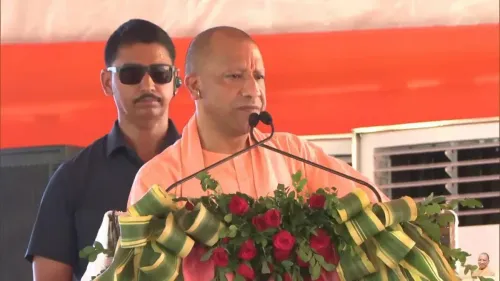
Posting on X, the Chief Minister wrote — translated from Hindi — 'वर्ष 2017 के पहले उत्तर प्रदेश... हर दूसरे-तीसरे दिन एवरेज एक दंगा होता था, महीनों-महीनों कर्फ्यू रहता था' ('Before 2017 in Uttar Pradesh... on average there was one riot every two to three days, and curfews would last for months and months'). The post was accompanied by a video.
Context
The period Yogi Adityanath references spans the years before March 2017, when he assumed office. Uttar Pradesh under the preceding Samajwadi Party government led by Akhilesh Yadav — Chief Minister from 2012 to 2017 — did witness several episodes of communal tension. The most prominent of these was the Muzaffarnagar riots of September 2013, a major outbreak of communal violence in western Uttar Pradesh that resulted in prolonged curfews and the displacement of thousands of residents.
The Chief Minister's post does not cite a specific dataset or official report for the figures he mentions. The research notes that the exact average figures for riots and curfew durations are not independently verifiable from established public records.
Policy Backdrop
Since taking charge in March 2017, the Yogi Adityanath government has consistently projected law-and-order reform as its flagship achievement. The administration launched a stated zero-tolerance policy on communal violence and reinforced district-level riot-control mechanisms across Uttar Pradesh, India's most populous state.
The BJP-led state government has regularly cited reductions in reported communal incidents and the faster lifting of curfews as evidence of improved governance. This rhetorical contrast between pre-2017 and post-2017 conditions has been a recurring element in the party's political communication since it first came to power in the state.
Stakeholders and Impact
The primary stakeholders in this narrative are the residents of Uttar Pradesh, particularly communities in districts historically affected by communal tensions, and the state's police and administrative machinery credited with maintaining order. Opposition parties, including the Samajwadi Party, have in the past disputed the framing that pre-2017 conditions were uniformly worse, pointing to selective use of statistics.
The post arrives with the 2027 Uttar Pradesh assembly elections on the horizon, a context that gives such messaging added political weight. Governance performance on law and order is expected to be a central campaign theme for all major parties.
What's Next
Analysts and opposition politicians are likely to scrutinise the claims against official crime data, including the next release of National Crime Records Bureau (NCRB) statistics and any state government white papers on communal incidents. The 2027 assembly election cycle is expected to intensify the debate over law-and-order records, with both the ruling BJP and opposition parties marshalling competing data to shape public perception ahead of polling.
Point of View
A frame the party has deployed consistently since first winning the state. By invoking riot frequency and curfew duration, he is setting the terms of the law-and-order debate well ahead of the 2027 assembly elections, forcing the opposition to defend a record from a decade ago. The absence of cited official data, however, leaves the specific figures open to challenge from the Samajwadi Party and independent fact-checkers. Whether the NCRB's next data release supports or complicates this framing will be a key moment in the pre-election information war.
NationPress
16 Sept 2026
Frequently Asked Questions
What did CM Yogi Adityanath say about UP before 2017?
Chief Minister Yogi Adityanath claimed that Uttar Pradesh witnessed on average one riot every two to three days and endured curfews lasting months before 2017, contrasting it with the law-and-order situation under his government.
What were the major communal riots in UP before 2017?
The most significant communal violence in Uttar Pradesh before 2017 was the Muzaffarnagar riots of September 2013, which caused widespread displacement and prolonged curfews in western UP during the Samajwadi Party government.
Who was the Chief Minister of UP before Yogi Adityanath?
Akhilesh Yadav of the Samajwadi Party was Chief Minister of Uttar Pradesh from 2012 to 2017, the period Yogi Adityanath referred to in his post.
Has law and order improved in UP under Yogi Adityanath?
The Yogi Adityanath government has claimed significant improvements in law and order since March 2017, citing a zero-tolerance policy on communal violence and faster lifting of curfews, though opposition parties have disputed some of these claims.
Why is Yogi Adityanath talking about 2017 UP riots now?
With the 2027 Uttar Pradesh assembly elections approaching, CM Yogi Adityanath is reinforcing his government's governance record on law and order, a theme expected to be central to the BJP's campaign narrative.