CM Rekha Gupta marks World Food Day, highlights India's nutrition push
Synopsis
Delhi Chief Minister Rekha Gupta marked World Food Day on 16 October 2026 by crediting PM Modi's leadership for India's shift from grain self-sufficiency to nutrition security and millet revival, pledging that no citizen should go hungry.
Key Takeaways
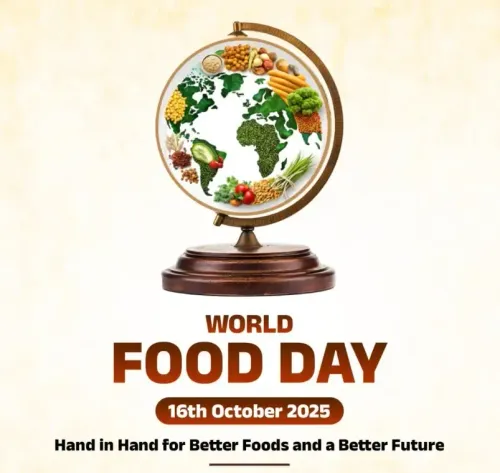
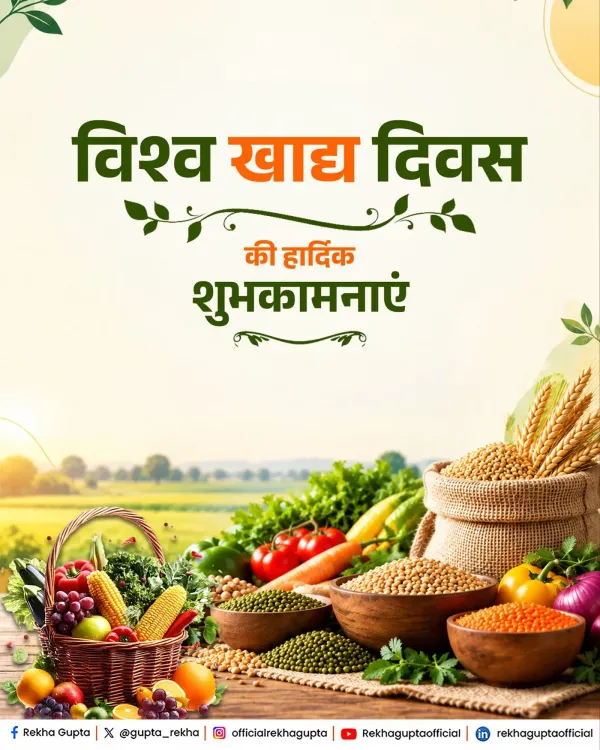
Delhi CM Rekha Gupta posted World Food Day greetings on 16 October 2026 , calling food a symbol of farmers' labour and nature's blessing.
She credited Prime Minister Narendra Modi for moving India beyond food-grain self-sufficiency toward nutrition security and farmer prosperity.
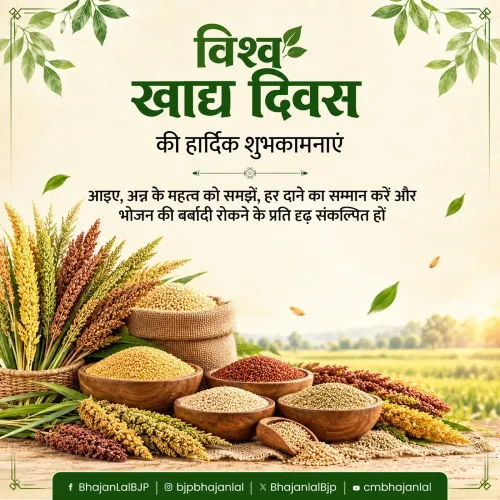
The post highlighted Shri Anna — the government's millet-promotion initiative — as a key pillar of India's food and agricultural strategy.
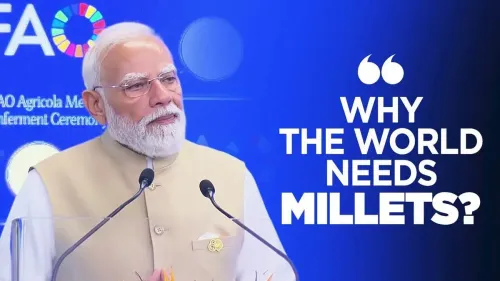
India championed the International Year of Millets in 2023 at the UN, underscoring millets' nutritional and climate-resilience benefits.
India's food-security architecture rests on the Green Revolution legacy and the National Food Security Act, 2013 , with newer focus on dietary quality.
CM Gupta pledged that adequate and nutritious food must reach every Indian plate — a goal that depends heavily on state-level welfare delivery.
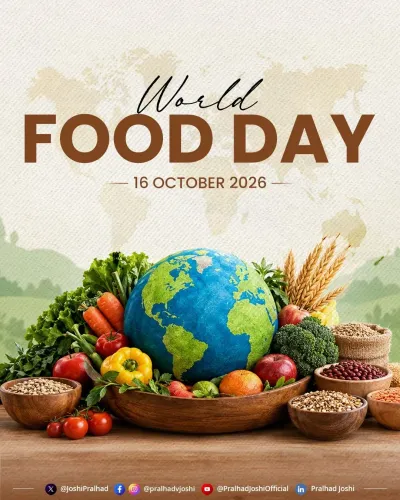
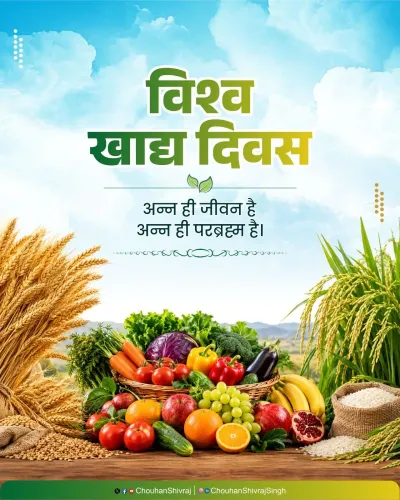
On World Food Day, 16 October 2026, Delhi Chief Minister Rekha Gupta extended greetings to all Indians and framed food not merely as sustenance but as a symbol of farmers' labour and nature's bounty — placing the occasion squarely within India's evolving food-security story.
Posting in Hindi on X, CM Gupta wrote: 'Vishwa Khadya Diwas ki samast deshvasiyon ko hardik shubhkamnaen.' ('Heartfelt greetings to all citizens on World Food Day.') She credited the leadership of Prime Minister Narendra Modi for steering India beyond grain self-sufficiency toward a broader goal — nutrition security, the promotion of Shri Anna (millets), and farmer prosperity. Her stated pledge: 'No citizen of the country should go hungry, and adequate and nutritious food should reach every plate.'
From grain surplus to nutrition security — India's longer arc
India's journey with food security stretches back decades. The Green Revolution of the late 1960s and 1970s transformed the country from a net food importer into a grain-surplus nation. The National Food Security Act, 2013 then gave legal teeth to subsidised food access, covering a significant share of the population through the public distribution system.
But quantity was only the first chapter. The policy conversation has since shifted to quality — whether every plate carries enough protein, iron, and micronutrients, not just calories. That pivot is precisely what CM Gupta's post reflects.
Shri Anna: India's millet revival on the global stage
At the centre of that nutritional push is Shri Anna, the government's campaign to mainstream millets — sorghum, bajra, ragi, and their cousins — as everyday food. India championed the International Year of Millets in 2023, winning endorsement from the United Nations Food and Agriculture Organisation (FAO), which also coordinates World Food Day each year on 16 October.
The case for millets is threefold: they are more nutritious than polished rice or refined wheat, far less water-intensive, and well-suited to rain-fed farming in dryland regions where smallholder farmers dominate. Reviving demand for millets, the argument goes, simultaneously fixes dietary gaps and boosts incomes for millions of marginal cultivators.
Delhi's voice in a national conversation
For a state chief minister, invoking World Food Day carries a particular resonance. Delhi is a net food-consuming city-state, dependent on procurement and supply chains that originate in states like Punjab, Haryana, and Uttar Pradesh. State-level implementation of central nutrition and welfare schemes — from the Mid-Day Meal programme to anganwadi supplementary nutrition — ultimately determines whether national pledges translate into filled plates in the capital's resettlement colonies and urban-poor households.
CM Gupta's message aligns with the BJP's broader national narrative of linking welfare delivery to a farm-to-fork vision under PM Modi's government — one that state leaders have consistently amplified on occasions like this.
The real test, as always, will be in the rollout: whether millet inclusion is scaled within Delhi's own school-meal and welfare infrastructure, and whether budgetary commitments at the state level match the rhetoric of a 'zero hunger' pledge. Every World Food Day is a reminder of how far the ambition still stretches.
Point of View
It reinforces a unified party message that frames food security as an active, ongoing achievement rather than a legacy entitlement. The millet pivot is also strategically useful: it bridges urban nutrition concerns with rural farmer-income politics, allowing the same policy to appeal across the BJP's electoral base. Watch for whether Delhi's own budget and welfare schemes reflect these stated priorities — the gap between World Food Day messaging and state-level implementation will be the real indicator.
NationPress
16 Oct 2026
Frequently Asked Questions
What is World Food Day and when is it observed?
World Food Day is observed every year on 16 October to raise awareness about global food security and hunger eradication. It is coordinated by the UN Food and Agriculture Organisation (FAO) and marks the FAO's founding anniversary.
What did Delhi CM Rekha Gupta say on World Food Day 2026?
CM Rekha Gupta extended greetings to all Indians, credited PM Narendra Modi for steering India toward nutrition security and millet promotion, and pledged that no citizen should go hungry and every plate should receive adequate, nutritious food.
How did India achieve food grain self-sufficiency?
India achieved food-grain self-sufficiency through the Green Revolution of the late 1960s and 1970s, which dramatically boosted wheat and rice yields. The National Food Security Act, 2013 later codified subsidised access for a large portion of the population.
What is India's current focus beyond food grain self-sufficiency?
India has moved from ensuring sufficient grain supply toward qualitative nutrition security — making sure diets include adequate proteins and micronutrients. Millet promotion under the Shri Anna initiative and integration with public distribution and school-meal schemes are central to this effort.