PM Modi Hails FAO Collaboration in Recognising Millet's Global Power
Synopsis
Prime Minister Narendra Modi on 21 May 2026 credited FAO collaboration for globally spotlighting millets and praised Indian farmers for addressing nutrition and delivering major environmental benefits through millet cultivation, continuing India's post-2023 millet advocacy.
Key Takeaways
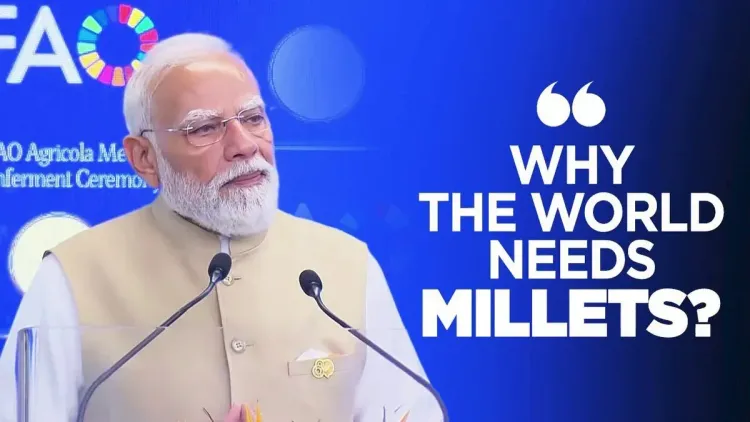
Prime Minister Narendra Modi on 21 May 2026 posted on X crediting FAO with helping the world recognise the power of millets in a new way.
He stated that Indian farmers are simultaneously addressing nutrition concerns and rendering the greatest service to the environment through millet cultivation.
The UN General Assembly declared 2023 the International Year of Millets following a resolution proposed by India in 2021 .
The government rebranded millets as 'Shree Anna' and integrated them into the National Food Security Mission and POSHAN Abhiyaan .
Millets require less water and fewer chemical inputs than rice or wheat, positioning them as climate-smart crops for semi-arid farming regions.
Further announcements on expanded millet procurement under welfare schemes and new FAO-India joint projects on climate-resilient varieties are anticipated.
Prime Minister Narendra Modi on Thursday, 21 May 2026 credited the Food and Agriculture Organization (FAO) with helping the world rediscover the power of millets, while highlighting that Indian farmers are simultaneously addressing nutrition security and rendering the greatest service to the environment through millet cultivation.
In a post on X in Hindi, Modi wrote: 'FAO ke sahyog se duniya ne Millets ki shakti ko naye roop mein pehchana hai' ('With the cooperation of FAO, the world has recognised the power of millets in a new way'). He added that Indian farmers, through millet farming, are not only addressing nutritional concerns but are also performing the greatest service to the environment.
Context
The post arrives in the wake of the International Year of Millets 2023, which the United Nations General Assembly declared following a resolution formally proposed by India in 2021. That global campaign, championed by New Delhi through multilateral platforms including the FAO and the G20, thrust millets onto the international food-policy agenda as a climate-resilient and nutritionally dense alternative to water-intensive staples.
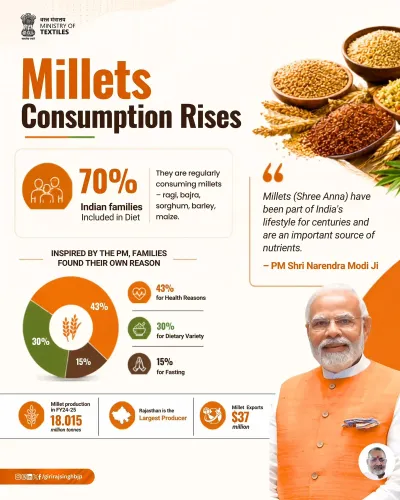
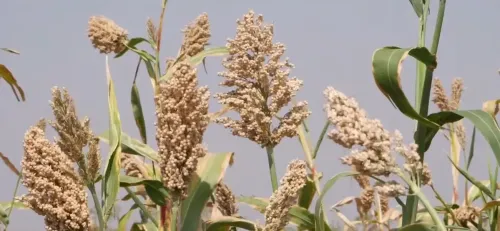
India is among the world's largest producers of millets, which include crops such as jowar, bajra, and ragi — staples historically grown by smallholder farmers in semi-arid and rainfed regions. The government rebranded millets as 'Shree Anna', a term that elevated their cultural and agricultural standing domestically.
Policy Backdrop
The Government of India incorporated millets under the National Food Security Mission and the POSHAN Abhiyaan, the national nutrition programme, to simultaneously boost cultivation and mainstream consumption. These moves were designed to address anaemia and micronutrient deficiencies, particularly among women and children in rural areas.
From an environmental standpoint, millets require significantly less water and fewer chemical inputs compared to rice and wheat, making them well-suited to the increasingly erratic rainfall patterns linked to climate change. By framing farmers as stewards of the environment, Modi's message reinforces a policy narrative that positions traditional crop systems as nature-based climate solutions.
Stakeholders and Impact
Indian smallholder farmers in states such as Rajasthan, Maharashtra, Karnataka, and Madhya Pradesh stand at the centre of this push, as these regions account for a large share of domestic millet production. For these farming communities, the renewed global interest in millets — validated by a UN agency — translates into potential market access, better procurement prices, and recognition of traditional agricultural knowledge.
For consumers and policymakers, the dual framing — nutrition and environment — strengthens the case for expanding millet inclusion in the Public Distribution System and school mid-day meal programmes. The FAO's institutional backing lends international credibility to what has largely been a domestically driven advocacy effort.
What's Next
Observers will watch for concrete follow-through, including expanded millet procurement under government welfare schemes and new FAO-India joint initiatives focused on developing climate-resilient millet varieties. The continued post-2023 messaging from the Prime Minister signals that New Delhi intends to keep millets at the centre of its agriculture-environment-nutrition agenda well beyond the symbolic year. Any announcement on enhanced minimum support prices or export facilitation for millet-based products would mark the next tangible step in translating this narrative into farmer-level benefit.
Point of View
Which reached its peak during the International Year of Millets 2023 and has since been sustained as a soft-power and domestic agriculture narrative. By invoking FAO validation, the Prime Minister reinforces the government's claim that India's traditional crop systems offer globally relevant solutions to climate and nutrition crises. The dual framing of farmers as both nutrition providers and environmental stewards is politically significant — it elevates agrarian communities in the public discourse while tying domestic agricultural policy to multilateral climate commitments. The timing and tone suggest New Delhi is intent on keeping millets a live policy priority rather than allowing momentum to dissipate after the symbolic UN year.
NationPress
7 Oct 2026
Frequently Asked Questions
Why is PM Modi talking about millets and FAO in 2026?
Prime Minister Modi reaffirmed India's millet advocacy by crediting FAO with helping the world recognise the crop's power, continuing a campaign that gained global traction during the UN-declared International Year of Millets in 2023.
What is 'Shree Anna' and how does it relate to millets?
'Shree Anna' is the name the Government of India gave to millets to elevate their cultural and agricultural status. The rebranding was part of a broader push to integrate millets into national nutrition and food security programmes.
How do millets help the environment?
Millets require significantly less water and fewer chemical inputs compared to water-intensive staples like rice and wheat, making them a climate-smart choice particularly suited to semi-arid and rainfed farming regions facing erratic rainfall.
What did India do to get the International Year of Millets declared?
India formally proposed a resolution to the UN General Assembly in 2021, which led to the declaration of 2023 as the International Year of Millets, a campaign supported by the FAO and other multilateral bodies.
Which Indian states are major millet producers?
States such as Rajasthan, Maharashtra, Karnataka, and Madhya Pradesh account for a large share of India's millet production, with smallholder farmers in semi-arid regions being the primary cultivators.