FTAs can boost Indian farm exports, says Gujarat farmer on I-Day

Synopsis
On India's 80th Independence Day, a Gujarat farmer put a ground-level voice to Modi's 'Sapta Dhara' agriculture push — arguing that FTAs are already opening real export doors for millets, spices, and horticultural produce. With APEDA data showing ₹543.40 crore in millet exports and zero-duty Australia access kicking in from January 2026, the policy framework is in place. The gap between promise and delivery now hinges on packaging, certification, and farmer readiness.
Key Takeaways
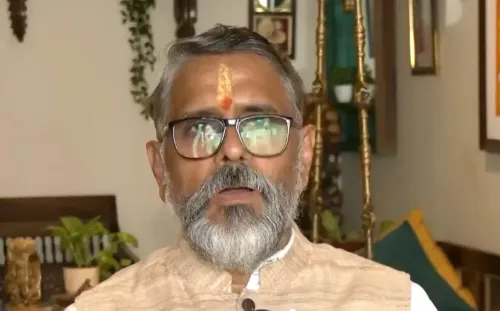
Hrithik Purohit , a Vadodara -based farmer, said FTAs could significantly boost Indian agricultural exports on 15 August 2025 .
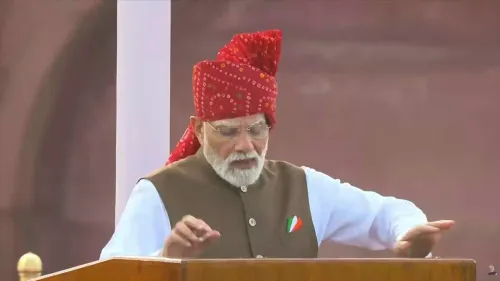
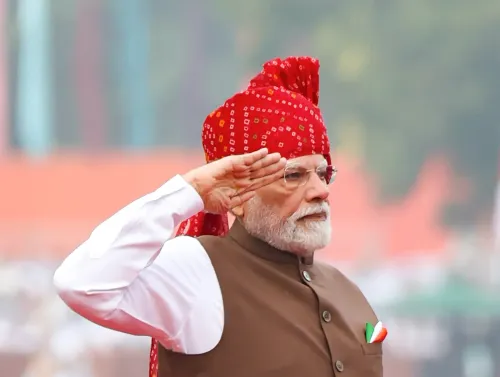
PM Narendra Modi placed agriculture and food processing among seven priority streams under his 'Sapta Dhara' framework in his 80th Independence Day address.
APEDA data shows India exported 138.69 thousand tonnes of millets worth ₹543.40 crore in 2025-26 .
Gujarat contributed an estimated 7.25% of India's millet production in 2024-25 .
The India-Australia Economic Cooperation and Trade Agreement provides zero-duty access for Indian farm products from 1 January 2026 .
Purohit flagged technology, packaging, and quality certification as critical enablers for farm export growth.
A Vadodara-based farmer has said that free trade agreements (FTAs) could significantly expand income opportunities for Indian agricultural producers, particularly through increased exports of food products, fruits, and flowers. Hrithik Purohit, speaking on 15 August 2025, was responding to Prime Minister Narendra Modi's 80th Independence Day address, in which Modi placed agriculture and food processing among seven priority streams for India's growth.
What Modi Said on Agriculture
Addressing the nation from the Red Fort, Prime Minister Modi identified agriculture and food processing as one of seven areas under his 'Sapta Dhara' framework — alongside manufacturing, technology and innovation, Gati Shakti, defence, the green and blue economy, and soft power. Modi called for channelling traditional Indian food products, millets, spices, fruits, and vegetables from farms into global export markets, noting that FTAs were opening new doors for Indian farmers.
The Farmer's Perspective
Purohit said the expanded global market access created by FTAs presented a concrete opportunity, provided farmers could meet international standards. 'Yes, I would like to tell you that today, through FTAs, India's large markets have opened up at the global level. If we make greater use of food products, fruits and flowers, then in the coming time we can progress significantly in this sector as well,' he said.
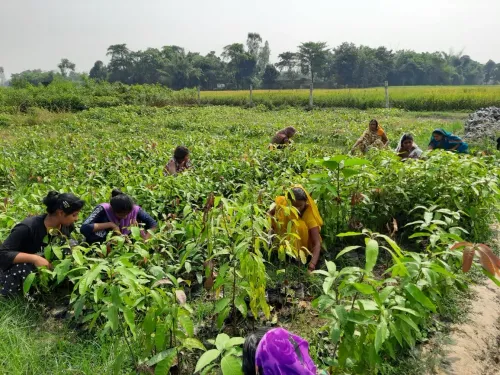
He added that realising this potential would require improvements in technology, packaging, and quality certification, as well as stronger linkages between farmers and overseas buyers. GI-tagged products, millets, spices, and horticultural produce, he noted, could find greater overseas demand if farmers were equipped to meet international requirements.
India's Current Export Base
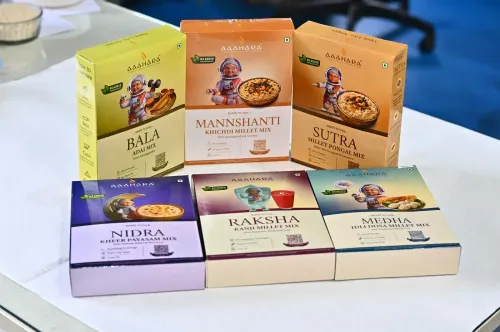
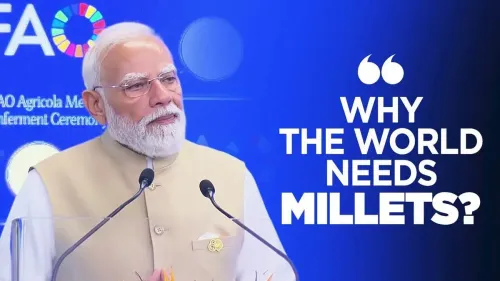
According to the Agricultural and Processed Food Products Export Development Authority (APEDA), India exported 138.69 thousand tonnes of millets worth ₹543.40 crore in 2025-26, with the UAE, Saudi Arabia, Nepal, the United States, and Morocco among the major destinations. Gujarat accounted for an estimated 7.25 per cent of India's millet production in 2024-25, underlining the state's stake in any export-led agricultural push.
Trade Agreements Expanding Market Access
Recent bilateral agreements have added structural support to the export narrative. The India-Australia Economic Cooperation and Trade Agreement provides zero-duty market access for Indian exports — including food, agricultural, and marine products — from 1 January 2026. Under the India-UAE Comprehensive Economic Partnership Agreement (CEPA), India has secured duty-free or preferential access across a large share of UAE tariff lines, a significant gain for agricultural exporters.
Technology as an Enabler
Purohit also highlighted the role of agricultural technology, citing Modi's references to the 'Drone Didi' initiative — a programme enabling women to generate income by operating drones for farm services. 'When our PM mentioned in Mann Ki Baat that many women are generating incomes worth lakhs through Drone Didi, then in the coming time India is going to progress significantly in the field of agriculture,' he said.
Looking ahead, Purohit expressed confidence that India's agricultural base could help it build a stronger position across Asia. As FTA-linked market access widens and technology adoption grows, the coming years will test whether farm-level readiness can match the scale of the opportunity.
Point of View
But the structural challenge is more stubborn than the rhetoric suggests. India's millet exports at ₹543.40 crore are a fraction of the country's agricultural potential, and the gap between farm gate and export market — in cold chain, certification, and packaging — has persisted for decades despite repeated policy attention. Zero-duty access under the Australia and UAE agreements is a genuine gain, but access alone does not translate into exports unless farmer-level readiness catches up. The 'Drone Didi' framing, while symbolically appealing, risks reducing a complex supply-chain problem to a technology narrative. The real test of the Sapta Dhara agriculture push will be measurable export growth in GI-tagged and horticultural products within the next two to three years.
NationPress
30 Sept 2026
Frequently Asked Questions
What did PM Modi say about agriculture on Independence Day 2025?
PM Modi, in his 80th Independence Day address from the Red Fort, identified agriculture and food processing as one of seven priority areas under his 'Sapta Dhara' framework. He called for taking Indian millets, spices, fruits, and vegetables into global export markets, noting that FTAs were opening new opportunities for farmers.
How much did India export in millets in 2025-26?
According to APEDA, India exported 138.69 thousand tonnes of millets worth ₹543.40 crore in 2025-26. The UAE, Saudi Arabia, Nepal, the United States, and Morocco were among the top destinations.
What trade agreements are expanding market access for Indian farm exports?
The India-Australia Economic Cooperation and Trade Agreement provides zero-duty market access for Indian food, agricultural, and marine products from 1 January 2026. The India-UAE CEPA has also secured duty-free or preferential access across a large share of UAE tariff lines for Indian exporters.
What is the 'Drone Didi' initiative mentioned by the farmer?
'Drone Didi' is a government initiative that enables women to generate income by operating drones for agricultural services such as crop spraying. PM Modi has referenced the programme in his Mann Ki Baat addresses as an example of technology-driven farm income generation.
What does Gujarat contribute to India's millet production?
Gujarat accounted for an estimated 7.25 per cent of India's millet production in 2024-25, giving the state a direct stake in any export-led push for millets under the FTA framework.