Modi's agriculture push can unlock global markets for Indian farmers: Expert
Synopsis
A Ministry of Agriculture expert says Modi's Independence Day agenda — millets, AI, blue economy, and 35 signed FTAs — is more than rhetoric. With millet prices already up 15–25% and GI tags protecting regional produce, the framework for a genuine agricultural export push may finally be in place. The missing piece: execution at the farm level.
Key Takeaways
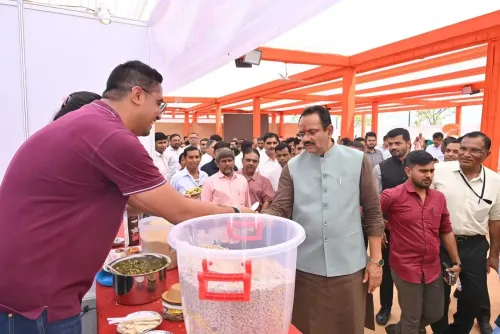
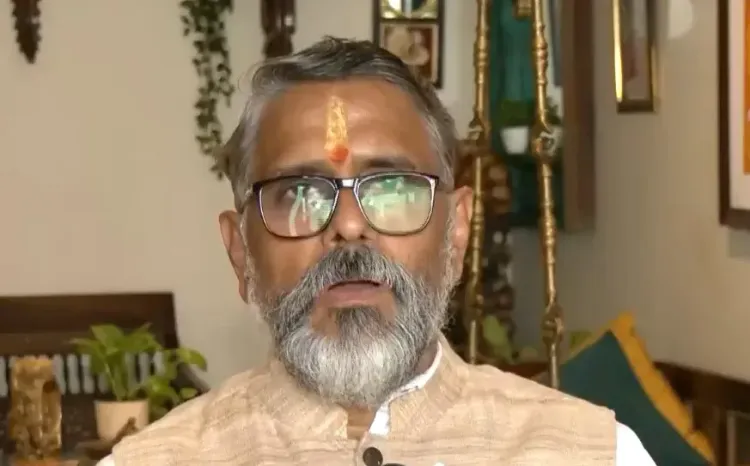
CA Aditya Sesh , Member of the Expert Committee at the Ministry of Agriculture and Farmers Welfare , said PM Modi's Independence Day agenda can open new global opportunities for Indian farmers.
India has signed 35 Free Trade Agreements (FTAs) , which Sesh described as a significant achievement for agricultural export access.
Millet market prices have reportedly risen by 15 to 25 per cent this year, reflecting growing domestic and global demand.
Maharashtra 's Konkan region and its diverse ecosystems were highlighted as key to the country's agricultural progress.
Sesh backed E20 ethanol-blended fuel and called for a diversified energy portfolio covering hydrogen, solar, wind, and nuclear to insulate India from global supply-chain shocks.
Artificial intelligence and blue economy development were identified as critical pillars for India's agricultural and economic growth in the coming years.
Prime Minister Narendra Modi's Independence Day emphasis on millets, artificial intelligence in farming, and the blue economy can open significant new avenues for India's agricultural exports and economic growth, according to CA Aditya Sesh, Member of the Expert Committee at the Ministry of Agriculture and Farmers Welfare. Speaking on 15 August from Mumbai, Sesh said the government's groundwork — including the signing of 35 Free Trade Agreements (FTAs) — positions Indian agricultural products for greater international market access.
Millets: From Tradition to Global Trade
Sesh described millets as a generational crop with strong commercial potential. 'Millets are one type of grain that we have used for generations. They consume less water, have high value and a longer shelf life. They can be consumed domestically as well as exported,' he said.
He highlighted the nutritional profile of millets — including a low glycemic index, high protein content, and essential nutrients — and argued that value-added millet products such as cereal bars could reduce India's dependence on protein imports. 'You will be surprised to note that we import protein. Why should we do that? We have enough millets in our country to produce such products,' Sesh said. Market prices for millets have reportedly already risen by around 15 to 25 per cent this year, reflecting growing domestic and global acceptance.
Maharashtra's Agricultural Role and GI Recognition
Maharashtra, Sesh noted, holds particular promise within this national push. The state's diverse ecosystems — especially the Konkan region, which receives substantial rainfall — make it a major producer of food grains, vegetables, and fruits. 'Maharashtra has a big role to play in the overall agricultural progress of the country,' he said.
He also pointed to the growing focus on Geographical Indication (GI) recognition for agricultural produce as a mechanism to preserve product value and improve farmer returns. The One District One Product (ODOP) initiative, which promotes and markets locally distinctive products, was cited as a complementary framework driving this effort.
AI and Technology in Farming
Sesh welcomed Prime Minister Modi's emphasis on artificial intelligence in agriculture, describing AI as a potential cornerstone of the farming ecosystem. He said AI can improve productivity, support better decision-making, and enhance the efficiency of both farming operations and supply chains. Combined with technology-driven food processing and the development of the blue economy, he argued, these shifts can contribute substantially to India's growth trajectory in the coming years.
Energy Diversification as Agricultural Security
Sesh drew a direct link between agricultural resilience and energy security, arguing that recent global crises have exposed India's vulnerability to supply-chain disruptions. 'We must build multiple streams of energy so that we remain insulated from global shocks,' he said.
He backed the expansion of E20 ethanol-blended fuel — noting that compatible vehicles have already been tested — and called for India to broaden its energy portfolio to include hydrogen, solar, wind, and nuclear sources. 'Every other source of energy that you think of must be in our portfolio so that we remain insulated from global shocks,' he added.
The Bigger Picture
Sesh's overall argument is that India needs a resilient agricultural and economic ecosystem that combines traditional strengths — millets, diverse farm produce, and regional specialities — with modern technology, global market access through FTAs, and value addition at every stage of the supply chain. With the Independence Day address setting the direction, the challenge now lies in translating policy signals into verifiable outcomes for farmers on the ground.
Point of View
But market access alone does not translate into farmer income without robust cold-chain infrastructure, price-discovery mechanisms, and processing capacity. The millet price uptick of 15–25% is encouraging, yet it must be weighed against input cost inflation. The real test of this Independence Day agenda will be whether AI tools and GI protections reach smallholder farmers — who make up the bulk of India's agricultural workforce — or remain concentrated among larger, better-connected producers.
NationPress
30 Sept 2026
Frequently Asked Questions
What did PM Modi say about agriculture in his Independence Day speech?
Prime Minister Narendra Modi's Independence Day address on 15 August emphasised strengthening the agriculture sector, promoting millets, harnessing artificial intelligence in farming, and developing India's blue economy. Experts say these priorities, backed by 35 signed Free Trade Agreements, can open new global markets for Indian farmers.
Why are millets being promoted as an export crop?
Millets consume less water, have a high nutritional value including a low glycemic index and high protein content, and offer a longer shelf life — making them suitable for both domestic consumption and export. According to CA Aditya Sesh, value-added millet products could also reduce India's dependence on protein imports, and millet prices have reportedly risen 15 to 25 per cent this year.
What is the One District One Product (ODOP) initiative?
The One District One Product initiative promotes, markets, and showcases locally distinctive agricultural and other products from each district across India. It is designed to preserve regional specialities, improve farmer returns, and complement Geographical Indication (GI) recognition efforts.
How does energy security connect to India's agricultural push?
CA Aditya Sesh argued that agricultural and economic resilience depend on energy security, as global supply-chain disruptions can undermine farm productivity and food logistics. He backed E20 ethanol-blended fuel and called for expanding India's energy portfolio to include hydrogen, solar, wind, and nuclear sources to insulate the country from external shocks.
What role can AI play in Indian agriculture?
According to Sesh, artificial intelligence can improve farm productivity, enhance supply-chain efficiency, and support better decision-making for farmers. He described AI as a potential cornerstone of India's agricultural ecosystem, particularly when combined with food processing advances and blue economy development.