Modi's millet push: How global agri exports can fuel businesses like Granoxy Naturals

Synopsis
PM Modi's Independence Day call to globalise millets isn't just rhetoric for Shahdol's Granoxy Naturals — it's a business roadmap. Founder Shubham Tiwari says India's shift from raw commodity exporter to value-added food producer, with millet-based pasta, noodles, and cookies already in the pipeline, could reshape farm incomes and create a new export category.
Key Takeaways
PM Modi on 15 August called for taking millets and agri products to global markets in his Independence Day address.
Shubham Tiwari , Founder of Granoxy Naturals Private Limited (Shahdol), described the push as a major opportunity for the agri-food sector.
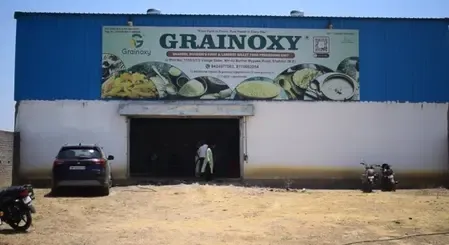
Granoxy Naturals produces millet-based pasta, noodles, and cookies , as well as ready-to-cook and ready-to-eat products with international market potential.
Tiwari identified manufacturing, food processing, and AI as game changers among Modi's seven focus areas for India's next five to seven years.
The millet value chain — from farm processing to global export — can create employment for farmers and entrepreneurs, according to Tiwari.
Prime Minister Narendra Modi, in his Independence Day address on 15 August, called for taking millets and other agricultural products to global markets — a signal that entrepreneurs in India's food-processing sector are already acting on. Shubham Tiwari, Founder and Director of Shahdol-based Granoxy Naturals Private Limited, welcomed the vision, describing it as a defining opportunity for those working in agriculture and agri-food processing.
The Opportunity in Value-Added Agri Products
Tiwari noted that India is steadily moving beyond its traditional role as a raw agricultural commodity exporter. The shift, he said, lies in processing farm produce into value-added, internationally standardised food products. Granoxy Naturals is already producing millet-based pasta, noodles, and cookies, alongside ready-to-cook and ready-to-eat food lines — all of which, according to Tiwari, carry considerable potential in international markets.
He said that Shri Anna (millets), spices, and allied agri-food products are expected to play a central role in India's global food market presence over the coming years. This aligns with the Prime Minister's broader framing of millets — which India championed globally during its G20 presidency — as a strategic export category.
Modi's Seven Focus Areas and the Agri-Food Connection
Tiwari also referenced the seven key areas highlighted by Prime Minister Modi for taking India to new heights over the next five to seven years. Among these, he identified manufacturing, food processing, and artificial intelligence as potential game changers for India's economy and employment in the coming decade.
He argued that the agriculture sector is evolving into a complete ecosystem — one that spans the entire chain from raw produce processing to global market access. This end-to-end integration, he said, can simultaneously create new employment opportunities and provide farmers with better returns on their produce.
What It Means for Farmers and Entrepreneurs
According to Tiwari, expanding the global footprint of value-added millet products can open new avenues for farmers, entrepreneurs, and the broader Indian economy. The model being pursued by companies like Granoxy Naturals — converting raw millets into processed, export-ready food items — represents exactly the kind of value chain integration that policymakers have long advocated but struggled to scale.
Notably, India's millet production has historically been consumed domestically with minimal processing. The push to globalise these products requires not just production capacity but also compliance with international food safety and labelling standards — a challenge that smaller agri-food businesses are beginning to navigate.
The Road Ahead
Tiwari said the coming decade will be pivotal not only for manufacturing and AI, but specifically for the agri-food sector. As India works to align its agricultural output with global demand patterns, businesses rooted in millet processing and value-added food products stand to benefit — provided the policy environment, export infrastructure, and quality standards keep pace with the ambition.
Point of View
But the distance between political rhetoric and export reality remains wide. India's agri-food processing sector is fragmented, under-capitalised, and often unable to meet the food safety standards required in key Western markets. The Granoxy Naturals model is promising, but it is one small company in Shahdol — not a systemic shift. The real test is whether the government pairs the Independence Day vision with concrete export facilitation, quality certification support, and cold-chain investment. Without that infrastructure, the millet moment risks being another missed opportunity dressed in nationalist framing.
NationPress
30 Sept 2026
Frequently Asked Questions
What did PM Modi say about millets on Independence Day?
Prime Minister Narendra Modi, in his Independence Day address on 15 August, called for taking millets and other agricultural products to global markets. He identified food processing as one of seven key focus areas for India's growth over the next five to seven years.
What is Granoxy Naturals and what does it produce?
Granoxy Naturals Private Limited is a Shahdol-based agri-food company founded by Shubham Tiwari. It produces millet-based products including pasta, noodles, and cookies, as well as ready-to-cook and ready-to-eat food items aimed at domestic and international markets.
Why are millets considered a global export opportunity for India?
India is one of the world's largest millet producers, and global demand for healthy, gluten-free grains has risen sharply. By processing millets into value-added food products that meet international standards, Indian companies can move up the export value chain and earn significantly more than by exporting raw grain.
How can the millet push benefit Indian farmers?
According to Shubham Tiwari, building an end-to-end agri-food ecosystem — from processing raw produce to accessing global markets — can provide farmers with better prices for their output while also generating new employment opportunities across the value chain.
What are the challenges for small agri-food businesses trying to export millet products?
Smaller agri-food businesses face hurdles including compliance with international food safety and labelling standards, limited export infrastructure, and access to capital for scaling production. These structural challenges need to be addressed alongside the policy push for millet globalisation.