Is Strengthening Food Processing a Strategic Priority for National Security?

Synopsis
On October 27, Prime Minister Modi emphasized the importance of boosting India's food processing capabilities for national security. This initiative not only aims at enhancing rural prosperity but also strengthens economic resilience. Discover how these efforts empower farmers and transform local economies.
Key Takeaways
Strengthening food processing is vital for national security.
Empowers farmers through local job creation.
Encourages rural self-reliance and prosperity.
Supports the 'One District, One Product' vision.
Facilitates development of local agro-processing units.
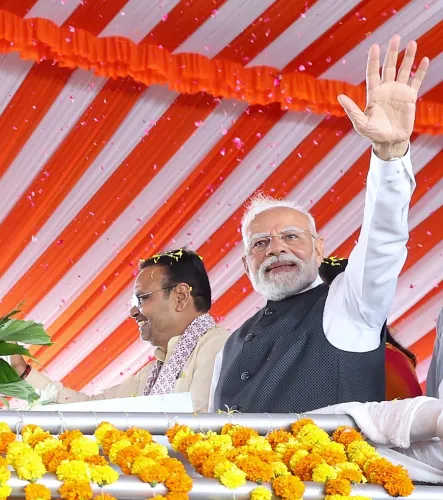
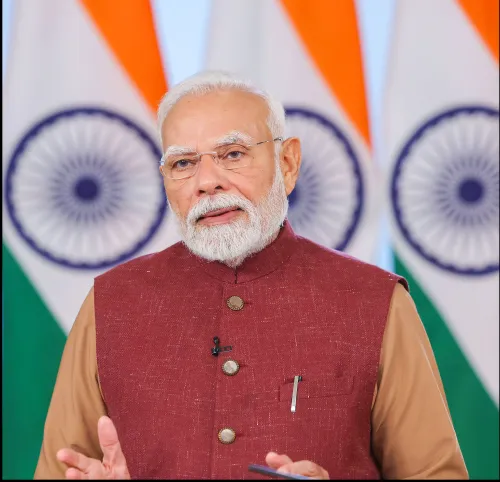
New Delhi, Oct 27 (NationPress) Prime Minister Narendra Modi emphasized the government's pledge to bolster India's domestic food processing capabilities on Monday, highlighting its vital importance in securing national safety, fostering rural growth, and enhancing economic stability.
In response to a post on X by the Finance Minister Nirmala Sitharaman’s Office, PM Modi stated that it is clear that enhancing domestic food processing capacity is a priority for national security.
He remarked, “The Minister points out how initiatives under the ‘One District, One Product’ vision are empowering farmers, creating local job opportunities, and fostering rural self-sufficiency. Check it out!”
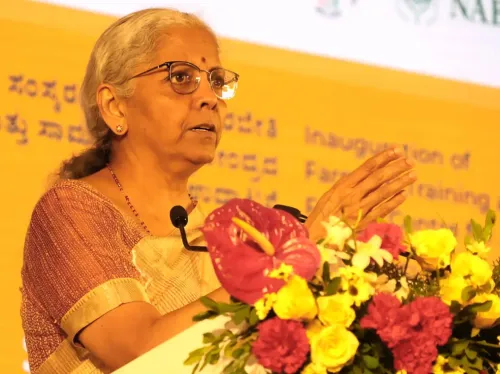
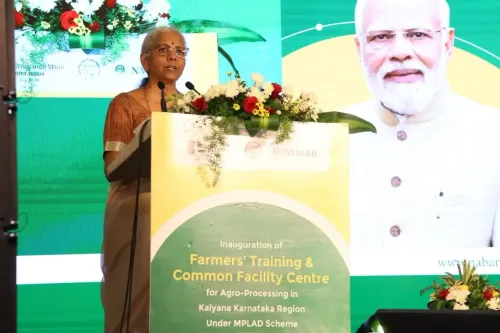
The Finance Minister noted in her article that a transformation in agro-processing is converting farmers in the arid regions of Karnataka into entrepreneurs, turning blocks into manufacturing centers.
“A visit to the beautiful state of Karnataka, which I am privileged to represent in the Council of States, a land evocative of lush green landscapes, waterfalls, ancient hills, verdant valleys, pristine rivers, and a history spanning thousands of years, is always invigorating. This visit was a journey through time, showcasing contrasts, and a profound reminder of our nation’s vast potential,” FM Sitharaman wrote, adding that in a world leaning towards protectionism, enhancing our domestic food processing capacity is essential for national security.
She emphasized that planning for Karnataka’s aspirational districts—Yadgir and Raichur—must consider the notable local differences. This is where the government of India’s 'Aspirational Block Programme' plays a crucial role, targeting not just districts but also addressing sub-district and block-level disparities.
The Finance Minister mentioned that her MPLADS funds were utilized to assist local farmers by bringing agro-processing resources closer to them. An umbrella brand called Kalyana Sampada (Wealth of Kalyana) was established, encouraging each district to identify an agricultural product or a set of products for development into value-added goods.
This initiative is in line with the Prime Minister's vision of the “One District, One Product” program, extending 'Make in India' for our annadatas (farmers). In each district, a farmer producer company (FPC) was selected by NABARD to manage food processing and training units.
In Koppal, where the per capita income is approximately 15 percent below the national average, a multi-fruit processing facility has been established. Despite the district cultivating around 6,000 hectares (ha) of mango, 5,000 ha of papaya, 3,000 ha of guava, and 2,000 ha of tomato, it previously lacked processing infrastructure. This newly established facility is the first of its kind in the district, now processing these fruits into products such as mango juice, dry mango powder, guava nectar, tomato puree, and ginger powder, ensuring farmers benefit from value addition.
However, the unit can process only about 2 percent of the fruits into juice/pulp produced in the district, indicating significant potential for further processing units in the area.
In Raichur, an aspirational district recognized for its substantial pulse production—over 80,000 metric tonnes of red gram and 34,000 metric tonnes of Bengal gram annually—the new processing unit is focused on converting these pulses into arhar dal, chana dal, and a ready-to-make chilla mix. Currently, the unit can process and market only about 1 percent of the total pulse production in the district.
“At least 50 such units would be necessary to process around 50 percent of all dal produced in the district. Therefore, this initiative serves as a model for other FPOs and rural entrepreneurs in the area to follow,” Sitharaman added.
Point of View
It is evident that the government's focus on food processing is a strategic move towards ensuring both economic stability and national security. Empowering farmers through innovative programs not only uplifts rural communities but also positions India to navigate global challenges. The commitment to enhancing domestic capabilities reflects a forward-thinking approach that aligns with the nation’s long-term goals.
NationPress
30 Sept 2026
Frequently Asked Questions
What is the significance of strengthening food processing in India?
Enhancing food processing is crucial for national security, rural prosperity, and economic resilience. It empowers farmers and creates job opportunities.
How does the 'One District, One Product' initiative work?
This initiative encourages each district to identify and develop specific agricultural products into value-added goods, fostering local entrepreneurship.
What role does the government play in supporting farmers?
The government provides financial support and establishes processing units to bring agro-processing capabilities closer to farmers.
Which districts are highlighted in the food processing initiatives?
The initiatives particularly focus on aspirational districts like Yadgir and Raichur in Karnataka.
What are the potential benefits of these food processing units?
These units can significantly increase the value-added products available to farmers, enhancing their income and livelihood.