Defence exports, millets, energy diversity can boost India's self-reliance: Experts

Synopsis
India's defence output has grown five-fold and exports 50 times since 2014 — but the 80th Independence Day conversation goes beyond weapons. Experts are connecting the dots between millet prices, FTA expansion, and E20 fuel to argue that India's self-reliance strategy is now multi-front, and the window to lock it in is narrowing as global supply chains fracture.
Key Takeaways
India's indigenous defence production has grown nearly five-fold since 2014 , with exports to friendly neighbours rising nearly 50 times , according to retired Brigadier Hemant Mahajan .
Millet prices have risen 15–25 per cent in 2025 , reflecting growing domestic and export demand, says Aditya Sesh of the Ministry of Agriculture and Farmers' Welfare .
India's expanding FTA network is seen as a key enabler for agricultural exports, particularly millets used in cereal products currently imported.
Maharashtra 's agro-climatic diversity and the One District One Product initiative are highlighted as levers for higher farm-gate value.
Experts advocate a diversified energy mix — E20 ethanol blending , solar , wind , hydrogen , and nuclear — to guard against global supply shocks.
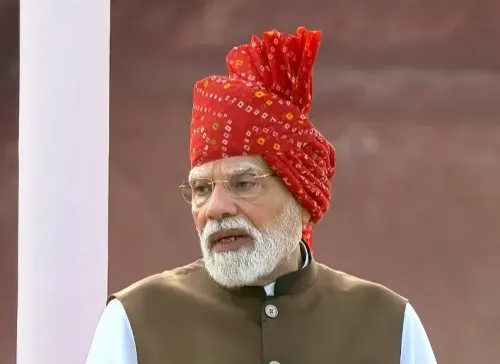
Prime Minister Narendra Modi's emphasis on indigenous defence production, agricultural exports — particularly millets — and energy diversification can significantly bolster India's economic and strategic self-reliance amid rising global uncertainties, experts said on 15 August 2025, reacting to his address on the 80th Independence Day.
Defence Manufacturing: A Five-Fold Leap
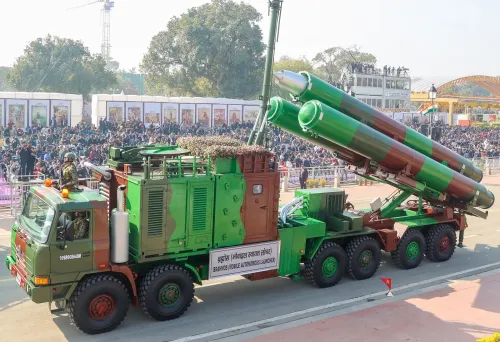
Retired Brigadier Hemant Mahajan, a defence analyst, said India's expanding indigenous defence sector was delivering concrete strategic dividends. According to him, domestic defence production has grown nearly five-fold compared with 2014 levels, while exports to neighbouring friendly nations have surged nearly 50 times over the same period.
'This rise in both domestic manufacturing and exports strengthens India's strategic capabilities and reduces dependence on external suppliers,' Mahajan said. The scale of the shift, he argued, marks a structural — not merely incremental — change in India's defence posture. Notably, this growth comes as several traditional defence exporters face supply-chain constraints, opening new markets for Indian-made equipment.
Millets: From Domestic Staple to Export Commodity
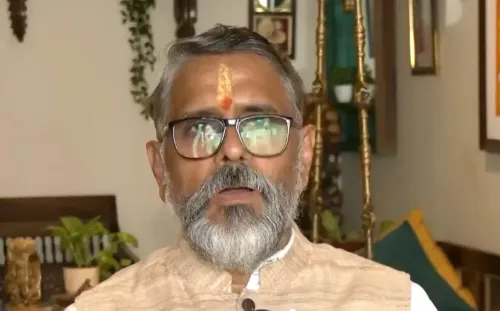
Chartered Accountant Aditya Sesh, a member of the Ministry of Agriculture and Farmers' Welfare, said the recent expansion of India's free trade agreement (FTA) network could unlock substantial opportunities for agricultural products, with millets at the forefront.
Sesh noted that millets — which require comparatively less water, carry a longer shelf life, and deliver strong nutritional value — hold significant potential for both domestic consumption and international export. 'Millets can not only be consumed within India but can also be exported and used in various types of cereal bars that we today import,' he said.
Rising market acceptance is already visible in pricing: millet prices have increased by around 15–25 per cent this year, according to Sesh. He also highlighted Maharashtra's role as a potential agricultural growth engine, citing its diverse agro-climatic conditions and output across foodgrains, fruits, and vegetables. Greater use of geographical indication (GI) tags and the One District One Product initiative, he said, could help farmers capture better value for their produce.
Energy Security: Building a Diversified Portfolio
On the energy front, Sesh stressed that India must develop multiple energy sources simultaneously to insulate itself from global supply disruptions. He backed the scaling up of ethanol-blended fuel, including the E20 standard, alongside accelerated expansion of solar, wind, hydrogen, and nuclear energy.
'Weaponisation of every article, every produce, every product is being done,' Sesh said, underlining the urgency of shielding India's sovereignty from external economic pressure. This comes amid a broader global trend of resource nationalism, where critical commodities — from rare earths to food grains — are increasingly used as geopolitical leverage.
The Bigger Picture
Taken together, the expert assessments point to a convergence of strategic imperatives: a defence sector less reliant on imports, an agriculture sector pivoting toward value-added exports, and an energy mix insulated from single-source dependency. As global supply chains remain fragile and geopolitical fault lines deepen, India's ability to execute across all three fronts simultaneously will be the defining test of its self-reliance ambitions in the years ahead.
Point of View
Not just what it claims. Linking defence export growth, millet pricing, and energy blending under a single 'self-reliance' frame is politically convenient — but the underlying data on defence production and millet adoption does show real momentum. The harder question is sequencing: India cannot simultaneously be a defence exporter, a millet export champion, and an energy transition leader without institutional bandwidth that its bureaucracy has historically struggled to sustain across sectors. The 'weaponisation of commodities' warning from Sesh is the most underreported signal here — it suggests that India's strategic planners are thinking about food and energy not just as economic inputs but as geopolitical vulnerabilities, which is a significant shift in framing.
NationPress
30 Sept 2026
Frequently Asked Questions
How much has India's defence production grown since 2014?
According to retired Brigadier Hemant Mahajan, India's indigenous defence production has grown nearly five-fold compared with 2014 levels. Exports to neighbouring friendly countries have risen nearly 50 times over the same period.
Why are millets being highlighted as an export opportunity for India?
Millets require less water, have a longer shelf life, and offer strong nutritional value, making them competitive in global markets. Aditya Sesh of the Ministry of Agriculture and Farmers' Welfare noted that India currently imports cereal bars that could be made from domestically grown millets and exported instead.
What is driving the rise in millet prices in 2025?
Millet prices have increased by around 15–25 per cent in 2025, reflecting rising domestic acceptance and growing export interest. The expansion of India's FTA network is expected to further open international markets for the crop.
What energy sources are experts recommending for India's energy security?
Experts advocate a diversified portfolio including ethanol-blended fuel up to the E20 standard, along with accelerated development of solar, wind, hydrogen, and nuclear energy. The goal is to reduce India's exposure to disruptions in any single global energy supply chain.
What is the One District One Product initiative and how does it help farmers?
The One District One Product initiative promotes each district's signature agricultural or craft product to improve market access and value realisation for local producers. Combined with geographical indication (GI) tags, it is seen as a tool to help Indian farmers — particularly in Maharashtra — secure better prices for their produce.