Pralhad Joshi Marks World Food Day, Calls for Hunger-Free India
Synopsis
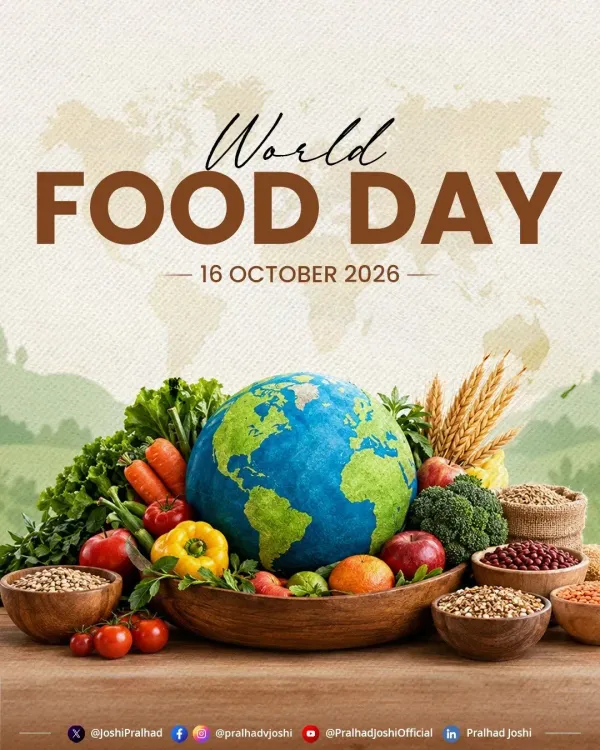
Union Consumer Affairs Minister Pralhad Joshi marked World Food Day on 16 October 2026 with a bilingual English-Kannada appeal for food security, zero food wastage, and a hunger-free India, invoking the spirit of Goddess Annapurna and the labour of Indian farmers.
Key Takeaways
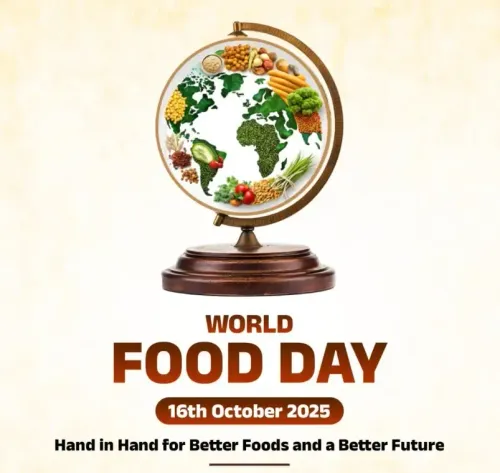
Pralhad Joshi , Union Minister of Consumer Affairs, Food and Public Distribution, marked World Food Day on 16 October 2026 with a public appeal in English and Kannada.
He invoked a Sanskrit verse to Goddess Annapurna and called for an India where 'no one suffers from hunger.' Joshi urged citizens to reduce food waste and honour the labour of annadata farmers.
India's food security architecture rests on the National Food Security Act (2013) and the PM Garib Kalyan Anna Yojana (2020) , which provides free grains to vulnerable households.
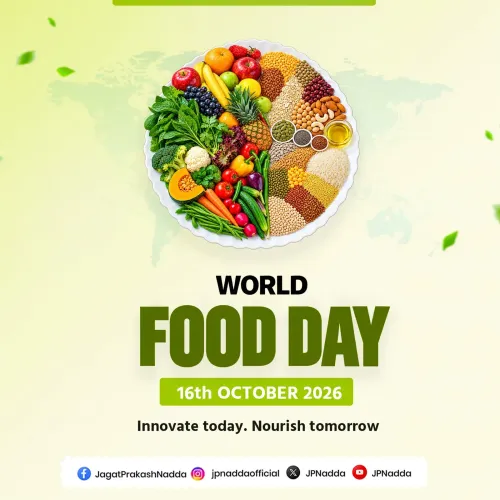
World Food Day is an annual FAO observance held every 16 October , aligned with India's SDG 2 Zero Hunger commitments.
On a day the world pauses to reckon with hunger, Union Consumer Affairs Minister Pralhad Joshi used World Food Day — 16 October 2026 — to call for a renewed national commitment to food security, sustainable agriculture, and the simple but radical idea that no Indian should go to bed hungry.
Posting in both English and Kannada, Joshi opened with a Sanskrit verse invoking Goddess Annapurna — 'Annapurne sadapurne, Shankara prana vallabhe' (O Annapurna, ever-full, beloved of Shankara) — before calling on citizens to 'build an awareness about the right to nutritious food for every person and the creation of a hunger-free society.' He urged Indians not to waste food, to honour the labour of farmers — annadata raitaru — and to collectively contribute to a 'yaaru hasivininda baladada Bharata' (an India where no one suffers from hunger).
Why World Food Day Carries Extra Weight for India's Food Minister
The call is not merely ceremonial when it comes from the minister who oversees India's public distribution system. The National Food Security Act of 2013 remains the legal backbone of India's hunger-reduction architecture, guaranteeing subsidised food grains to priority households — a commitment that underpins the daily meals of hundreds of millions of Indians.
That framework was stress-tested and expanded during the pandemic, when the PM Garib Kalyan Anna Yojana, launched in 2020, extended free food grains to vulnerable populations at scale. Both schemes reflect India's broader alignment with the United Nations' SDG 2 Zero Hunger goal, championed globally each year by the Food and Agriculture Organization (FAO), which established World Food Day in 1979.
The Annadaata Argument: Respecting the Farmer's Labour
Joshi's emphasis on not wasting food — and on respecting the annadata, the farmer who provides sustenance — threads together two distinct policy pressures. Post-harvest food loss remains a persistent challenge in India's supply chain, draining the gains of agricultural productivity before food even reaches consumers. Reducing that loss is as much a food-security lever as expanding production.
The minister's framing connects individual behaviour — don't waste a meal — to a national ambition: a hunger-free India. It is the kind of message that lands differently from a cabinet minister who controls the levers of the public distribution system than from any other voice.
As India approaches its next budget session, the ministry's follow-through — on food wastage reduction targets, National Food Security Act coverage, and procurement policy — will test whether this World Food Day message translates into measurable policy movement.
Point of View
A cabinet minister publicly anchoring himself to zero-hunger goals sets an expectation of policy follow-through. The invocation of the farmer as annadata also signals continued BJP messaging around agrarian welfare — a constituency the party has worked hard to retain after the farm-law controversy. Linking individual food-waste behaviour to a national hunger-free mission is a deft framing that turns a global observance into a domestic political commitment.
NationPress
16 Oct 2026
Frequently Asked Questions
What is World Food Day and when is it observed?
World Food Day is observed every year on 16 October to raise global awareness about hunger, food security, and sustainable agriculture. It was established by the Food and Agriculture Organization (FAO) of the United Nations in 1979 .
What did Pralhad Joshi say on World Food Day 2026?
Pralhad Joshi called for renewed commitment to food security, sustainable agriculture, and reducing food wastage. He posted in English and Kannada, urging citizens to honour farmers' labour and work toward an India where no one goes hungry.
What is the National Food Security Act?
The National Food Security Act , enacted in 2013 , provides legal entitlement to subsidised food grains for priority households across India. It is the primary legislative framework underpinning India's public distribution system.
What is PM Garib Kalyan Anna Yojana?
The PM Garib Kalyan Anna Yojana was launched in 2020 to provide free food grains to vulnerable populations in India, significantly expanding the reach of the public distribution system during and after the pandemic.
Who oversees India's food security and public distribution system?
The Ministry of Consumer Affairs, Food and Public Distribution , currently headed by Union Minister Pralhad Joshi , oversees India's food security framework including the National Food Security Act and the public distribution system.