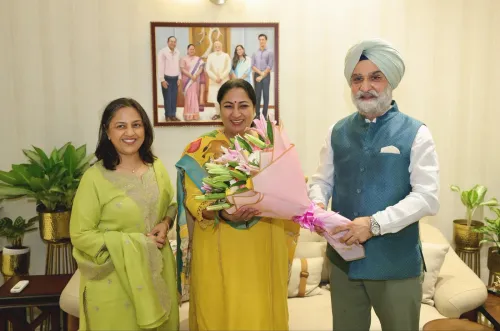
CM Rekha Gupta Meets Actor Rakesh Bedi at Delhi Secretariat
Synopsis
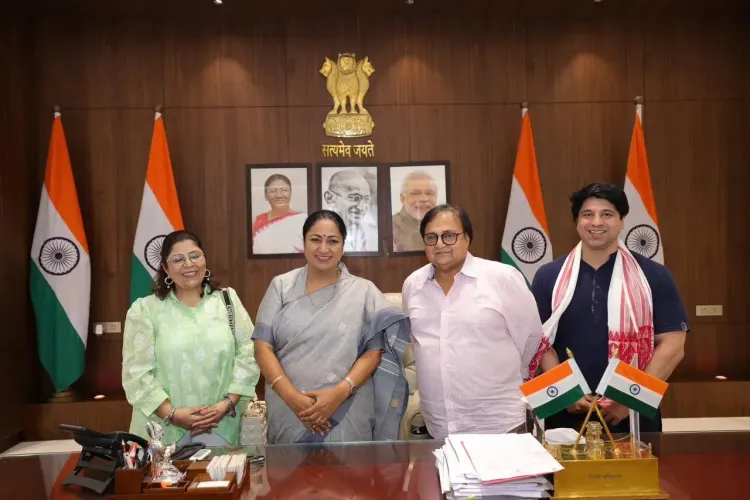
Delhi Chief Minister Rekha Gupta met veteran actor Rakesh Bedi at the Delhi Secretariat on 25 May 2026, discussing the capital's growing ambitions as a hub for entertainment and the creative arts, with possible policy follow-up on film incentives and cultural infrastructure.
Key Takeaways
Delhi Chief Minister Rekha Gupta met veteran actor Rakesh Bedi at the Delhi Secretariat on 25 May 2026 .
Gupta described Bedi as 'a distinguished Delhiite' whose work commands admiration across generations.
Bedi's role in Dhurandhar was highlighted as having resonated particularly with younger audiences.
The meeting included discussion on Delhi's growing stature as a hub for entertainment and the creative arts.
No specific policy announcements were made, but the engagement signals possible follow-up on film incentives and cultural infrastructure.
Delhi administrations have historically used such meetings to advance the capital's cultural economy branding.
Delhi Chief Minister Rekha Gupta met veteran actor Rakesh Bedi at the Delhi Secretariat on Monday, 25 May 2026, in a meeting that touched on the capital's ambitions as a hub for entertainment and the creative arts. Gupta described Bedi as 'a distinguished Delhiite' whose work continues to command admiration across generations.
Context
The meeting brought together the head of the Delhi government and one of Hindi cinema and television's most recognisable faces. Gupta noted that Bedi's recent role in Dhurandhar has 'particularly resonated with younger audiences', signalling the actor's continued relevance in a rapidly changing media landscape. The encounter was held at the official administrative headquarters of the Delhi government, lending it an institutional character beyond a routine courtesy call.
Policy Backdrop
Delhi administrations across successive governments have periodically engaged with artists and entertainers to project the capital as a centre of India's cultural economy. Such outreach typically accompanies broader efforts to attract film and media production, position Delhi alongside Mumbai as a creative destination, and boost tourism through cultural branding. The current administration has signalled interest in exploring incentives for the entertainment sector, though no specific policy announcements have been made following this meeting.
India's film and television industry generates significant employment and revenue, and state governments have increasingly competed to offer studio infrastructure, location incentives, and event hosting. Delhi's dense population, heritage sites, and connectivity make it a natural candidate for expanded production activity.
Stakeholders and Impact
Film industry professionals and creative sector workers in Delhi stand to benefit most directly from any policy momentum generated by such high-level engagements. For veteran artists like Rakesh Bedi, whose career spans decades of television and cinema, institutional recognition from the city's top executive carries symbolic weight for the broader artistic community. Younger creators and independent producers working out of Delhi may also watch closely for signals about government support for local content production.
Bedi is widely remembered by audiences across age groups for his comedic and character roles, and his continued activity in projects like Dhurandhar underscores the sustained demand for experienced performers in contemporary productions.
What's Next
The Chief Minister's explicit mention of Delhi's 'growing stature as a hub for entertainment and the creative arts' suggests the meeting may be a precursor to formal policy announcements. Observers will watch for follow-up moves such as film incentive schemes, investment in studio infrastructure, or government-backed cultural events designed to consolidate Delhi's position in India's creative economy. Whether this engagement translates into concrete policy or remains a symbolic gesture of goodwill toward the arts community will become clearer in the weeks ahead.
Point of View
Cross-generational figure to signal the BJP-led Delhi government's intent to position the capital as a serious player in India's entertainment economy. By referencing Bedi's contemporary work in Dhurandhar, Gupta frames the outreach as forward-looking rather than merely nostalgic. The move fits a broader pattern of state governments competing for a share of the film and media production pie that has long been dominated by Mumbai. Whether this translates into tangible policy — studio infrastructure, location incentives, or a dedicated creative economy fund — will determine if the engagement has lasting impact or remains symbolic goodwill.
NationPress
9 Oct 2026
Frequently Asked Questions
Why did Delhi CM Rekha Gupta meet actor Rakesh Bedi?
Chief Minister Rekha Gupta met Rakesh Bedi at the Delhi Secretariat to honour his contribution to Indian entertainment and to discuss Delhi's ambitions as a hub for the creative arts and entertainment industry.
What is Dhurandhar, the project mentioned by CM Rekha Gupta?
Dhurandhar is a recent project in which Rakesh Bedi has appeared; CM Gupta noted that his role in it has particularly resonated with younger audiences, though specific details of the production were not elaborated upon in her post.
Is Delhi planning new policies for the film and entertainment industry?
No formal policy announcements were made following the meeting, but CM Gupta's remarks about Delhi's 'growing stature as a hub for entertainment' suggest possible future announcements on film incentives or cultural infrastructure.
Where is the Delhi Secretariat located?
The Delhi Secretariat is the official administrative headquarters of the Delhi government, located in New Delhi , where official government meetings and functions are conducted.