CM Rekha Gupta pays tribute to Jyotiba Phule
Synopsis
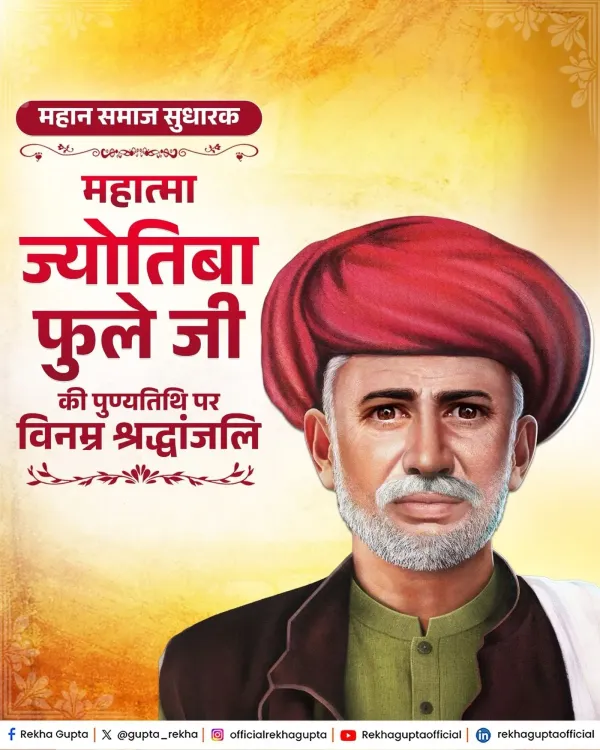
Delhi Chief Minister Rekha Gupta paid tribute to Mahatma Jyotiba Phule on his death anniversary, calling him a pioneer of social justice and women's education. Inspired by PM Narendra Modi's Sabka Saath, Sabka Vikas, she said Delhi would put Phule's ideals of schooling, equal opportunity and empowerment of the deprived into practice.
Key Takeaways
Delhi Chief Minister Rekha Gupta paid tribute to Mahatma Jyotiba Phule on his death anniversary on 28 November 2026.
She called Phule a pioneer of social justice and women's education and offered a humble homage on his punyatithi.
She said Delhi is committed to his ideals of education, equal opportunity and empowerment of the deprived.
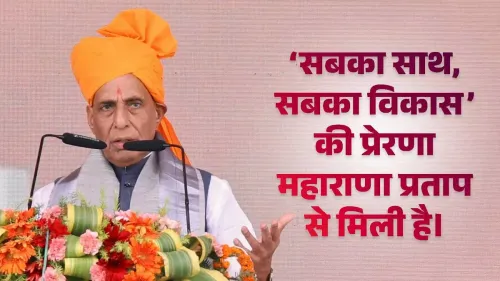
The pledge was framed as inspired by Prime Minister Narendra Modi's Sabka Saath, Sabka Vikas, articulated after 2014.
Phule founded a school for girls in Pune in 1848 and established the Satyashodhak Samaj in 1873.
On 28 November 2026, Delhi Chief Minister Rekha Gupta turned a death anniversary into a governing pledge: honour Mahatma Jyotiba Phule, pioneer of social justice and women's education, by putting his ideals on the ground in Delhi. She said the work would be inspired by Prime Minister Narendra Modi's mantra of Sabka Saath, Sabka Vikas — together with all, development for all.
In Hindi she offered a vinamra shraddhanjali (humble homage) on Phule's punyatithi, calling him samajik nyay aur nari shiksha ke agradoot — the forerunner of social justice and women's education. The next line was a commitment, not a bouquet: education, equal opportunity, and the empowerment of the deprived would be pursued in the capital under that national slogan.
Phule's 1848 girls' school and the Satyashodhak Samaj
Jyotiba Phule founded the first school for girls in Pune in 1848, a radical act in a society that kept most women and lower-caste communities outside the classroom. In 1873 he established the Satyashodhak Samaj to challenge caste hierarchy and demand education for those shut out of it.
That double legacy — girls' schooling and anti-caste organising — is why Indian political leaders return to his death anniversary each year. The tribute is never only historical. It is a claim on the present: who gets a desk, and who still waits.
Delhi's pledge on education and the deprived
Modi set out Sabka Saath, Sabka Vikas after assuming office in 2014 as a governing principle of inclusive growth. Gupta's post places Delhi's education and empowerment work inside that vocabulary, aligning the capital's stated priorities with the Centre's inclusion frame for women, girls and historically marginalized communities.
Phule opened a schoolhouse in Pune when that act was rebellion. The measure of this tribute will be whether Delhi's next school door opens as wide.
Point of View
Then places Delhi's response under Modi's Sabka Saath, Sabka Vikas. That is a statement of alignment between the national capital's stated priorities and the Centre's governing slogan since 2014. The policy arc to watch is whether Delhi's education and empowerment machinery actually widens access for women, girls and disadvantaged groups — the constituencies Phule organised around.
NationPress
28 Nov 2026
Frequently Asked Questions
When is Mahatma Jyotiba Phule's death anniversary?
Mahatma Jyotiba Phule's death anniversary, or punyatithi, is observed on 28 November. Delhi Chief Minister Rekha Gupta issued her tribute on that date in 2026.
Who was Mahatma Jyotiba Phule?
Mahatma Jyotiba Phule was a 19th-century social reformer from Maharashtra who pioneered girls' education and campaigned against caste discrimination. He founded a school for girls in Pune in 1848 and established the Satyashodhak Samaj in 1873.
What did Rekha Gupta say on Jyotiba Phule punyatithi?
She offered a humble tribute to Phule as a pioneer of social justice and women's education. Inspired by PM Narendra Modi's Sabka Saath, Sabka Vikas, she said Delhi is committed to implementing his ideals of education, equal opportunity and empowerment of the deprived.
What is Sabka Saath, Sabka Vikas?
Sabka Saath, Sabka Vikas is Prime Minister Narendra Modi's guiding principle of inclusive development, set out after he assumed office in 2014. It is commonly rendered as together with all, development for all.
What school did Jyotiba Phule found in 1848?
Jyotiba Phule founded the first school for girls in Pune in 1848. That act is central to his reputation as a pioneer of women's education in India.