CM Rekha Gupta Salutes CRPF, CoBRA on Police Commemoration Day
Synopsis
On Police Commemoration Day, Delhi CM Rekha Gupta shared Home Minister Amit Shah's tribute to CoBRA and CRPF jawans and Chhattisgarh Police, honouring their indomitable courage in the decades-long campaign against Naxalism in central India.
Key Takeaways
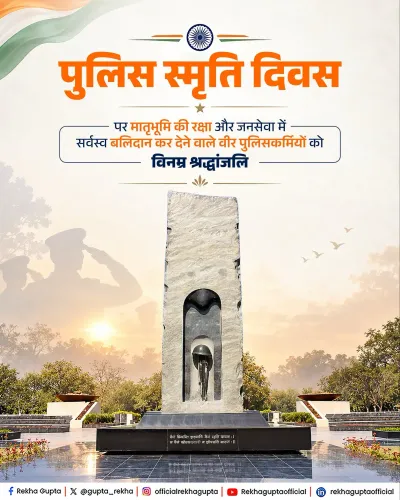
Delhi Chief Minister Rekha Gupta marked Police Commemoration Day (October 21, 2026) by sharing a quote from Home Minister Amit Shah praising security forces.
Amit Shah credited CoBRA and CRPF jawans with displaying 'indomitable courage' in counter-Naxal operations.
Chhattisgarh Police was separately recognised for 'extraordinary valour' in the same campaign.
CoBRA (Commando Battalion for Resolute Action) is the CRPF's specialised jungle-warfare unit deployed in Bastar and other LWE districts.
Police Commemoration Day is observed annually on October 21 to honour police and paramilitary personnel who died in the line of duty.
The Union government has pursued a combined security-and-development strategy against Left Wing Extremism since the early 2000s.
Decades of jungle warfare, ambushes, and silent sacrifice converged into a single moment of national salute on Police Commemoration Day, Wednesday, October 21, 2026, as Delhi Chief Minister Rekha Gupta shared a powerful tribute quoting Union Home Minister Amit Shah, honouring the forces that have fought to dismantle Naxalism from India's heartland.
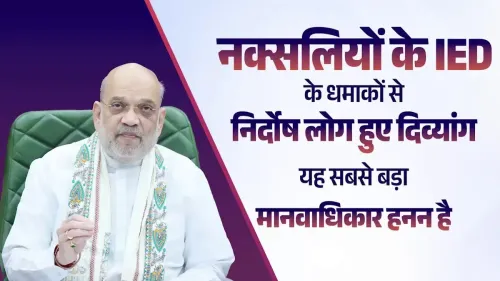
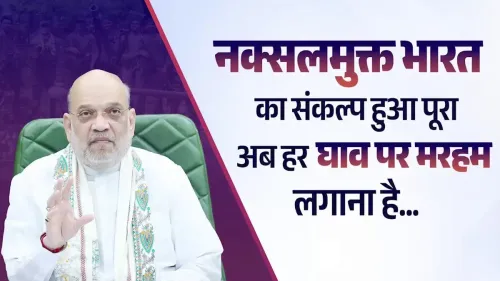
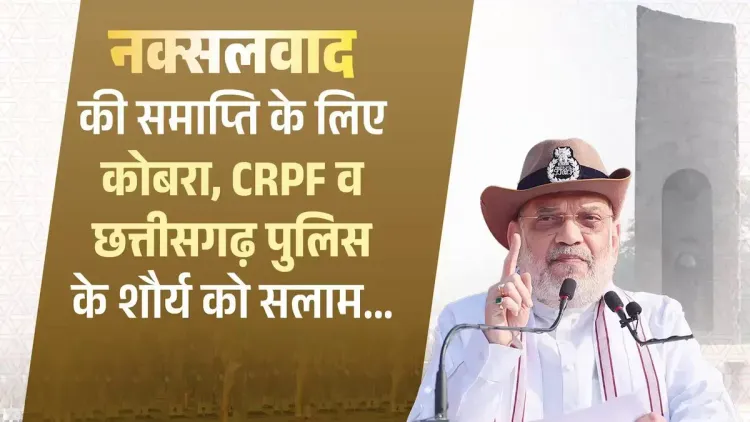
Quoting Home Minister Amit Shah, CM Gupta's post read: 'दशकों पुराने नक्सलवाद को समाप्त करने में कोबरा और CRPF के जवानों ने अदम्य साहस का परिचय दिया' — 'In eliminating decades-old Naxalism, the CoBRA and CRPF jawans displayed indomitable courage' — and further acknowledged that Chhattisgarh Police had shown extraordinary valour in the same campaign.
CoBRA and CRPF: the sharp edge of counter-Naxal operations
The Commando Battalion for Resolute Action (CoBRA) is the CRPF's elite jungle-warfare unit, raised specifically to take the fight into the dense forests of Bastar and other Left Wing Extremism (LWE)-affected districts of central India. Operating in terrain that heavily favours an entrenched insurgency, CoBRA battalions have led some of the most strategically difficult counter-insurgency missions the country has seen since independence.
The broader Central Reserve Police Force (CRPF) has been the federal government's primary instrument in this theatre for decades, with successive expansions of its battalions matching the scale of the Maoist challenge across Chhattisgarh, Jharkhand, Odisha, and neighbouring states.
Chhattisgarh Police's frontline role in Bastar
Alongside central forces, the Chhattisgarh Police — and particularly its district reserve guards and specialised anti-Naxal units — have borne the daily cost of patrolling terrain that has historically been among the most lethal for security personnel in India. Home Minister Shah's quoted words specifically singled out the state force's 'extraordinary valour,' a recognition of how much of this campaign has been fought by officers from the very communities most affected by LWE violence.
Police Commemoration Day and the weight it carries
Police Commemoration Day is observed every year on October 21, marking the 1959 ambush in Hot Springs, Ladakh, in which ten Indian police personnel were killed by Chinese forces — the first significant loss after the 1950 annexation of Tibet. Over time, the day expanded into a national moment to honour all police and paramilitary personnel who have fallen in the line of duty, making it the fitting occasion for tributes to those lost in the long counter-Naxal campaign.
The Union government has, since the early 2000s, pursued a twin-track approach to LWE — sustained security operations combined with accelerated infrastructure and development spending in affected districts — with official assessments pointing to a gradual reduction in the geographic footprint of Maoist influence over the years.
The bravery cited today did not happen in a vacuum. Every metre of ground taken back from armed insurgency in Chhattisgarh's forests came at a cost measured in lives — and Police Commemoration Day exists precisely so that cost is never forgotten.
Point of View
CM Gupta aligns Delhi's BJP leadership with the Centre's internal-security messaging at a symbolically weighted moment. The specific naming of both CoBRA-CRPF and Chhattisgarh Police signals a deliberate effort to credit both federal and state machinery, reinforcing cooperative federalism in the security domain. Whether the campaign has crossed a true inflection point or remains in a prolonged endgame will be tested by official LWE-district counts in the months ahead.
NationPress
21 Oct 2026
Frequently Asked Questions
What is Police Commemoration Day in India?
Police Commemoration Day is observed on October 21 every year to honour Indian police and paramilitary personnel who have died in the line of duty. It traces its origin to October 21, 1959 , when ten Indian police personnel were killed in an ambush by Chinese forces in Hot Springs, Ladakh .
What is CoBRA in the CRPF?
CoBRA (Commando Battalion for Resolute Action) is an elite unit of the Central Reserve Police Force (CRPF) trained specifically for jungle warfare and counter-insurgency operations against Maoist groups in central India, particularly in Chhattisgarh's Bastar region.
What did Amit Shah say about Naxalism on Police Commemoration Day 2026?
Home Minister Amit Shah stated that CoBRA and CRPF jawans displayed 'indomitable courage' in eliminating decades-old Naxalism, and that Chhattisgarh Police showed 'extraordinary valour' in the campaign. The remarks were shared by Delhi CM Rekha Gupta on her official social media on October 21, 2026 .
What is the government's approach to fighting Naxalism in Chhattisgarh?
The Union government has followed a combined security-and-development strategy against Left Wing Extremism since the early 2000s, expanding CRPF battalions and CoBRA units while simultaneously increasing infrastructure spending in LWE-affected districts like those in Bastar, Chhattisgarh .
Why did Delhi CM Rekha Gupta post about Naxalism?
Delhi CM Rekha Gupta posted on Police Commemoration Day (October 21, 2026) to honour the security forces involved in counter-Naxal operations, sharing a quote from Home Minister Amit Shah praising CoBRA, CRPF , and Chhattisgarh Police for their courage.