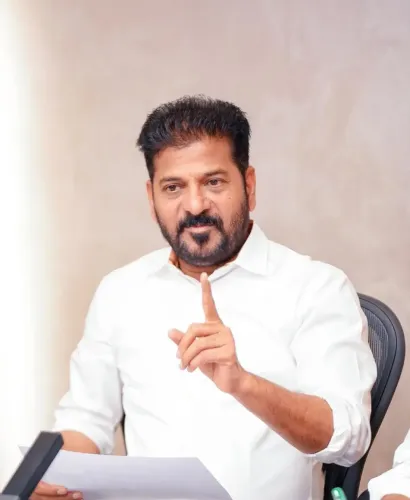
CM Revanth Reddy Asserts Palamuru Roots, Defends Right to Govern
Synopsis
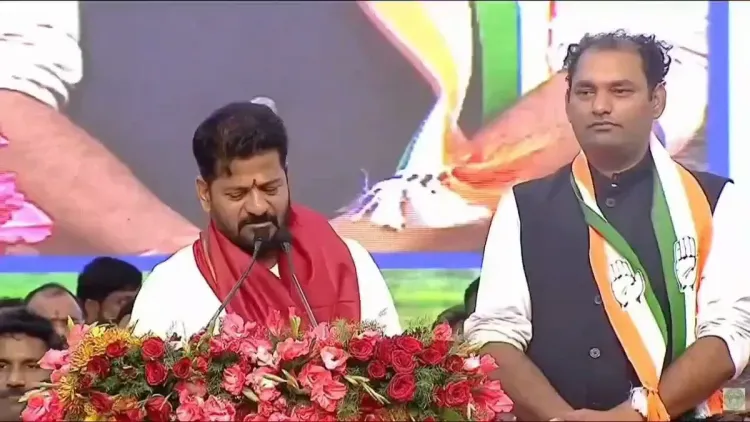
Telangana Chief Minister A. Revanth Reddy on 6 July 2026 invoked his working-class Palamuru origins on X, rejecting the notion that those without landed ancestry cannot govern, and pledging to dismantle elite arrogance against Dalits, tribals, backward classes and minorities.
Key Takeaways
Revanth Reddy posted in Telugu on 6 July 2026 , asserting his right to govern despite lacking elite or landed ancestry.
He used the hashtag #ZPTCToCM to highlight his political journey from a grassroots Zilla Parishad representative to Chief Minister.
He cited his upbringing in Palamuru (Mahbubnagar) among Dalits, tribals, backward classes, minorities and the poor as the foundation of his governance philosophy.
The post specifically named manual-labour occupations — basket-carrying, spade work, pickaxe work — associated with lower-caste communities in Palamuru.
He called for burying the 'arrogance' that people from such backgrounds are unfit for administration.
The messaging aligns with the Telangana Congress government's stated priority of welfare for SC, ST, BC and minority communities since its December 2023 election victory.
Telangana Chief Minister A. Revanth Reddy on Monday, 6 July 2026, invoked his agrarian, working-class origins in a pointed post on X, pushing back against critics who question whether someone without landed ancestry or elite lineage has the authority to govern. The post, carrying the hashtag #ZPTCToCM, drew a direct line from his Palamuru roots to his current office.
Context
Writing in Telugu, Revanth Reddy opened with a sharp rebuke: 'గడీలు లేని వాడికి, తాతలు దొరలు కాని వాడికి పెత్తనం ఏం తెలుసు' — 'What does someone without a mansion, whose forefathers were not landlords, know about governance?' He was quoting the taunt directed at him, only to reject it. He countered that he knows how to 'plough the field and sow the seed,' a metaphor for hands-on, ground-level understanding of public administration.
The hashtag #ZPTCToCM — shorthand for 'Zilla Parishad Territorial Constituency member to Chief Minister' — underscores his political journey from a grassroots local-body representative to the state's top executive. It is a narrative device that frames his rise as proof that governance is not the preserve of the traditionally privileged.
Policy Backdrop
Revanth Reddy grew up in Palamuru, the popular name for the Mahbubnagar region of southern Telangana — an area with a predominantly agrarian economy, historically associated with migration, drought, and manual labour. He describes growing up among Dalits, tribals, backward classes, minorities, and the poor, watching their hardships at close quarters.
The Congress government he leads has, since assuming office in December 2023, repeatedly stated its priority of delivering welfare to Scheduled Castes, Scheduled Tribes, Backward Classes and minority communities — commitments that formed the core of the party's campaign against the previous BRS administration. His post reinforces that ideological positioning.
The phrase 'తట్ట పని, పార పని, పలుగు పనికి పనికొచ్చే పాలమూరు బిడ్డలు' — 'Children of Palamuru who are fit for basket-carrying work, spade work, and pickaxe work' — directly references the manual occupations associated with lower-caste and landless communities. He argues that such people being deemed unfit for governance is an arrogance that must be 'buried.'
Stakeholders and Impact
The post speaks directly to Dalit, tribal, OBC, and minority voters in Telangana — communities that collectively constitute a substantial share of the state's electorate. By anchoring his identity in their lived experience, Revanth Reddy is reinforcing his government's social-justice credentials at a time when local-body elections, including ZPTC seats, are in political focus.
The messaging also targets the landed, upper-caste establishment — a coded critique of the entrenched power structures that historically dominated Telangana's political economy. Indian politicians across parties routinely deploy personal narratives of humble origins to establish authenticity with rural and lower-caste voters, but the specificity of Revanth Reddy's language — naming the tools of manual labour — is notably direct.
What's Next
The #ZPTCToCM framing suggests the Chief Minister is actively building a political biography around social mobility ahead of what observers expect will be a period of intensified grassroots outreach. Any forthcoming state budget announcements or welfare scheme expansions targeting SC, ST, BC and minority communities would give policy substance to the identity politics on display here. Whether this messaging translates into concrete programme announcements or serves primarily as electoral positioning will become clearer in the weeks ahead.
Point of View
Designed to consolidate his image as a product of Telangana's most marginalised communities at a moment when local-body elections are approaching. The #ZPTCToCM hashtag is not merely biographical — it is a strategic counter-narrative against opponents who may seek to delegitimise his authority on grounds of social background. By naming the specific tools of manual labour and the communities associated with them, he signals to Dalit, tribal and OBC voters that his governance instincts are rooted in their reality. This fits a broader pattern across Indian politics where leaders from non-elite backgrounds aggressively foreground their origins to neutralise upper-caste or landed-elite challengers.
NationPress
5 Oct 2026
Frequently Asked Questions
What does #ZPTCToCM mean in Revanth Reddy's post?
#ZPTCToCM stands for 'Zilla Parishad Territorial Constituency member to Chief Minister,' referencing Revanth Reddy's political journey from a grassroots local-body representative to the top executive of Telangana.
What is Palamuru and why is it significant to Revanth Reddy?
Palamuru is the popular name for the Mahbubnagar region in southern Telangana, known for its agrarian economy and history of manual labour and migration. It is Revanth Reddy's native area and he frequently invokes it to establish his working-class credentials.
What did Revanth Reddy say in his July 2026 X post?
He rejected the taunt that someone without a mansion or landlord ancestors cannot understand governance, asserting that he knows how to plough fields and sow seeds, and that the arrogance dismissing Palamuru's working-class children from governance must be buried.
Which communities does Revanth Reddy say he grew up among?
He stated he grew up among Dalits, tribals, backward classes, minorities and the poor, watching their hardships — a claim he uses to frame his governance as rooted in their lived experience.
When did the Telangana Congress government come to power?
The Indian National Congress, led by Revanth Reddy, won the Telangana assembly elections and assumed office in December 2023 , replacing the previous BRS administration.