CM Revanth Reddy Discusses T-Fiber Rollout With Scindia
Synopsis
Telangana CM Revanth Reddy met Union Communications Minister Scindia via video conference on 27 May 2026 to discuss T-Fiber internet deployment to every village under the Amended BharatNet Programme, pressing for faster fund releases, a swift project agreement, and a clear policy on ring-network asset transfers to Digital Bharat Nidhi.
Key Takeaways
Telangana CM Revanth Reddy held a video conference with Union Minister Jyotiraditya Scindia on 27 May 2026 on T-Fiber deployment under the Amended BharatNet Programme .
Key issues raised include expediting the project agreement and releasing pending central funds for the programme.
The meeting discussed transferring mandal-to-gram panchayat ring network assets to the Digital Bharat Nidhi with a clear policy framework.
Scindia assured the central government's full cooperation in implementing the project.
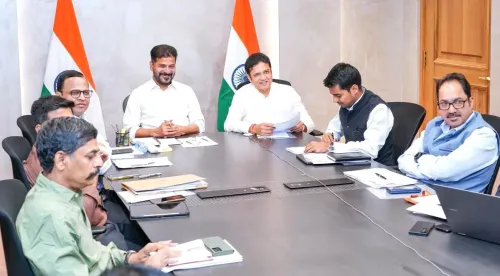
Telangana Minister Sridhar Babu and Chief Secretary Ramakrishna Rao participated in the meeting alongside senior officials.
T-Fiber aims to bring broadband internet to every village in Telangana through integration with the national BharatNet framework.
Telangana Chief Minister A. Revanth Reddy held a video conference with Union Communications Minister Jyotiraditya Scindia on Wednesday, 27 May 2026, to discuss the deployment of T-Fiber internet to every village in the state under the Amended BharatNet Programme (ABP). The meeting focused on accelerating project agreements, releasing pending funds, and establishing a clear policy for transferring ring-network assets to the Digital Bharat Nidhi.
Context
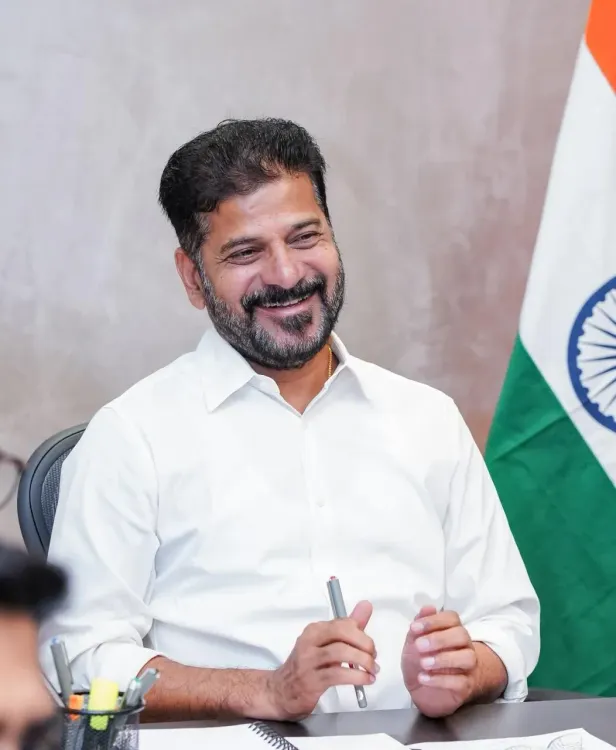
In the post, Chief Minister Revanth Reddy wrote in Telugu: 'ప్రతి గ్రామానికి టీ-ఫైబర్ ఇంటర్నెట్ ను అమెండెడ్ భారత్ నెట్ కార్యక్రమం కింద అమలు చేయాలన్న అంశం పై' — meaning, 'on the subject of implementing T-Fiber internet for every village under the Amended BharatNet Programme.' He stated that he raised several key issues with Scindia, including the swift conclusion of the project agreement and the expedited release of pending funds. Scindia assured that the central government would extend full cooperation for the project's implementation.
The meeting was also attended by Telangana Minister Sridhar Babu, Chief Secretary Ramakrishna Rao, and other senior officials, signalling the state government's institutional commitment to the initiative.
Policy Backdrop
BharatNet, originally launched as the National Optical Fibre Network in 2011, is a central government scheme designed to connect rural gram panchayats with broadband optical fibre infrastructure. Phase II, approved in 2017, expanded the programme through state-led models and additional funding mechanisms, including public-private partnerships. The scheme has since evolved, with states adapting the framework to local network architectures.
T-Fiber is Telangana's state-level rural broadband initiative that seeks integration with the national BharatNet framework to extend last-mile internet connectivity to villages. A critical operational question discussed in Wednesday's meeting was the transfer of mandal-to-gram panchayat ring network assets — existing fibre infrastructure — to the Digital Bharat Nidhi, the central fund earmarked for sustaining and expanding digital infrastructure across India.
Stakeholders and Impact
The primary beneficiaries of a successful T-Fiber rollout under the Amended BharatNet Programme would be rural households and gram panchayats across Telangana, who stand to gain reliable, high-speed internet access. Improved rural connectivity is widely seen as foundational to digital delivery of government services, agricultural information, and economic opportunity in remote areas.
For the state government, securing a formal project agreement and unblocking pending central funds are prerequisites before physical network expansion can proceed at scale. The asset-transfer question to Digital Bharat Nidhi is particularly significant, as it determines the long-term ownership and maintenance responsibility for existing ring-network infrastructure built under earlier phases.
What's Next
The immediate focus will be on formalising the project agreement between Telangana and the Centre, a step that Revanth Reddy specifically flagged as requiring urgent attention. The release of pending funds under the Amended BharatNet Programme will be the next operational milestone, without which village-level deployment cannot be scaled. Scindia's stated assurance of full central cooperation will be tested against the pace at which these administrative and financial clearances materialise.
Progress on the asset-transfer policy to Digital Bharat Nidhi will also be closely watched, as it sets a precedent for how other states with similar ring-network investments coordinate with the central broadband framework. A successful Telangana model could inform the broader national rollout of the Amended BharatNet Programme.
Point of View
Differentiating it from the preceding BRS administration. The asset-transfer question to Digital Bharat Nidhi is a structural issue that extends beyond Telangana; its resolution could shape how states with legacy ring-network investments are absorbed into the Centre's evolving broadband architecture. Scindia's assurance of cooperation, while politically routine, will carry weight only if it translates into cleared funds and a signed agreement within a defined timeline.
NationPress
11 Oct 2026
Frequently Asked Questions
What is T-Fiber and how does it relate to BharatNet?
T-Fiber is Telangana's state rural broadband project that seeks integration with the central BharatNet scheme to deliver optical fibre internet connectivity to every village in the state. BharatNet, launched in 2011 as the National Optical Fibre Network, funds and coordinates rural broadband infrastructure at the national level, and T-Fiber is designed to operate within this framework under the Amended BharatNet Programme.
What did Revanth Reddy discuss with Scindia on 27 May 2026?
CM Revanth Reddy raised three key issues with Union Minister Scindia: the swift conclusion of the project agreement for T-Fiber under the Amended BharatNet Programme, the expedited release of pending central funds, and the establishment of a clear policy for transferring mandal-to-gram panchayat ring network assets to the Digital Bharat Nidhi.
What is Digital Bharat Nidhi?
Digital Bharat Nidhi is a central government fund that supports digital infrastructure development and maintenance across India. Telangana is seeking to transfer its existing rural ring-network assets to this fund as part of the T-Fiber and BharatNet integration process.
Why are pending BharatNet funds significant for Telangana?
Pending central fund releases are a prerequisite for Telangana to scale up physical deployment of T-Fiber internet to villages under the Amended BharatNet Programme. Without cleared funds, the state cannot proceed with network expansion at the pace required to meet rural connectivity targets.
Who attended the T-Fiber meeting with Scindia?
Apart from CM Revanth Reddy, the meeting was attended by Telangana Minister Sridhar Babu, Chief Secretary Ramakrishna Rao, and other senior state government officials, indicating a high-level institutional push for the project.