CM Revanth Reddy: Mahalakshmi Scheme a National Benchmark
Synopsis
Telangana CM Revanth Reddy invoked NSO's all-India Time Use Survey on 26 October 2026 to declare the Mahalakshmi free bus scheme a national benchmark, citing up to 37 lakh women commuting daily on TGSRTC since the programme launched within 48 hours of his government taking office.
Key Takeaways
Up to 37 lakh women are reported to use TGSRTC buses daily under the Mahalakshmi free travel scheme, according to CM Revanth Reddy.
The NSO's all-India Time Use Survey recorded a 'remarkable increase' in Telangana women's use of public transport, cited as independent evidence of scheme impact.
Mahalakshmi was launched within 48 hours of the Telangana Congress government taking office in December 2023, fulfilling a core election guarantee.
Transport Minister Ponnam Prabhakar was publicly credited by the CM for the scheme's implementation and leadership.
Telangana's scheme joins Karnataka's Shakti and Delhi's free bus programme as part of a broader national pattern of gender-targeted public transport subsidies.
Full state-wise NSO Time Use Survey data remains to be formally released, which will allow independent comparison across states.
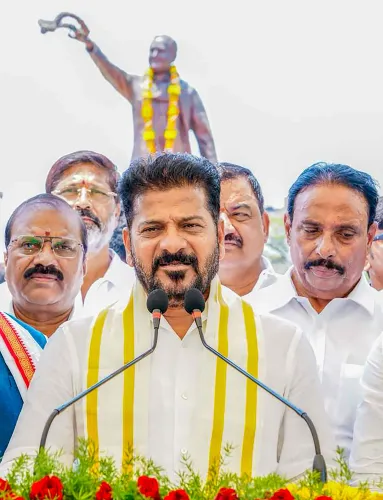
A national survey has handed Telangana Chief Minister A. Revanth Reddy a data-backed vindication: the state's flagship free bus travel scheme for women, Mahalakshmi, is registering a measurable surge in ridership that the Centre's own statisticians have captured. On Monday, 26 October 2026, Revanth Reddy cited findings from the National Statistics Office (NSO)'s all-India Time Use Survey to declare the scheme a 'benchmark for the entire country.'
37 lakh daily riders — and a scheme born in 48 hours
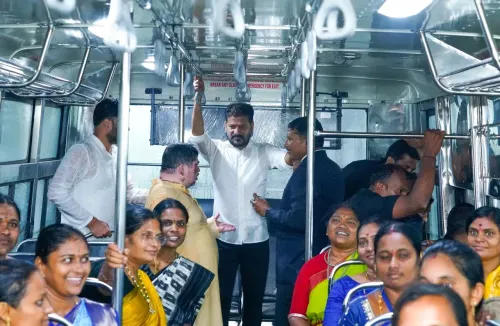
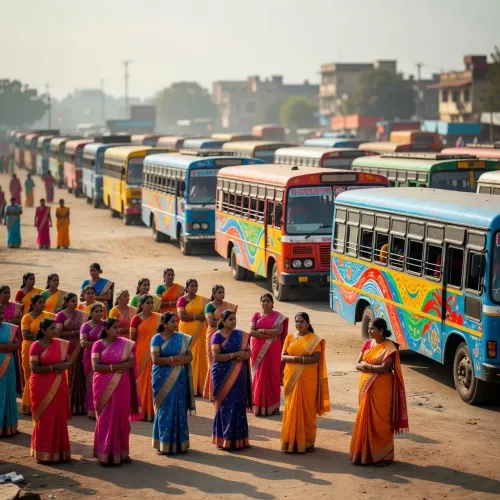
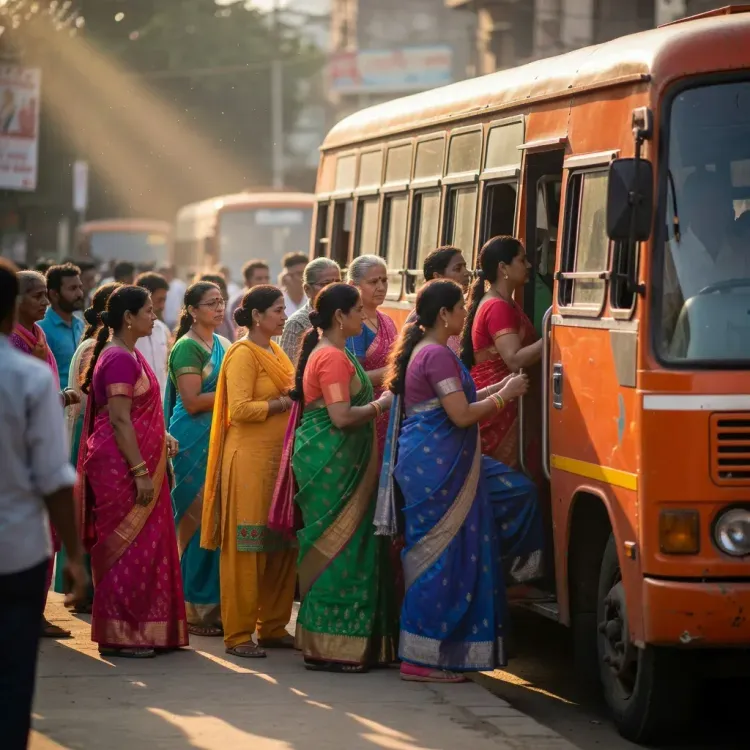
The numbers the Chief Minister invoked are striking. According to Revanth Reddy's post, up to 37 lakh women are boarding TGSRTC buses every single day — travelling to schools, colleges and workplaces under the free-ride guarantee. What makes that figure more pointed is the timeline: the scheme was launched within 48 hours of the Congress government taking office in December 2023, making it one of the fastest welfare scheme activations in recent state politics anywhere in India.
The Chief Minister framed the scheme in explicitly social terms: 'Telangana Mahalakshmi scheme is not just a bus. It is about dignity, freedom and autonomy of women.' That framing — mobility as empowerment, not mere transit — is central to how the government has positioned the programme since day one.
NSO's Time Use Survey as political and policy evidence
The citation of the NSO Time Use Survey is significant. The Time Use Survey, conducted by the Central government's statistical arm, tracks how Indians — broken down by gender, age and state — spend their hours across work, caregiving, travel and leisure. A visible jump in Telangana women's public transport usage in that dataset would constitute independent, nationally comparable evidence of behavioural change driven by the scheme, going beyond state-level ridership counts.
The survey's findings, as quoted by Revanth Reddy, position Telangana ahead of other states in translating a welfare promise into measurable, documented mobility. The full state-wise disaggregated data from the latest NSO survey round is yet to be formally released for public scrutiny.
Where Mahalakshmi sits in India's free-bus landscape
Telangana is not alone in this space. Karnataka's Shakti scheme, launched in 2023, and Delhi's free bus travel for women, running since 2020, laid the immediate precedents. What distinguishes Mahalakshmi's current moment is the invocation of central government survey data — rather than just state ridership logs — as proof of impact, a move that implicitly benchmarks Telangana against those other schemes on a nationally consistent metric.
Revanth Reddy also used the post to publicly congratulate Transport Minister Ponnam Prabhakar, crediting his 'capable leadership' for the scheme's implementation, and extended appreciation to every TGSRTC employee who keeps the network running. The acknowledgement of frontline workers alongside a senior minister is a calculated public signal about how the government wants the scheme's success story told.
The political weight of a welfare milestone
For the Telangana Congress government, Mahalakshmi is one of the 'six guarantees' that anchored its 2023 assembly election campaign. Demonstrating that the promises are not just launched but are generating measurable social outcomes — backed by NSO data — is essential political currency ahead of future electoral cycles. The scheme's fast launch, sustained ridership figures and now a national survey citation together form a narrative the party is clearly invested in amplifying.
The question the full NSO data will eventually answer: whether Telangana's numbers genuinely outpace comparable states — or whether the momentum of other schemes is equally robust.
Point of View
So keeping its data narrative alive and credible serves an obvious pre-electoral function. More broadly, the growing use of gender-targeted transport subsidies across multiple states signals that mobility access has become a mainstream women's welfare metric in Indian state politics, not a niche experiment. Whether NSO data can bear the precise weight Revanth Reddy places on it will depend on the survey's methodology and the comparability of state samples — details that will matter when the full data is released.
NationPress
26 Oct 2026
Frequently Asked Questions
What is the Telangana Mahalakshmi scheme?
The Mahalakshmi scheme provides free travel for women on all TGSRTC (Telangana State Road Transport Corporation) buses across the state. It was launched within 48 hours of the Congress government taking office in December 2023 and is one of the party's six core election guarantees.
How many women use the Mahalakshmi free bus scheme daily?
CM Revanth Reddy stated that up to 37 lakh women use TGSRTC buses on a daily basis under the scheme, travelling to schools, colleges and workplaces. This figure comes from the CM's post and has not yet been independently verified from publicly released NSO data.
What did the NSO Time Use Survey say about the Mahalakshmi scheme?
According to CM Revanth Reddy, the National Statistics Office's all-India Time Use Survey recorded a 'remarkable increase' in Telangana women's use of free RTC bus rides. The full state-wise data from the relevant survey round has not yet been formally released.
Who is responsible for implementing the Mahalakshmi scheme?
The scheme is implemented by TGSRTC (Telangana State Road Transport Corporation) under the oversight of Transport Minister Ponnam Prabhakar, whom CM Revanth Reddy publicly congratulated for his leadership of the department.
Which other Indian states have similar free bus schemes for women?
Karnataka launched the Shakti scheme in 2023, and Delhi has offered free bus travel for women since 2020. These schemes, along with Telangana's Mahalakshmi, are part of a broader pattern of gender-targeted public transport subsidies across Indian states.