Rajasthan villagers raise ₹25 lakh for poll loser Chidi Devi in Nagaur
Synopsis
In Rajasthan's Nagaur district, villagers did something almost unheard of after a sarpanch poll — they raised ₹25 lakh and presented it to the losing candidate. Chidi Devi lost by just 162 votes in the 2026 Panchayati Raj elections, but her family's years of community service — a donated tractor, a drinking-water facility, a borewell pledge — meant the village chose to honour her anyway. It is a rare story of rural solidarity over electoral rivalry.
Key Takeaways
Chidi Devi , 45, lost the sarpanch election in Bhadaura Gram Panchayat , Nagaur district , by 162 votes — 1,155 to 1,317 — in the 2026 Panchayati Raj elections .
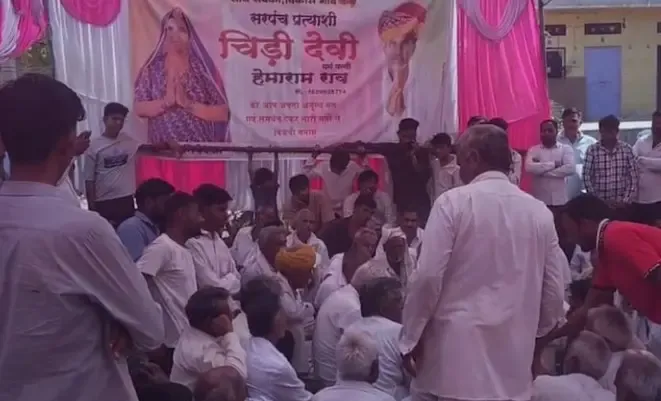
Villagers of Modi village collectively raised ₹25 lakh and presented it to Chidi Devi and her husband Hemaram Rao at a celebratory gathering.
The contribution was framed as recognition of the family's social service, not compensation for the loss.
Hemaram Rao reportedly donated a tractor to the village gaushala, set up a drinking-water facility, and pledged to fund a borewell.
The gesture has sparked wide discussion about community solidarity in Rajasthan's rural belt amid otherwise competitive local elections.
Villagers in Modi village, Nagaur district, Rajasthan, have collectively raised ₹25 lakh for Chidi Devi, a farmer's wife who narrowly lost the sarpanch election in the 2026 Panchayati Raj polls by just 162 votes. The gesture, widely discussed across the district, has come to symbolise a rare instance of community solidarity triumphing over electoral disappointment in rural India.
The Election and the Narrow Defeat
Chidi Devi, 45, a resident of Modi village under Bhadaura Gram Panchayat in Mundwa Panchayat Samiti, contested the sarpanch seat against Girija Sandu, daughter-in-law of Madho Singh, a retired police inspector from Bhadaura village. The final tally showed Girija Sandu securing 1,317 votes against Chidi Devi's 1,155 votes — a margin of 162 votes. Her husband, Hemaram Rao, is a farmer.
How the Community Responded
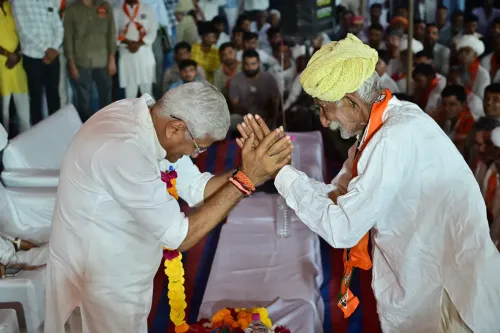
Rather than allowing the result to fracture local bonds, residents organised a special village assembly shortly after the announcement. Elders, youth, and prominent community members gathered and collectively articulated a sentiment that resonated widely: 'If there is a win, the entire village wins; if there is a loss, the entire village loses.' Contributions were pooled, eventually totalling ₹25 lakh, which was arranged on a ceremonial platter and presented to Chidi Devi and her husband at their home, accompanied by music and celebrations.
Why the Family Commanded Such Loyalty
According to villagers, the outpouring of support reflects the family's longstanding contributions to local welfare. Approximately two years ago, Hemaram Rao reportedly donated a new tractor to the village's gaushala (cow shelter) from his personal savings. He also established a drinking-water facility for residents and passersby, and announced plans to fund the drilling of a borewell to address the village's water needs. These acts of public service are believed to have deepened the family's ties with the community well before the election.
What the Gesture Means Beyond the Vote
The ₹25 lakh was not framed as compensation for electoral loss but as recognition of the family's social standing and contributions. Hemaram Rao, speaking to reporters, acknowledged that the family had felt the sting of the result, but said the village's response had transformed disappointment into pride. He noted that holding office was not the only measure of a person's worth, and that the affection of one's community was more enduring. This comes amid a broader national narrative about the divisive effects of hypercompetitive local elections — making Nagaur's story a notable counterpoint.
Wider Significance
The story has drawn attention well beyond Nagaur district, sparking conversation about how rural communities in Rajasthan — and India more broadly — can choose solidarity over rivalry. Notably, Panchayati Raj elections are often marked by intense local rivalries, caste dynamics, and long-lasting social fractures. The Modi village episode offers a striking departure from that pattern, reinforcing that electoral outcomes and community relationships need not be defined by the same outcome. How the gesture is sustained — and whether it sets a precedent — remains to be seen.
Point of View
By design, hyperlocal — and that proximity often makes them more fractious, not less. Caste equations, land disputes, and factional rivalries routinely outlast the results themselves. The Nagaur episode is a genuine anomaly: a community that chose to measure its candidate not by a 162-vote margin but by years of tangible public service. What makes it analytically interesting is the implicit standard being set — that social capital, demonstrated through concrete acts like tractor donations and water infrastructure, can outweigh the binary of win or lose. Whether this remains a feel-good outlier or points to a more resilient form of rural civic culture is the more important question mainstream coverage has not yet asked.
NationPress
26 Oct 2026
Frequently Asked Questions
Why did Rajasthan villagers give ₹25 lakh to Chidi Devi?
Villagers in Modi village, Nagaur district, raised ₹25 lakh as a mark of respect and appreciation for Chidi Devi and her husband Hemaram Rao, who lost the 2026 sarpanch election by 162 votes. The gesture honoured the family's years of community service, including donating a tractor, providing drinking water, and pledging to fund a borewell.
By how many votes did Chidi Devi lose the sarpanch election?
Chidi Devi lost the sarpanch election in Bhadaura Gram Panchayat by 162 votes. Her opponent Girija Sandu secured 1,317 votes while Chidi Devi received 1,155 votes in the 2026 Panchayati Raj elections in Rajasthan.
Who is Hemaram Rao and what is his connection to the story?
Hemaram Rao is Chidi Devi's husband and a farmer from Modi village, Nagaur. He is credited with several community welfare initiatives — donating a tractor to the village gaushala, setting up a drinking-water facility, and announcing plans to fund a borewell — which villagers cited as reasons for their collective show of support after the election.
Where did this incident take place?
The incident took place in Modi village, under Bhadaura Gram Panchayat in Mundwa Panchayat Samiti, Nagaur district, Rajasthan. It emerged during the counting and immediate aftermath of the 2026 Panchayati Raj elections.
What does this story say about rural elections in Rajasthan?
The episode highlights that community bonds in rural Rajasthan can, in some cases, override the divisive pressures of local electoral competition. Villagers explicitly framed their gesture around a shared sentiment — 'If there is a win, the entire village wins; if there is a loss, the entire village loses' — suggesting that social relationships and mutual service can endure beyond poll results.