CM Revanth Reddy Pays Tribute to Nehru on Children's Day
Synopsis
Telangana CM A. Revanth Reddy marked Children's Day on 14 November 2026 by honouring Pandit Jawaharlal Nehru and urging a commitment to equality, secular democracy, and value-based education for every child — linking Nehru's founding ideals to contemporary child-welfare priorities.
Key Takeaways
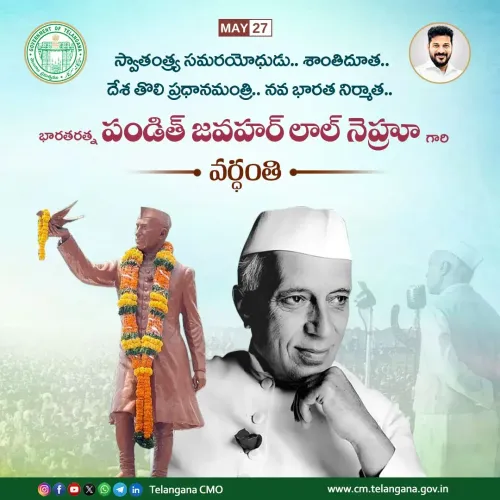
Revanth Reddy paid tribute to India's first PM Pandit Jawaharlal Nehru on his birth anniversary on 14 November 2026 .
Children's Day is observed nationally on Nehru's birthday, linking his legacy to child rights and development.
The CM credited Nehru's contributions to education, science, and technology as the foundation of India's progress.
Revanth Reddy called for a society free of discrimination, one that guarantees a fear-free childhood and protects children's rights.
He said genuine tribute to Nehru's ideals is achieved only through value-based education .
Nehru's government established the Indian Institutes of Technology and national research bodies in the 1950s, anchoring India's knowledge economy.
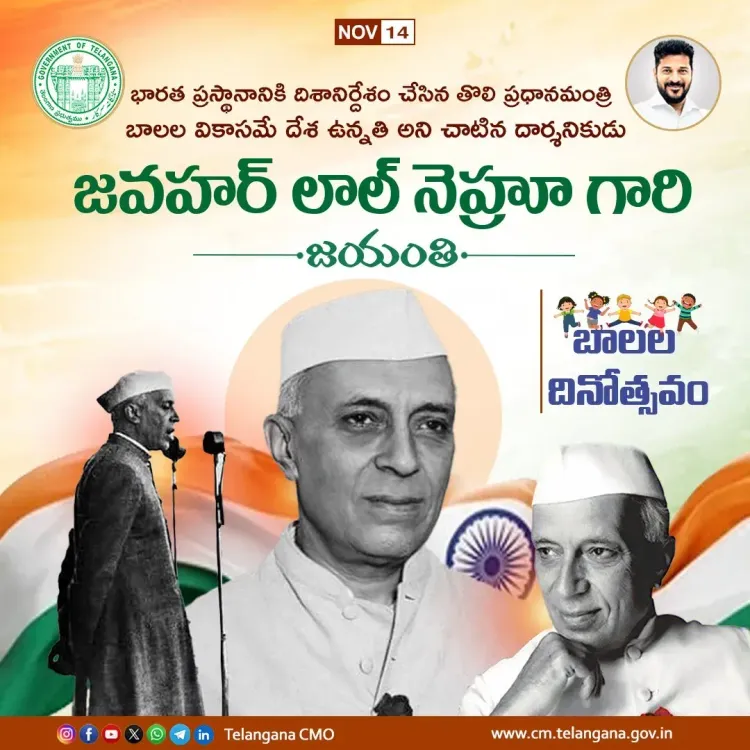
On a day that belongs equally to history and to children, Telangana Chief Minister A. Revanth Reddy honoured India's first Prime Minister Pandit Jawaharlal Nehru on his birth anniversary — observed across the country as Children's Day on 14 November 2026 — with a message that wove Nehru's founding ideals into a call for fearless, equitable childhoods.
Nehru's Foundations and What Revanth Reddy Said About Them
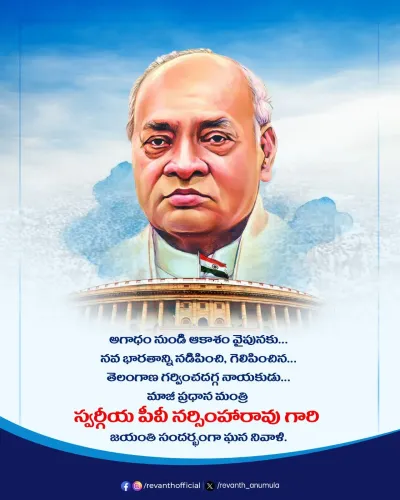
The Chief Minister's Office of Telangana posted in Telugu that Nehru's contributions to education, science, and technology had 'laid the pathways for India's progress.' Revanth Reddy called on citizens to draw inspiration from Nehru's ideals of equality, secularism, and democratic spirit and carry them forward in the nation's development journey.
The statement recalled a defining belief attributed to Nehru — that every child carries within them 'immense talent, creativity, and new ideas.' That conviction, the CM said, is the lens through which child rights must be protected and nurtured today.
Children's Day as a Policy Moment, Not Just a Ceremony
Revanth Reddy framed the occasion as a commitment rather than a commemoration. He called for building a society that protects children's rights, encourages their potential, guarantees a fear-free childhood, and leaves no room for discrimination. 'Only when we provide value-based education,' he said, 'does the tribute to Nehru's aspirations become real.'
The sentiment fits a well-established pattern: state governments across India use Nehru's birth anniversary to connect national founding ideals with current child-welfare and education priorities. For Telangana — a relatively young state with a vocal focus on its youth — the linkage carries particular weight.
Nehru's Legacy in India's Institutional Architecture
Nehru's government built the scaffolding of modern India's knowledge economy — the Indian Institutes of Technology, national scientific research bodies, and a constitutional commitment to scientific temper. Those institutions, established in the 1950s, remain the bedrock of India's technical workforce seven decades later. Any invocation of Nehru on Children's Day is, implicitly, an invocation of that institutional inheritance.
Revanth Reddy's message extends that inheritance into a sharper contemporary demand: not just schools and laboratories, but a childhood defined by safety, inclusion, and the freedom to think without fear.
The question the CM leaves open — and the one worth watching — is whether the tribute translates into new state-level education or child-welfare commitments in the months ahead.
Point of View
Particularly on a day that naturally commands public goodwill toward children. For Revanth Reddy, leading a Congress government in Telangana, invoking Nehru's ideals of secularism and equality on Children's Day carries both ideological alignment and political signalling. The emphasis on 'fear-free childhood' and 'discrimination-free society' also gestures toward broader social-equity arguments that the Telangana government has consistently foregrounded. Watch whether this tribute is followed by concrete scheme announcements — that is when rhetoric converts to governance record.
NationPress
14 Nov 2026
Frequently Asked Questions
Why is Children's Day celebrated on 14 November in India?
14 November is the birth anniversary of India's first Prime Minister Pandit Jawaharlal Nehru , who was known for his love of children. After his death in 1964, the day was designated as Children's Day (Bal Diwas) to honour both his memory and the importance of child welfare.
What did CM Revanth Reddy say on Children's Day 2026?
Telangana CM A. Revanth Reddy paid tribute to Nehru and called for protecting children's rights, encouraging their creativity, and providing value-based education. He urged citizens to pursue national development guided by Nehru's ideals of equality, secularism, and democracy .
What was Nehru's contribution to education and science in India?
Nehru's government in the 1950s established the Indian Institutes of Technology (IITs) and promoted national scientific research institutions, building the technical and intellectual foundation of modern India.
Who is A. Revanth Reddy?
A. Revanth Reddy is the Chief Minister of Telangana . He leads the Congress government in the state and has frequently linked Nehru's founding ideals to current education and child-welfare priorities.
What does the Telangana government plan for child welfare?
The CM's statement on 14 November 2026 outlined commitments to a discrimination-free society and value-based education, though specific new scheme announcements tied to this tribute have not been officially confirmed yet.