CM Revanth Reddy calls to end child labour on World Day
Synopsis
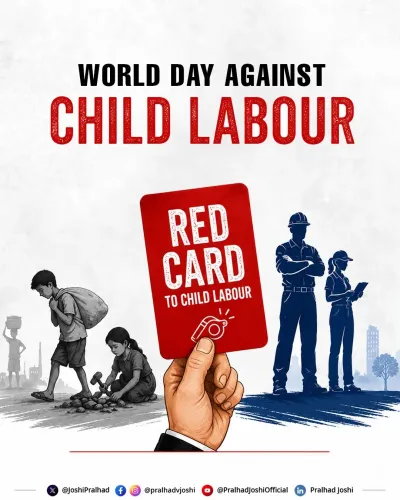
On World Day Against Child Labour, Telangana CM Revanth Reddy called on citizens, families, teachers, and civil society to treat child labour eradication as a collective social responsibility, pledging government commitment to quality education and safety for every child in Telangana.
Key Takeaways
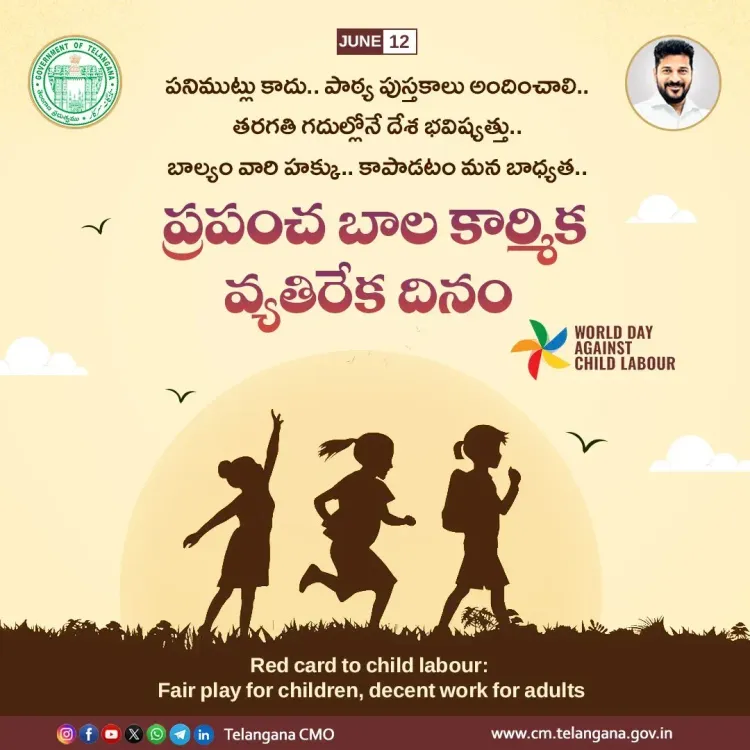
Revanth Reddy issued a public message on 12 June 2026 , World Day Against Child Labour, calling for collective action to end child labour in Telangana.
He declared childhood a birthright and stated that child labour 'has no place in society.' The Telangana government reaffirmed its commitment to quality education, safety, a healthy environment, and equal opportunities for every child.
Citizens were urged to report any child found engaged in labour to relevant authorities, framing such action as giving the child 'a new future.' India's Child Labour (Prohibition and Regulation) Amendment Act, 2016 bans employment of children under 14 in all occupations; India also ratified ILO Convention 138 in 2017 .
Families, teachers, NGOs, and elected representatives were all identified as essential partners in achieving the goal.
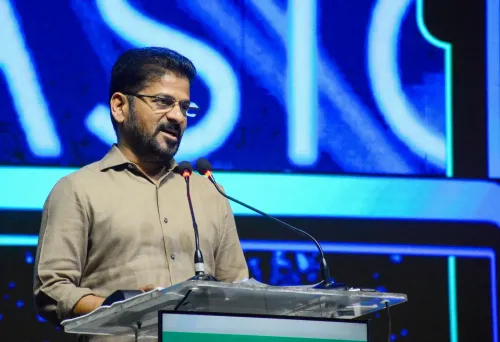
The Chief Minister's Office of Telangana on 12 June 2026 shared a message from Chief Minister A. Revanth Reddy on the occasion of World Day Against Child Labour, calling on every citizen, family, teacher, civil society organisation, and elected representative to treat the eradication of child labour as a shared social responsibility.
Context
World Day Against Child Labour, observed annually on 12 June, was established by the International Labour Organization (ILO) in 2002 to galvanise global action against child labour. This year's observance prompted state governments across India to reaffirm their commitments under existing law and social welfare frameworks.
In his message, CM Revanth Reddy stated: 'Childhood is every child's birthright. The right to study, play, grow happily, and get opportunities to realise one's dreams is every child's natural right. It is the responsibility of all of us to ensure that child labour, which robs children of these rights, has no place in society.'
Policy Backdrop
India's Child Labour (Prohibition and Regulation) Amendment Act, 2016 bans the employment of children under 14 years in all occupations and regulates work by adolescents in hazardous industries. The country further aligned with international norms when it ratified ILO Convention 138 on minimum age for employment in 2017.
The Right of Children to Free and Compulsory Education Act, 2009 mandates free schooling for children aged 6 to 14 and remains the primary legislative instrument linking universal enrolment with reduced child labour. The National Child Labour Project Scheme, launched in 1988 and expanded over subsequent decades, provides rehabilitation, bridge education, and vocational training for rescued children.
Telangana, formed as a separate state in 2014, has integrated these national mandates into its state-level school education and welfare programmes. The Congress government led by CM Revanth Reddy since December 2023 has emphasised education and social welfare as policy priorities.
Stakeholders and Impact
The Chief Minister's message directly addressed multiple stakeholder groups — families, teachers, non-governmental organisations, elected representatives, and ordinary citizens — urging collective ownership of the goal. He stressed that child labour must not be encouraged under any circumstances and that spotting a child engaged in work must prompt citizens to alert the relevant authorities.
The message carried a pointed social appeal: 'Children's hands should hold books, not tools. Their shoulders should carry hopes for the future, not burdens. It is the responsibility of all of us to build a Telangana where every child grows up smiling, learning, and dreaming.' The statement frames child rescue not merely as law enforcement but as giving a child 'a new future.'
Working families in low-income urban and rural pockets of Telangana remain the primary demographic where child labour risks are concentrated. Civil society organisations and school education departments are positioned as frontline partners in identification and rehabilitation.
What's Next
Annual labour department surveys on child labour prevalence and state budget allocations for residential schools and bridge education programmes for rescued children will be key indicators of how the government translates this stated commitment into measurable outcomes. Advocacy groups are likely to use this occasion to push for updated district-level data and faster case resolution under existing law.
As Telangana approaches its next legislative and budget cycle, the degree to which child labour eradication features in welfare spending and school enrolment targets will signal the administration's operational seriousness beyond the symbolic messaging of observance days.
Point of View
Teachers, NGOs, elected representatives — reflects a shift in political messaging from top-down enforcement to community ownership, which aligns with SDG target 8.7 on ending child labour by 2025. For the Telangana Congress government, which came to power in December 2023 on a welfare-heavy platform, such messaging also serves to distinguish its social priorities from its predecessor. The real test will come in how labour department enforcement data and bridge-education budgets evolve in the coming fiscal cycle.
NationPress
14 Sept 2026
Frequently Asked Questions
What did CM Revanth Reddy say on World Day Against Child Labour 2026?
CM Revanth Reddy called on every citizen, family, teacher, NGO, and elected representative in Telangana to treat the eradication of child labour as a shared social responsibility, stating that 'childhood is every child's birthright' and pledging government commitment to quality education and safety for all children.
When is World Day Against Child Labour observed?
World Day Against Child Labour is observed every year on 12 June . It was established by the International Labour Organization in 2002 to raise awareness and mobilise action against child labour globally.
What is India's law on child labour?
The Child Labour (Prohibition and Regulation) Amendment Act, 2016 bans employment of children below 14 years in all occupations and restricts adolescent employment in hazardous industries. India also ratified ILO Convention 138 on minimum age for employment in 2017.
What should a citizen do if they spot a child working in Telangana?
CM Revanth Reddy specifically urged citizens to alert the relevant authorities if they spot any child engaged in labour, stating it is every citizen's responsibility to bring such cases to official attention.
What is the Telangana government's commitment to child welfare?
The Telangana government has stated it is committed to ensuring quality education, safety, a healthy environment, and equal opportunities for every child in the state, in line with national mandates under the Right to Education Act and the Child Labour Amendment Act.