Rajasthan CMO calls to end child labour on World Day 2026
Synopsis
On World Day Against Child Labour 2026, the Rajasthan Chief Minister's Office called on citizens to collectively pledge against child labour and ensure rescued children are connected to education, aligning state messaging with ILO commitments and India's legal framework banning child work.
Key Takeaways
The Chief Minister's Office of Rajasthan posted a public pledge call on World Day Against Child Labour, June 12, 2026 .
The post urged citizens to free any child seen working and connect them to schooling.
The Child Labour (Prohibition and Regulation) Amendment Act, 2016 bans employment of children under 14 in all occupations in India.
The Right of Children to Free and Compulsory Education Act, 2009 guarantees free schooling for children aged 6 to 14 .
The National Child Labour Project Scheme has operated since 1988 to rescue and rehabilitate child labourers.
India's efforts are tied to SDG Target 8.7 , calling for the elimination of all forms of child labour.
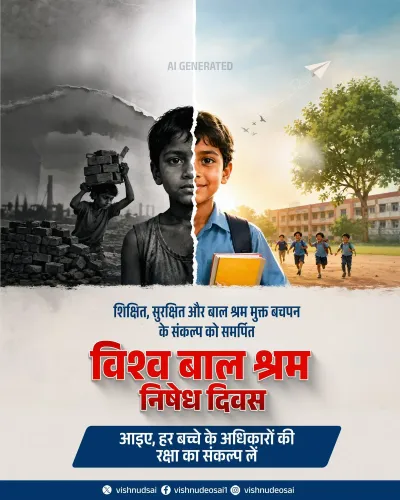
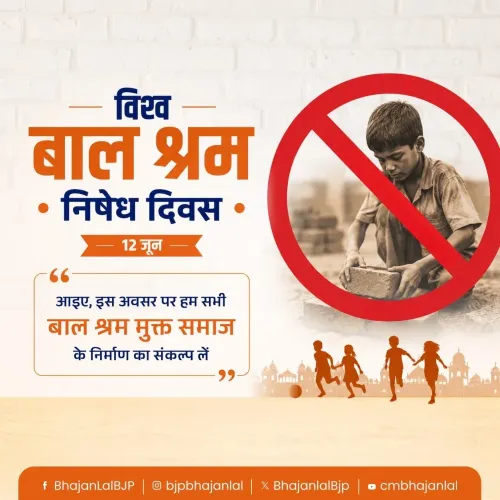
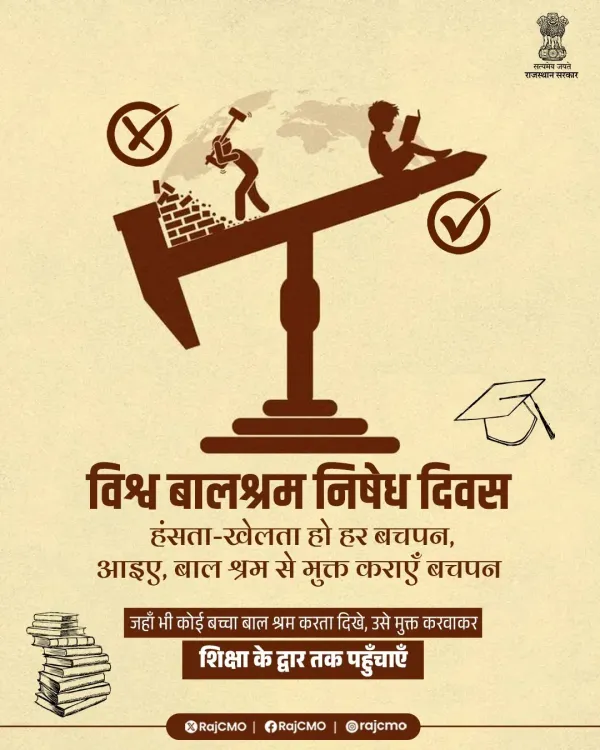
The Chief Minister's Office of Rajasthan on Friday, June 12, 2026 — World Day Against Child Labour — issued a public call urging citizens to pledge collective action against child labour and ensure every rescued child reaches the doors of education.
Posting in Hindi on the occasion of the annual observance, the CMO wrote: 'हंसता-खेलता हो हर बचपन, बाल श्रम से मुक्त कराएँ बचपन!' ('Let every childhood be full of laughter and play — let us free childhood from child labour!'). The post called on all citizens to raise their voices against child labour and, wherever they see a child working, to help free that child and connect them to schooling.
Context
World Day Against Child Labour is observed every year on June 12, established by the International Labour Organization (ILO) to spotlight the global effort to eliminate child labour and protect children's right to education and development. The day serves as a focal point for governments, civil society and communities to renew commitments and amplify awareness campaigns. Rajasthan, with a significant informal economy spanning agriculture, handicrafts and small industry, has been among the states where child labour remains a concern. The CMO's post aligns state-level messaging with the broader national and international framework on this annual occasion.Policy Backdrop
India has built a layered legal and programmatic architecture to combat child labour over three decades. The Child Labour (Prohibition and Regulation) Amendment Act, 2016 banned employment of children under 14 years in all occupations and tightened regulation of adolescent work in hazardous sectors, introducing stricter penalties for violations. Complementing the ban, the Right of Children to Free and Compulsory Education Act, 2009 guarantees free schooling for children aged 6 to 14, directly linking education access with the goal of eliminating child labour. The National Child Labour Project Scheme, launched in 1988, has provided a framework for identifying, rescuing and rehabilitating child labourers through special schools and skill training. Together, these measures reflect India's commitments under SDG Target 8.7, which calls for ending child labour in all its forms by 2025.Stakeholders and Impact
The primary beneficiaries of anti-child-labour efforts are children in low-income households who are most vulnerable to being pulled into informal work. Families under economic stress, particularly in sectors such as agriculture, brick kilns, carpet weaving and domestic work, are the key social context in which child labour persists. State education and labour departments are the principal implementing agencies, responsible for rescue operations, enrolment drives and rehabilitation. The CMO's public messaging on a high-visibility international day is aimed at activating community-level vigilance — encouraging ordinary citizens to report and intervene when they encounter a working child.What's Next
The June 12 observance typically precedes intensified inspection and rescue drives by state labour and education departments in the weeks that follow. School enrolment campaigns targeting out-of-school children are often timed to coincide with the start of the academic year. Observers will watch for follow-up announcements from Rajasthan's labour and school education departments on rescue numbers, rehabilitation placements and enrolment figures as the state translates awareness messaging into on-ground action.Point of View
The 2016 child labour amendment and the 2009 education guarantee. The call to citizen vigilance is notable: it shifts some responsibility for detection and reporting from the state apparatus to communities, a strategy that complements but does not replace enforcement. The real test, as with past years, will be whether the awareness spike on June 12 translates into measurable rescue and enrolment numbers in the months that follow.
NationPress
26 Oct 2026
Frequently Asked Questions
What is World Day Against Child Labour and when is it observed?
World Day Against Child Labour is observed every year on June 12 , established by the International Labour Organization (ILO) to highlight global efforts to end child labour and protect children's rights to education and development.
What did the Rajasthan CMO post on World Day Against Child Labour 2026?
The Chief Minister's Office of Rajasthan posted a Hindi message on June 12, 2026 calling on citizens to pledge collective action against child labour and to help any child seen working reach the doors of education.
What is India's law on child labour?
The Child Labour (Prohibition and Regulation) Amendment Act, 2016 bans employment of children under 14 years in all occupations and regulates adolescent work in hazardous sectors, with stricter penalties for violations.
How does the Right to Education Act relate to child labour in India?
The Right of Children to Free and Compulsory Education Act, 2009 guarantees free schooling for children aged 6 to 14 , directly linking education access to the elimination of child labour by providing a viable alternative for rescued children.
What is the National Child Labour Project Scheme?
The National Child Labour Project Scheme , launched in 1988 , is a central government programme that identifies, rescues and rehabilitates child labourers through special schools and skill training, serving as a key implementation mechanism alongside legislative bans.