HP CM Office marks World Day Against Child Labour
Synopsis
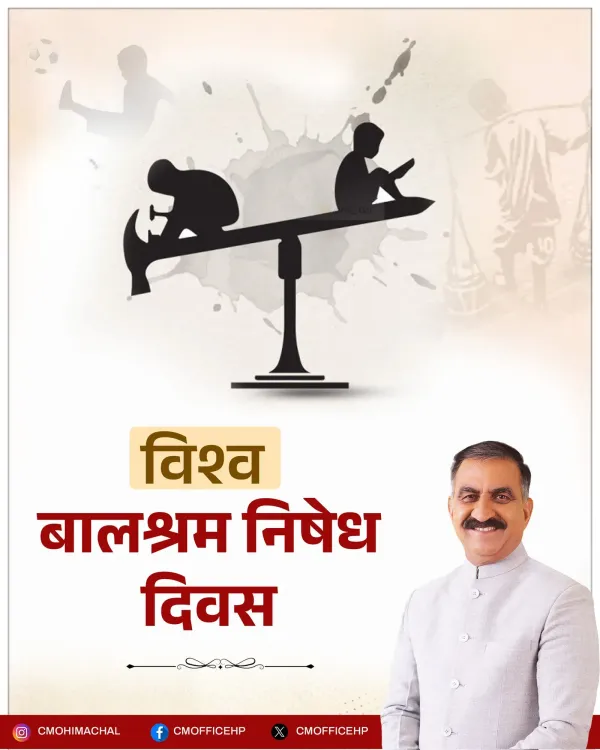
On World Day Against Child Labour, the Chief Minister's Office of Himachal Pradesh declared every child's right to a safe childhood and called ending child labour a collective social responsibility, reaffirming the state's alignment with India's legal framework and ILO commitments.
Key Takeaways
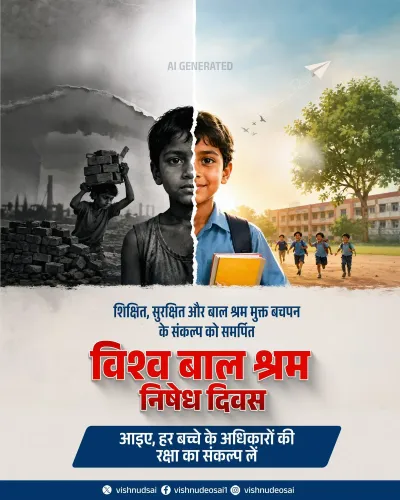
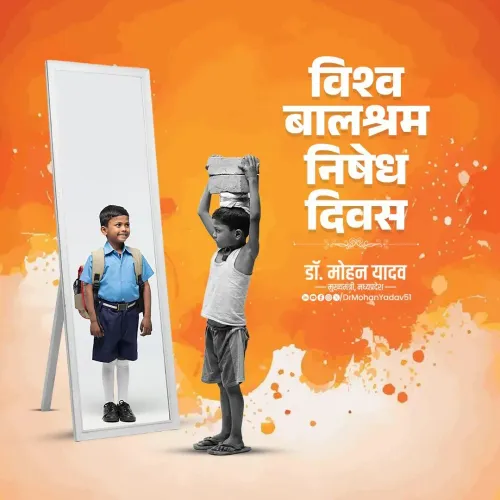
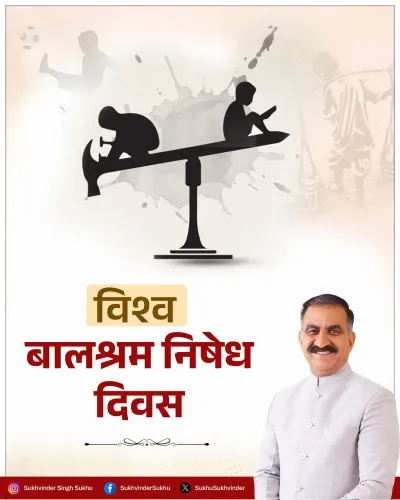
The Chief Minister's Office of Himachal Pradesh posted a statement on 12 June 2026 , marking World Day Against Child Labour .
The post described child labour as 'a serious challenge to humanity and an obstacle to social progress' and called its elimination a collective responsibility.
India's Child Labour (Prohibition and Regulation) Amendment Act, 2016 bans employment of children below 14 years in all occupations.
The National Child Labour Project (NCLP) , running since 1988 , withdraws child workers and mainstreams them into formal schooling.
Himachal Pradesh has high literacy rates but faces child labour risks in agriculture, apple orchards and tourism sectors.
Stakeholders will monitor whether the statement is followed by updated enforcement data or new directives under the PENCIL portal .
The Chief Minister's Office of Himachal Pradesh on Friday, 12 June 2026, marked World Day Against Child Labour with a statement affirming that every child has the right to a safe and dignified childhood, and calling the elimination of child labour a collective social responsibility.
Posting in Hindi on the occasion of the ILO-designated global observance, the official account stated: 'हर बच्चे का अधिकार है कि उसका बचपन सुरक्षित और सम्मानजनक हो' ('Every child has the right to a safe and dignified childhood'). The post went on to describe child labour as 'a serious challenge to humanity and an obstacle on the path of social progress,' and framed its elimination as the collective responsibility of a compassionate society.
Context
World Day Against Child Labour, observed every year on 12 June, is led by the International Labour Organization (ILO) to draw global attention to the need for ending child labour in all its forms. India is a signatory to relevant ILO conventions and has committed to Sustainable Development Goal target 8.7, which calls for the effective elimination of child labour by 2025. The Himachal Pradesh government's statement aligns the state with these national and international commitments.Policy Backdrop
India's legislative architecture against child labour has deepened over four decades. The original Child Labour (Prohibition and Regulation) Act, 1986 banned employment of children in specified hazardous occupations. The landmark Child Labour (Prohibition and Regulation) Amendment Act, 2016 extended the prohibition to all occupations for children below 14 years and restricted adolescents aged 14 to 18 from hazardous work. Simultaneously, the Right of Children to Free and Compulsory Education Act, 2009 guaranteed free schooling to all children aged 6 to 14, treating universal enrolment as a structural safeguard against child labour. At the central level, the National Child Labour Project (NCLP), operational since 1988, identifies and withdraws child workers, placing them in special bridge schools before mainstreaming them into formal education. The PENCIL portal — Platform for Effective Enforcement for No Child Labour — provides a digital channel for complaints and rehabilitation tracking across states.Stakeholders and Impact
Himachal Pradesh presents a distinctive profile: the state consistently records among the higher literacy rates in India, yet its rural and semi-urban economy — spanning agriculture, apple orchards and a large tourism sector — has historically seen pockets of child and adolescent labour. School-age children in rural households, informal-sector employers, and civil society organisations working on child rights are the primary stakeholders affected by the policy direction signalled in the statement. India's constitutional Article 24 explicitly prohibits employment of children below 14 years in factories, mines, or hazardous work, providing the foundational legal guarantee that state-level drives seek to operationalise.What's Next
Observers will watch for any follow-up from the Himachal Pradesh government in the form of updated state-level child labour survey data, fresh district-wise enforcement drives, or revisions to the state's action plan under the PENCIL portal. Statements of this nature on high-visibility international observance days often precede or accompany ground-level administrative directives. The broader national trajectory — linking school retention, vocational training for adolescents, and labour-law enforcement — will determine how effectively such reaffirmations translate into measurable reductions in child labour across the state.Point of View
Such declarations carry weight only insofar as they precede measurable administrative action. Himachal Pradesh's tourism and horticulture economy creates structural demand for cheap adolescent labour, making the gap between policy rhetoric and ground-level enforcement a persistent pressure point. The statement's emphasis on collective social responsibility — rather than purely state enforcement — also signals an intent to mobilise community-level accountability alongside legal mechanisms.
NationPress
26 Oct 2026
Frequently Asked Questions
What is World Day Against Child Labour and when is it observed?
World Day Against Child Labour is an annual global observance held on 12 June , led by the International Labour Organization (ILO), to highlight the need to eliminate child labour in all its forms worldwide.
What did the Himachal Pradesh CM Office say on Child Labour Day 2026?
The Chief Minister's Office of Himachal Pradesh posted on 12 June 2026 that every child has the right to a safe and dignified childhood, described child labour as a serious challenge to humanity, and called its elimination the collective responsibility of a compassionate society.
What is India's law against child labour?
The primary law is the Child Labour (Prohibition and Regulation) Amendment Act, 2016 , which bans employment of children below 14 years in all occupations and restricts adolescents aged 14 to 18 from hazardous work, building on the original 1986 Act.
What is the PENCIL portal for child labour in India?
The PENCIL portal — Platform for Effective Enforcement for No Child Labour — is a central government digital platform that allows citizens to file complaints about child labour and enables states to track rehabilitation of withdrawn child workers.
How does Himachal Pradesh address child labour given its high literacy rate?
Despite high literacy rates, Himachal Pradesh faces pockets of child and adolescent labour in agriculture, apple orchards and tourism. The state implements central schemes like the National Child Labour Project alongside the Right to Education Act to withdraw children from work and enrol them in schools.