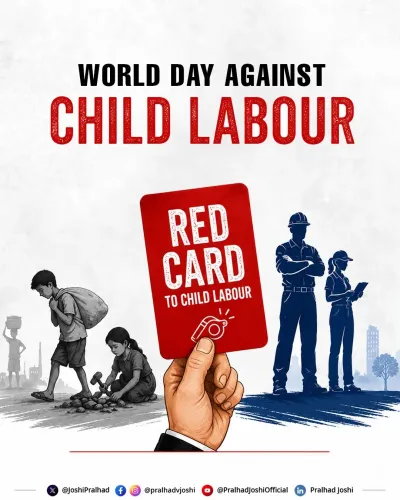
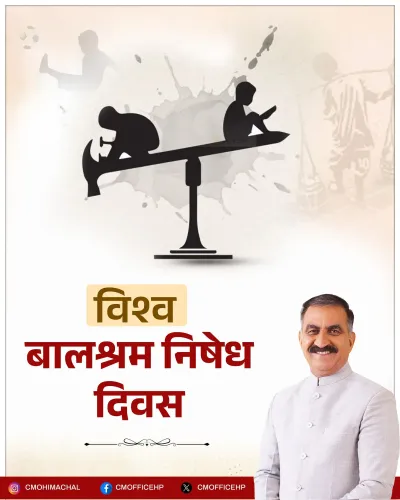
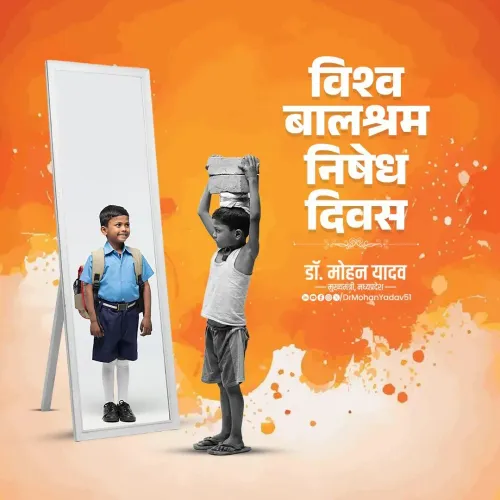
Punjab CMO marks World Day Against Child Labour
Synopsis
The Chief Minister's Office of Punjab marked the World Day Against Child Labour on 12 June 2026, calling for awareness against child labour and affirming every child's right to education and a good childhood, in line with ILO and national policy frameworks.
Key Takeaways
The Chief Minister's Office of Punjab observed the World Day Against Child Labour on 12 June 2026 .
The day is an annual ILO initiative started in 2002 to combat child labour globally.
India's Child Labour (Prohibition and Regulation) Act, 1986 bars children under 14 from hazardous occupations.
The Right to Education Act, 2009 links elimination of child labour with universal free schooling.
India ratified key ILO conventions on child labour in 2017 .
SDG Target 8.7 calls for ending all forms of child labour by 2025 , driving state-level policy action.
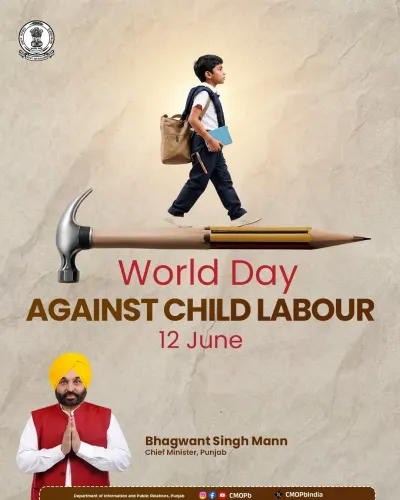
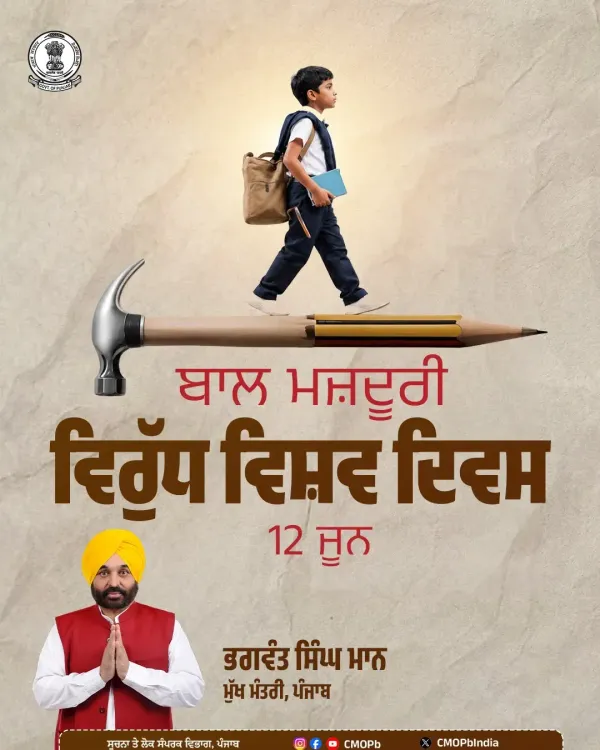
The Chief Minister's Office of Punjab on Friday, 12 June 2026 marked the World Day Against Child Labour, reaffirming the state's commitment to ending child labour and ensuring every child receives education and a dignified childhood.
The post, shared in Punjabi, stated: 'ਬਾਲ ਮਜ਼ਦੂਰੀ ਵਿਰੁੱਧ ਵਿਸ਼ਵ ਦਿਵਸ' [World Day Against Child Labour] is observed every year on 12 June with the aim of raising awareness against child labour and giving every child access to education and a good childhood.
Context
The World Day Against Child Labour is an annual global observance initiated by the International Labour Organization (ILO) in 2002. It is held every year on 12 June to spotlight the scale of child labour worldwide and mobilise governments, civil society, and communities to act against it. The day also emphasises the inseparable link between eliminating child labour and ensuring universal access to quality education.
State governments across India, including Punjab, routinely align their messaging on this date with the central labour ministry's guidelines and ongoing rehabilitation programmes for rescued children.
Policy Backdrop
India has maintained legal prohibitions on child labour through the Child Labour (Prohibition and Regulation) Act, 1986, which bars children under 14 years from hazardous occupations. The law has been strengthened through successive amendments over the decades. India also ratified key ILO conventions on child labour in 2017, signalling a firmer international commitment.
The Right of Children to Free and Compulsory Education Act, 2009 reinforced this framework by making schooling a fundamental right, directly linking the elimination of child labour with universal enrolment. At the global level, SDG Target 8.7 calls for an end to all forms of child labour by 2025, a benchmark that continues to drive national and state-level policy action.
Stakeholders and Impact
Punjab is a northern Indian state with a significant rural agricultural workforce, where enforcement of child labour prohibitions intersects with complex realities of seasonal migration, poverty, and uneven school attendance. Working children in sectors such as agriculture, brick kilns, and domestic work remain among the most vulnerable populations. Rural households dependent on supplementary income from child workers are also key stakeholders in any effective rehabilitation effort.
The National Child Labour Project (NCLP), a central government scheme, provides for the rescue, rehabilitation, and mainstreaming of child labourers into formal education. Punjab's observance of the day signals continued alignment with this framework, even as on-ground enforcement across districts remains a work in progress.
What's Next
Observers and child-rights advocates will watch for the state's release of district-level data on rescued child labourers and any new action plans under the National Child Labour Project. Sustained enforcement across agriculture, construction, and domestic sectors — alongside robust school enrolment drives — will determine how meaningfully Punjab translates today's observance into measurable outcomes for vulnerable children.
Point of View
As it sets a normative tone for district-level administrators. The broader pattern of state governments issuing statements on 12 June reflects a centralised communications strategy around labour and welfare observances, though the gap between messaging and enforcement in sectors like brick kilns and domestic work remains a live policy challenge. The real test for Punjab, as for other states, lies in translating annual observances into verifiable reductions in child labour incidence and improvements in school retention rates.
NationPress
26 Oct 2026
Frequently Asked Questions
When is World Day Against Child Labour observed?
World Day Against Child Labour is observed every year on 12 June . It was initiated by the International Labour Organization in 2002 to raise awareness about child labour and promote children's right to education.
What did the Punjab CMO say on World Day Against Child Labour 2026?
The Chief Minister's Office of Punjab posted on 12 June 2026 stating that the day is observed to raise awareness against child labour and to ensure every child receives education and a good childhood.
What is India's law against child labour?
India's primary law is the Child Labour (Prohibition and Regulation) Act, 1986 , which prohibits children under 14 years from working in hazardous occupations. India also ratified key ILO child labour conventions in 2017 .
What is the National Child Labour Project in India?
The National Child Labour Project (NCLP) is a central government scheme that provides for the rescue, rehabilitation, and mainstreaming of child labourers into formal education across Indian states including Punjab.
What is SDG 8.7 and how does it relate to child labour in India?
SDG Target 8.7 is a United Nations Sustainable Development Goal that calls for the elimination of all forms of child labour by 2025 . India's national and state-level policies, including those in Punjab, are shaped in part by this international commitment.