CM Mohan Yadav Marks World Day Against Child Labour
Synopsis
On World Day Against Child Labour, Madhya Pradesh Chief Minister Dr. Mohan Yadav pledged to build a child-labour-free society, asserting that a happy childhood and education are every child's right and that his government is continuously working toward children's welfare.
Key Takeaways
Madhya Pradesh CM Dr.
Mohan Yadav marked World Day Against Child Labour on 12 June 2026 with a public pledge against child labour.
He called for placing pens and books — not burdens — in children's hands and building a child-labour-free society.
India's Child Labour (Prohibition and Regulation) Amendment Act, 2016 , bans employment of children below 14 years in all occupations.
The Right to Education Act, 2009 , guarantees free and compulsory schooling for children aged 6 to 14 .
The National Child Labour Project Scheme has been providing rehabilitation and education to rescued children since 1988 .
India ratified ILO Convention 182 on the worst forms of child labour in 2017 , reinforcing national and state-level commitments.
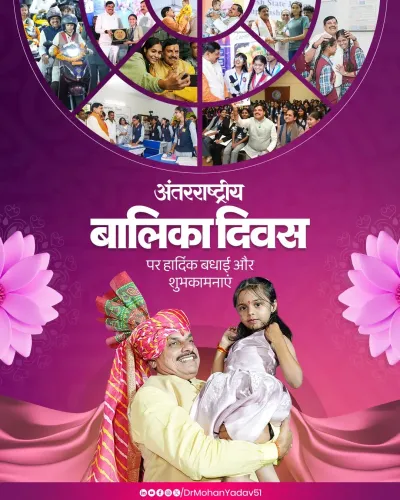
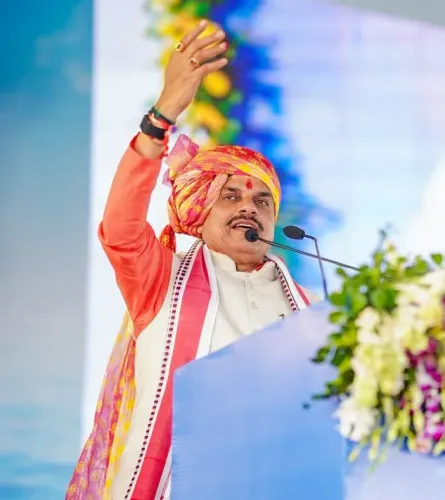
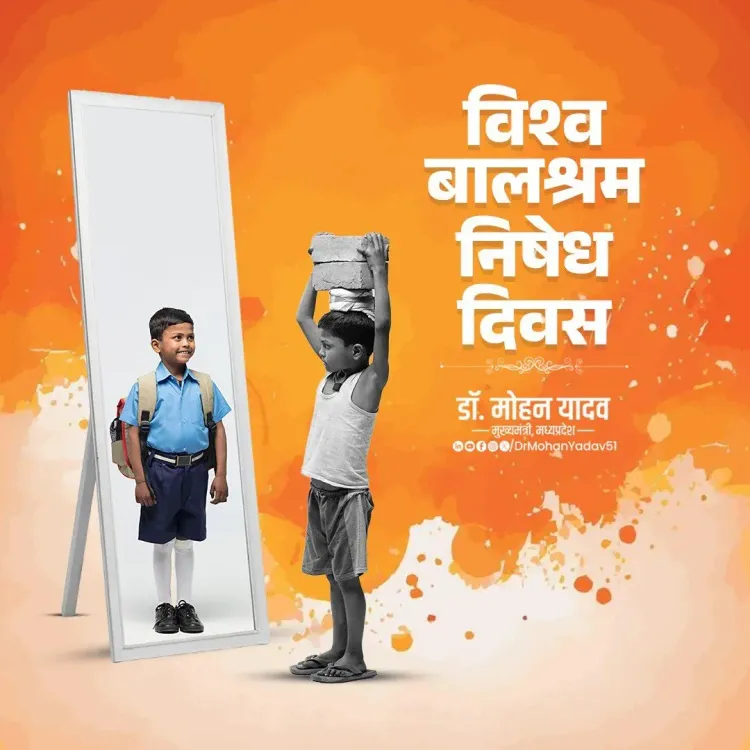
Madhya Pradesh Chief Minister Dr. Mohan Yadav on Friday, 12 June 2026, called for a society free of child labour, marking the World Day Against Child Labour with a pledge to place pens and books — not burdens — in every child's hands. The BJP leader reaffirmed that his government is continuously working for children's welfare and education.
In his post, Dr. Yadav wrote: 'बच्चों के माथे पर बोझ अच्छा नहीं लगता है' ['A burden on a child's forehead does not look right'], adding that a happy childhood and education are children's rights. He urged citizens to resolve, on this observance, to build a child-labour-free society.
Context
The World Day Against Child Labour, observed every year on 12 June, was established by the International Labour Organization (ILO) to spotlight global and national efforts to eliminate child labour. The day serves as a platform for governments, civil society, and citizens to renew commitments toward protecting children from exploitation. Dr. Yadav's post aligns with this annual cycle of public reaffirmation by state leaders across India.
Policy Backdrop
India has built a layered legal framework against child labour. The Child Labour (Prohibition and Regulation) Amendment Act, 2016, banned employment of children below 14 years in all occupations. The Right of Children to Free and Compulsory Education Act, 2009, guarantees free schooling for children aged 6 to 14, creating an entitlement that directly counters the conditions that push children into work.
At the national level, the National Child Labour Project Scheme, operational since 1988, provides rehabilitation and mainstreaming into formal education for children rescued from labour. India also ratified ILO Convention 182 on the worst forms of child labour in 2017, signalling an international commitment that state-level actions are expected to reinforce. Dr. Yadav's statement situates Madhya Pradesh within this broader constitutional and statutory framework, which includes Article 24 of the Indian Constitution prohibiting child labour in factories and hazardous occupations.
Stakeholders and Impact
The primary stakeholders are school-age children and working children in Madhya Pradesh's informal sector — agriculture, domestic work, and small-scale industries — where enforcement gaps have historically persisted. Families in economically vulnerable communities, who depend on supplementary income from children, are also directly affected by both enforcement drives and welfare-linkage programmes.
Effective implementation of education and rehabilitation schemes determines whether public pledges translate into measurable reductions in child labour. Civil society organisations and district-level administration in Madhya Pradesh are key intermediaries in turning state commitments into ground-level action for enrolled and out-of-school children alike.
What's Next
Attention will now turn to whether the Madhya Pradesh government follows the Chief Minister's statement with concrete programme announcements — such as expanded school enrolment drives, labour inspections in high-risk sectors, or updated rehabilitation targets under existing central schemes. The release of the next state-level child labour survey data will provide a measurable benchmark against which these commitments can be assessed. Progress on SDG 8.7 — which calls for ending all forms of child labour by 2025 — remains a yardstick for evaluating India's collective performance, with state governments playing a decisive role in closing the last-mile gap.
Point of View
Verifiable targets, a pattern common among state executives on observance days. The real test lies downstream: whether Madhya Pradesh pairs this rhetoric with measurable increases in school enrolment, rescue operations, and rehabilitation under existing central schemes. Analysts watching SDG 8.7 compliance will look for state-level data releases and programme audits as the more meaningful signal.
NationPress
26 Oct 2026
Frequently Asked Questions
What is World Day Against Child Labour?
World Day Against Child Labour is observed every year on 12 June and was established by the International Labour Organization to raise awareness about child labour and promote efforts to eliminate it globally.
What did Madhya Pradesh CM Mohan Yadav say on World Day Against Child Labour 2026?
CM Dr. Mohan Yadav posted that a burden on a child's forehead is not right, that a happy childhood and education are children's rights, and pledged to build a child-labour-free society with pens and books in every child's hand.
What is India's law against child labour?
The Child Labour (Prohibition and Regulation) Amendment Act, 2016, bans employment of children below 14 years in all occupations. The Right of Children to Free and Compulsory Education Act, 2009, also guarantees free schooling for children aged 6 to 14.
What is the National Child Labour Project Scheme?
The National Child Labour Project Scheme, operational since 1988, is a central government programme that provides rehabilitation and mainstream education to children rescued from child labour situations across India.
Has India signed international conventions on child labour?
Yes, India ratified ILO Convention 182 on the worst forms of child labour in 2017, committing to eliminate hazardous child labour and aligning national policy with international standards.