CM Mohan Yadav Backs JP Nadda's Call for Parliament Debate on Children
Synopsis
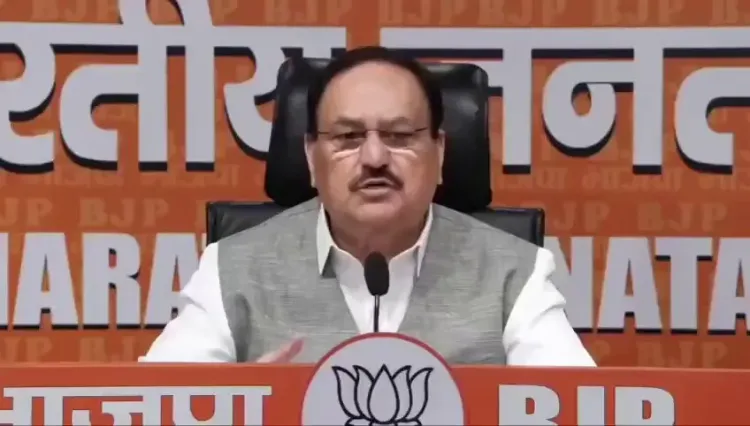
Madhya Pradesh CM Dr. Mohan Yadav amplified Union Minister JP Nadda's call on 23 July 2026 for Parliament to replace political blame games with structured, cross-party debate on child welfare and national policy, framing India's children as a shared national responsibility beyond partisan lines.
Key Takeaways
Mohan Yadav shared Union Minister JP Nadda 's statement on 23 July 2026 calling for structured parliamentary debate on child welfare.
Nadda urged the opposition to decide the debate duration so all parties could jointly frame 'concrete policy for the country's future.' The post emphasised that 'children do not belong to one person; they belong to the nation,' framing child welfare as a cross-party responsibility.
The BJP's appeal aligns with the policy lineage of the Right to Education Act 2009 and the National Education Policy 2020 .
The amplification by a state chief minister signals coordinated intra-party messaging extending the Union government's parliamentary narrative to state capitals.
The next parliamentary session will be the key test of whether the opposition accepts the offer for a structured, time-bound debate.
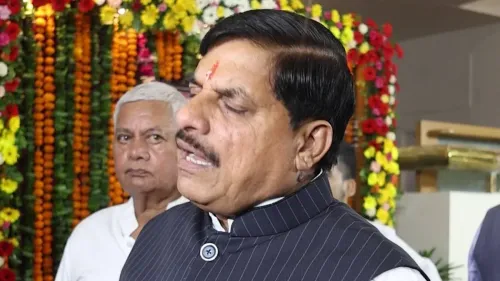
Madhya Pradesh Chief Minister Dr. Mohan Yadav on Thursday, 23 July 2026 shared a statement by Union Minister JP Nadda calling on Parliament to move beyond political blame games and hold structured debates on child welfare and national policy. The post, shared from Dr. Yadav's official X account, underscores a broader BJP push for cross-party consensus on issues affecting the country's future generations.
Context
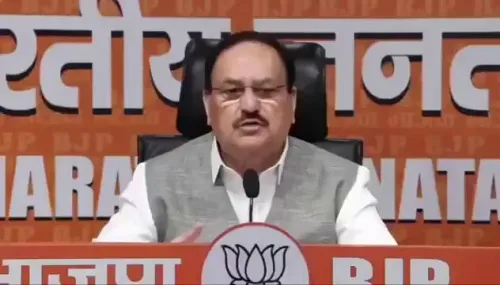
The statement attributed to JP Nadda, quoted in the post, reads: 'आरोप-प्रत्यारोप नहीं, हमें समाधान के विषय में सोचना चाहिए' — 'We should not indulge in blame games; we must think about solutions.' Nadda specifically called Parliament the most appropriate forum for this purpose, urging the opposition to decide the duration of debate so that all sides could together frame 'concrete policy for the country's future.'
The post ends with a pointed appeal: 'क्योंकि बच्चे किसी एक के नहीं, वो देश के हैं' — 'Because children do not belong to one person; they belong to the nation.' By amplifying this message, CM Dr. Mohan Yadav signals alignment between state BJP leadership and the Union government's parliamentary strategy.
Policy Backdrop
India's legislative framework for child welfare has deep roots. The Right to Education Act, 2009 enshrined free and compulsory education as a fundamental right for children aged 6 to 14, placing the responsibility squarely on the state. The National Education Policy 2020 built on this foundation, emphasising holistic child development and future-oriented reforms — both of which have been subjects of parliamentary discussion across multiple sessions.
Calls for structured parliamentary debate on social policy are not new to Indian politics. Ruling party figures have repeatedly framed disruptions and walkouts as obstacles to meaningful legislation, advocating instead for time-bound, agenda-driven discussions that can produce actionable outcomes for citizens.
Stakeholders and Impact
The immediate audience for Nadda's appeal — and Dr. Yadav's amplification — is the opposition in Parliament, which holds the power to propose and agree on debate durations under parliamentary procedure. The substantive beneficiaries, as the post itself notes, are India's children, whose welfare, education, and future prospects are shaped by the policies that emerge from legislative deliberation.
State chief ministers sharing Union-level messaging on parliamentary conduct is also a signal of intra-party coordination: it widens the reach of the BJP's narrative beyond New Delhi and into state capitals, reinforcing the party's positioning as solution-oriented rather than confrontational. Civil society groups and educators working on child welfare will be watching whether the appeal translates into a concrete legislative agenda in the upcoming session.
What's Next
The key test will come during the next parliamentary session — whether the Monsoon or Winter Session of Parliament sees the opposition take up Nadda's offer and agree on a structured debate duration on child-related legislation or education policy. Any follow-up statements from JP Nadda in his capacity as Union Minister, or coordinated messaging from other BJP chief ministers, will indicate whether this is a sustained campaign or a one-time appeal.
If Parliament does convene a dedicated, time-bound discussion on child welfare and education, it could set the stage for amendments or new frameworks building on the Right to Education Act and the National Education Policy 2020 — potentially the most consequential legislative outcome of this political moment.
Point of View
CM Dr. Mohan Yadav is doing more than sharing a quote — he is participating in a deliberate BJP communications strategy that reframes the party as the adult in the room on social policy. The appeal to the opposition to 'set the debate duration' is tactically shrewd: it shifts the burden of parliamentary inaction onto the opposition while projecting the ruling party as eager for dialogue. This fits a broader pattern in which BJP leaders at both the Union and state levels use child welfare and education as politically safe, consensus-friendly terrain to contrast their governance posture with opposition disruption tactics. Whether the gesture produces real legislative movement, or remains a messaging exercise, will depend on how the opposition responds in the next session.
NationPress
21 Oct 2026
Frequently Asked Questions
What did JP Nadda say about Parliament and child welfare?
Union Minister JP Nadda called on Parliament to move beyond blame games and hold structured, cross-party debates to frame concrete policy for India's children, stating that children belong to the nation and not to any one party.
Why did CM Mohan Yadav share JP Nadda's statement?
CM Dr. Mohan Yadav shared the statement on 23 July 2026 to amplify the BJP's call for constructive parliamentary debate on child welfare, signalling alignment between Madhya Pradesh's state leadership and the Union government's messaging.
What is the BJP's position on parliamentary debate on child policy?
The BJP, through leaders like JP Nadda and CM Dr. Mohan Yadav, has positioned itself in favour of structured, time-bound parliamentary debates on child welfare and education, urging the opposition to agree on debate durations rather than resort to disruptions.
What laws govern child welfare and education in India?
The Right to Education Act 2009 guarantees free and compulsory education for children aged 6 to 14 as a fundamental right, while the National Education Policy 2020 provides a broader framework for holistic child development and future-oriented educational reform.
What should we watch for after this statement?
The next Monsoon or Winter Session of Parliament will be critical — specifically whether the opposition agrees to a structured debate on child welfare or education legislation, and whether JP Nadda or other BJP leaders follow up with a concrete legislative proposal.