CM Sai calls for child-labour-free India on World Day
Synopsis
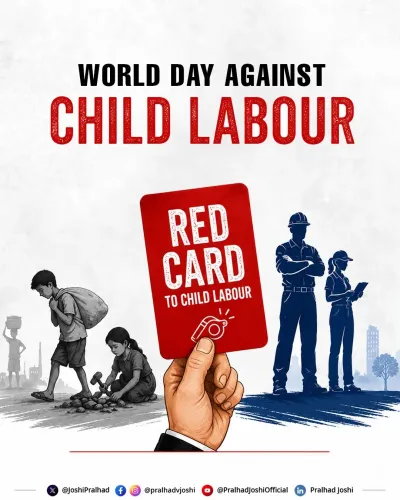
On World Day Against Child Labour, Chhattisgarh Chief Minister Vishnu Deo Sai called for a child-labour-free India, stressing that every child deserves education, safety, and the chance to fulfil their dreams. His pledge aligns with India's legislative and international commitments under ILO conventions and the RTE Act.
Key Takeaways
Chhattisgarh CM Vishnu Deo Sai marked World Day Against Child Labour on 12 June 2026 with a public pledge for a child-labour-free India.
He stated that every child deserves education, safety, and the opportunity to fulfil their dreams — the hallmark of a compassionate society.
India ratified ILO Conventions 182 and 138 in June 2017 , committing to eliminate the worst forms of child labour and setting minimum age standards.
The Child Labour (Prohibition and Regulation) Amendment Act, 2016 bans employment of all children under 14 years .
Chhattisgarh uses district-level monitoring committees and the PENCIL portal to track and act on child labour cases.
Progress will be measured against SDG 8.7 , which targets the elimination of all child labour globally.
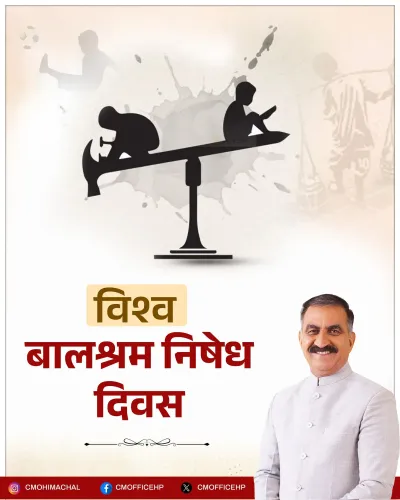
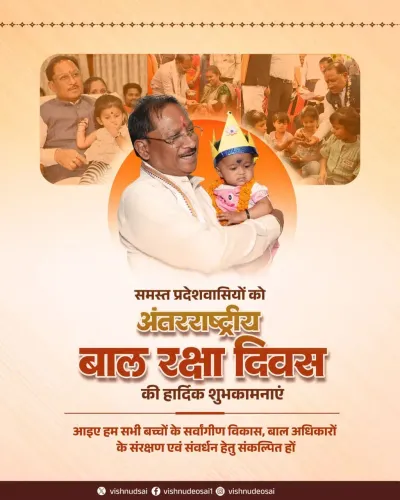
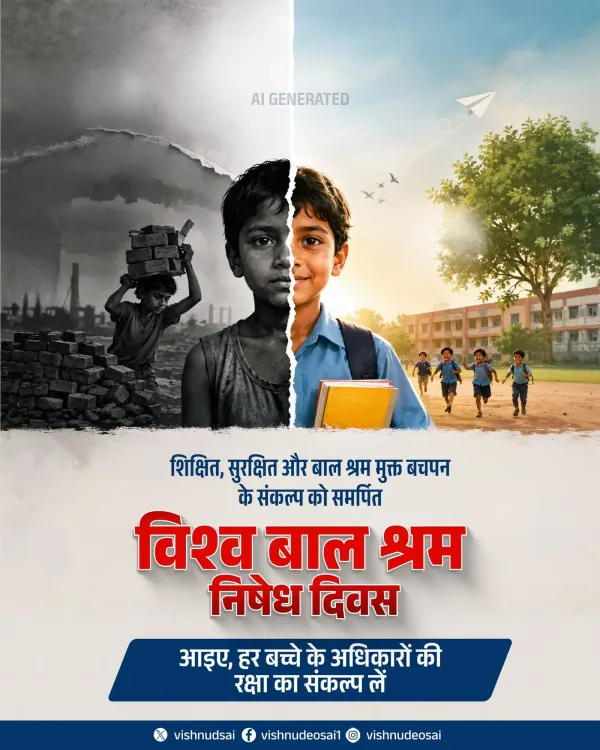
Chhattisgarh Chief Minister Vishnu Deo Sai on Friday, 12 June 2026, marked the World Day Against Child Labour with a call for a child-labour-free India, urging that every child deserves education, safety, and the opportunity to realise their dreams.
Posting on X, CM Sai wrote in Hindi: 'हर बच्चे को मिले शिक्षा, सुरक्षा और सपनों को साकार करने का अवसर' ('Every child should receive education, safety, and the opportunity to fulfil their dreams'), adding that this is the hallmark of a compassionate and developed society. He concluded with a pledge to build a child-labour-free India.
Context
The World Day Against Child Labour is observed every year on 12 June under the auspices of the International Labour Organization (ILO), a United Nations agency, since 2002. The day is dedicated to raising awareness about the need to eliminate child labour globally and to mobilising political and social commitments toward that goal.
India has ratified two landmark ILO conventions — Convention 182 on the worst forms of child labour and Convention 138 on minimum age — both in June 2017, signalling a formal international commitment to child protection standards.
Policy Backdrop
India's legal framework on child labour rests on the Child Labour (Prohibition and Regulation) Amendment Act, 2016, which banned all employment of children under the age of 14 and restricted adolescents from working in hazardous occupations. The Right of Children to Free and Compulsory Education Act, 2009, commonly known as the RTE Act, complements this by guaranteeing schooling for every child.
The National Child Labour Project (NCLP) Scheme provides rehabilitation and bridge education for children rescued from labour. Nationally, child labour elimination has been woven into broader frameworks such as Samagra Shiksha and the Poshan programme, while the PENCIL portal — Platform for Effective Enforcement for No Child Labour — enables online tracking of child labour complaints and rescues.
Chhattisgarh, like several other states, has constituted district-level child labour monitoring committees and linked rescue operations to the PENCIL portal, embedding enforcement within the state's child protection architecture.
Stakeholders and Impact
The most direct beneficiaries of child labour elimination efforts are the millions of school-age children who remain at risk of being pulled into work, particularly in agriculture, brick kilns, domestic service, and small industries. Access to quality schooling and a safe environment are preconditions for breaking intergenerational poverty cycles.
Civil society organisations, district child protection units, and school administrators are key operational stakeholders who translate legislative mandates into ground-level action. CM Sai's public pledge on a widely observed international day reinforces political will at the state level, which advocates argue is critical for sustained enforcement.
What's Next
The broader policy community will watch for Chhattisgarh budget allocations toward district child protection units and bridge education centres in the coming fiscal cycle. At the global level, the next joint ILO-UNICEF estimates on child labour trends will provide a data benchmark against which India's progress — and that of individual states — can be measured against Sustainable Development Goal 8.7, which targets the elimination of all forms of child labour by 2025. CM Sai's statement positions Chhattisgarh ahead of that reporting cycle, signalling continued state-level commitment.
Point of View
Safety, and aspiration together, the statement frames child labour elimination not merely as a law-enforcement issue but as a development imperative — language consistent with the Centre's Samagra Shiksha and SDG 8.7 commitments. Such public pledges by chief ministers carry operational significance: they set a tone for district administrations and signal to civil society that political cover exists for enforcement drives. The timing, ahead of likely ILO-UNICEF progress reporting, also positions Chhattisgarh within a broader accountability framework that will scrutinise state-level data.
NationPress
26 Oct 2026
Frequently Asked Questions
What is World Day Against Child Labour and when is it observed?
World Day Against Child Labour is an annual global observance held on 12 June every year, established by the International Labour Organization in 2002 to highlight the need to eliminate child labour worldwide.
What did Chhattisgarh CM Vishnu Deo Sai say on World Day Against Child Labour 2026?
CM Vishnu Deo Sai called for a child-labour-free India, stating that every child deserves education, safety, and the opportunity to realise their dreams, describing this as the hallmark of a compassionate and developed society.
What is India's law on child labour?
The Child Labour (Prohibition and Regulation) Amendment Act, 2016 bans employment of all children under 14 years of age and restricts adolescents from working in hazardous occupations.
What is the PENCIL portal in India?
PENCIL — Platform for Effective Enforcement for No Child Labour — is a government portal that enables online tracking, reporting, and follow-up of child labour complaints and rescue operations across Indian states.
What is SDG 8.7 and how does it relate to India?
SDG 8.7 is a United Nations Sustainable Development Goal that calls for the elimination of all forms of child labour globally. India, as a signatory, is expected to report progress toward this target, making state-level commitments like CM Sai's pledge directly relevant to international accountability.