CM Revanth Reddy Reviews Irrigation Projects, Pushes Water Security for Farmers
Synopsis
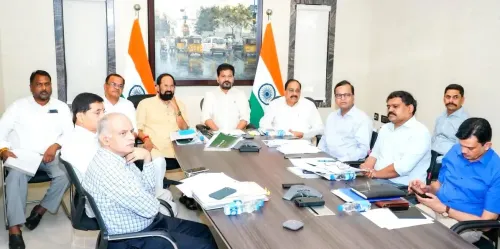
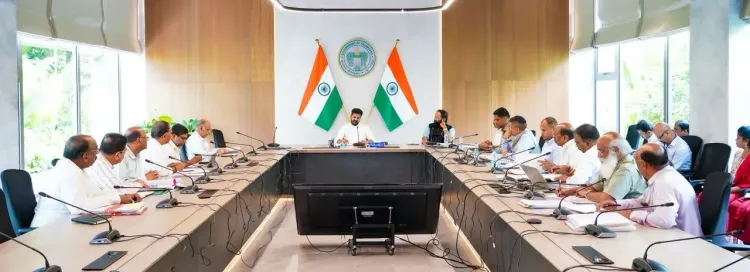
Chief Minister A. Revanth Reddy chaired a review of Telangana's Irrigation Department on 12 August 2026, directing officials to fast-track pending projects and ensure assured irrigation water to every acre of farmland, reaffirming the government's commitment to agricultural water security.
Key Takeaways
CM Revanth Reddy chaired an Irrigation Department review on 12 August 2026 .
Officials were directed to accelerate pending irrigation works across the state.
The review covered water availability, project maintenance, and future water needs.
The CM called for coordinated action to ensure irrigation water reaches every acre of farmland.
Providing irrigation security to Telangana's farming community was stated as a core government goal.
Telangana has prioritised irrigation infrastructure since statehood in 2014 , including through the Mission Kakatiya tank-restoration programme.
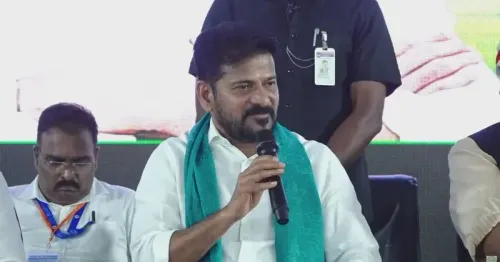
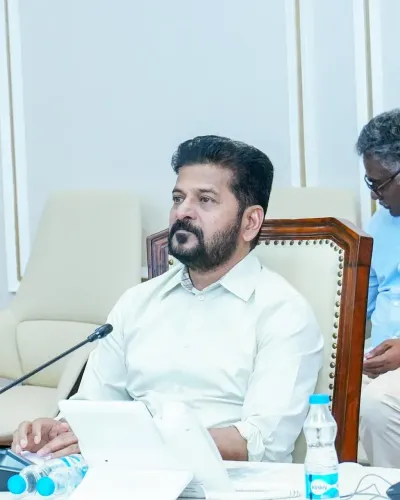
Every acre, every farmer, every drop — that is the mandate Telangana Chief Minister A. Revanth Reddy put on the table on Wednesday, 12 August 2026, when he chaired a high-level review of the state's Irrigation Department and pressed officials to accelerate pending works across the state.
Posting in Telugu after the meeting, the Chief Minister wrote: 'I participated in the review of the Irrigation Department and discussed the progress of projects with officials. I reviewed water availability, project maintenance, and steps to be taken in line of future needs. I directed officials to work in a coordinated manner to ensure irrigation water reaches farmers and to provide water assurance to every acre. Providing irrigation security to Telangana's farming community and further strengthening the state's agricultural sector is the goal of the people's government.'
Pending Works and the Push to Move Faster
The review zeroed in on bottlenecks slowing down ongoing irrigation infrastructure. Revanth Reddy directed officials to speed up pending works — signalling impatience with delays that directly affect when and how much water reaches fields. The emphasis on coordination between departments points to a recognition that water allocation is rarely a single-agency problem; it requires synchronised action across planning, construction, and revenue bodies.
Telangana's irrigation story has deep roots. Since the state was carved out of Andhra Pradesh in 2014, successive governments have treated water infrastructure as the backbone of rural stability. The earlier Mission Kakatiya programme, launched in 2015, set out to restore thousands of tanks and minor irrigation sources — a signal of how seriously the state has pursued decentralised water security. The current administration inherits both that momentum and its unfinished agenda.
Water Assurance to Every Acre — What It Means for Telangana's Farmers
The phrase 'water assurance to every acre' is not just rhetorical. Telangana's farming community — spread across rain-fed and canal-irrigated zones — remains acutely vulnerable to erratic monsoons and ageing canal networks. When irrigation infrastructure stalls, it is the smallholder who absorbs the loss first, switching crops or leaving land fallow.
Revanth Reddy's instruction for officials to work 'in a coordinated manner' suggests the review identified inter-departmental gaps as a key friction point. Getting water from a reservoir to a field involves dam management, canal maintenance, last-mile distribution, and revenue records — a chain that breaks easily without active oversight from the top.
With the agricultural season in full swing, the timing of this review carries practical weight. Decisions made in the department now will determine whether water reaches crops in the critical growing window — or arrives too late to matter.
Point of View
The CM is simultaneously managing a real governance gap and reinforcing a 'pro-farmer' identity that the Congress wrested from the BRS in the 2023 assembly election. The emphasis on coordination rather than new projects suggests the administration is grappling with implementation drag rather than a shortage of schemes. Whether the review translates into measurable progress on the ground — faster canal repairs, cleared bottlenecks, updated water-allocation protocols — will determine whether this becomes a durable policy win or a recurring headline.
NationPress
12 Aug 2026
Frequently Asked Questions
What did CM Revanth Reddy discuss in the Irrigation Department review?
CM Revanth Reddy reviewed the progress of irrigation projects, water availability, project maintenance, and future water needs, and directed officials to accelerate pending works and ensure coordinated water delivery to every acre of farmland.
When did Revanth Reddy hold the irrigation review meeting?
The Irrigation Department review was held on Wednesday, 12 August 2026 .
What is Mission Kakatiya and how does it relate to Telangana irrigation?
Mission Kakatiya was a programme launched in 2015 to restore thousands of tanks and minor irrigation sources across Telangana, forming part of the state's long-standing effort to expand water infrastructure since its formation in 2014.
What is the Telangana government's goal for farmers regarding water?
The government's stated goal is to provide irrigation water security to all of Telangana's farming community and ensure water assurance to every acre of agricultural land.
Why is irrigation infrastructure important for Telangana farmers?
Many Telangana farmers depend on canal and tank irrigation to protect crops from erratic monsoons. Delays in irrigation infrastructure directly affect crop yields and rural livelihoods, making assured water access a critical policy priority.