CM Rio Chairs NIMSR Governing Council Review Meet
Synopsis
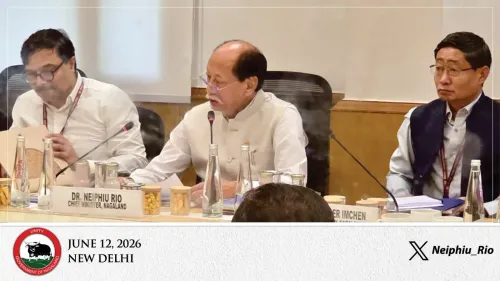
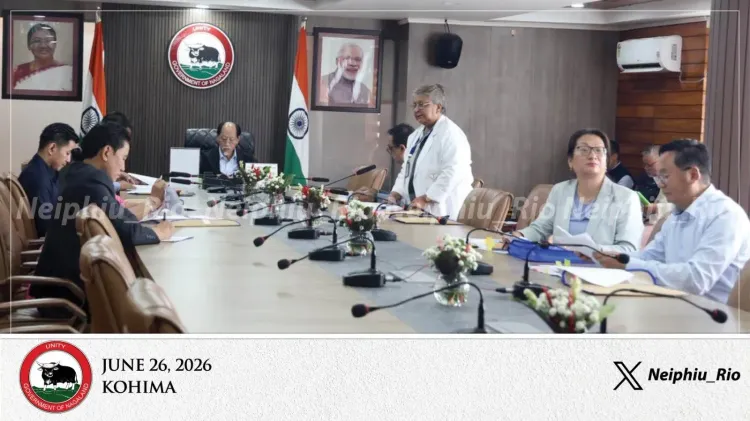
Nagaland Chief Minister Neiphiu Rio on 26 June 2026 chaired a Governing Council meeting of NIMSR to assess progress, development plans, and the institution's roadmap for delivering quality healthcare and medical education in the state.
Key Takeaways
CM Neiphiu Rio personally chaired the NIMSR Governing Council meeting on 26 June 2026 , signalling direct executive oversight of the institution.
NIMSR is Nagaland's state medical sciences and research institution, aimed at building local healthcare and education capacity.
The meeting reviewed the institution's progress, development plans, and future roadmap.
The initiative addresses a longstanding shortage of medical training facilities in Nagaland and the broader Northeast, reducing dependence on out-of-state healthcare.
Key stakeholders include medical students, healthcare professionals, and the general population of Nagaland .
Next steps to watch include infrastructure updates, faculty recruitment, and potential central government support for northeastern medical institutions.
Nagaland Chief Minister Neiphiu Rio on Friday, 26 June 2026, convened a meeting of the Governing Council of the Nagaland Institute of Medical Sciences and Research (NIMSR) to review the institution's progress, development plans, and future roadmap, reaffirming the state government's commitment to advancing healthcare and medical education in Nagaland.
Context
NIMSR is a state-run institution established to build medical education and research capacity within Nagaland, reducing the state's longstanding dependence on healthcare and specialist training facilities located outside the region. Chief Minister Rio, in his post on X, said the meeting was held to ensure the institution 'continues to contribute towards quality healthcare and education in the State.'
The Governing Council serves as the apex oversight body for the institution, responsible for steering policy decisions on infrastructure, academics, and research priorities. Convening such a review at the level of the Chief Minister signals direct executive attention to the institution's trajectory.
Policy Backdrop
Nagaland and other northeastern states have for decades faced acute shortages of trained doctors, specialists, and medical researchers, with patients often travelling to cities such as Guwahati, Kolkata, or New Delhi for advanced care. Establishing state medical institutions is a core plank of the region's strategy to close this gap.
Across India's Northeast, state governments have incrementally invested in medical colleges and research institutes as part of broader national policy to strengthen public health systems and higher education in peripheral areas. Central government schemes supporting health infrastructure in aspirational and border districts have complemented these state-level efforts.
Stakeholders and Impact
The primary beneficiaries of NIMSR's growth are Nagaland's medical students, who currently face limited local options for undergraduate and postgraduate medical training, and the state's general population, which stands to gain from an expanded pool of locally trained healthcare professionals. Healthcare workers and faculty recruited to the institution also form a key stakeholder group.
A functional, well-resourced NIMSR could meaningfully reduce the burden on families who bear significant financial and logistical costs when seeking specialised medical care outside the state. Progress at the institution also has implications for the state's health indicators, including maternal and child health outcomes in remote districts.
What's Next
Observers will watch for concrete outcomes from the 26 June Governing Council meeting, including announcements on infrastructure timelines, faculty recruitment drives, and student intake cycles. Any allocation in the state health budget or central government support specifically directed at NIMSR will be a key indicator of how firmly the institution features in Nagaland's near-term development agenda.
With Chief Minister Rio personally chairing the review, the meeting sets an expectation of follow-through on the institution's roadmap — and positions NIMSR as a flagship in the state's push to build self-sufficient, quality healthcare and medical education infrastructure in the Northeast.
Point of View
Not merely an administrative routine. It fits a broader pattern across northeastern states of using state-run medical institutions as anchors for both development credibility and political capital. The Northeast has historically been under-served in medical education, and any visible progress at NIMSR will carry weight with a constituency acutely aware of the costs of seeking care elsewhere. The meeting's outcomes — once made public — will be the real test of whether this executive attention translates into measurable institutional progress.
NationPress
26 Jun 2026
Frequently Asked Questions
What is NIMSR Nagaland?
NIMSR , or the Nagaland Institute of Medical Sciences and Research, is a state-run institution established to provide medical education, research, and healthcare services within Nagaland , reducing the state's reliance on medical facilities outside the region.
Why did CM Neiphiu Rio convene the NIMSR Governing Council meeting?
Chief Minister Neiphiu Rio convened the meeting on 26 June 2026 to review NIMSR's progress, development plans, and future roadmap, with the goal of ensuring the institution continues to contribute to quality healthcare and education in Nagaland .
What is the Governing Council of NIMSR?
The Governing Council is the apex oversight body of NIMSR , responsible for policy direction on the institution's infrastructure, academics, faculty, and research priorities.
What are the healthcare challenges in Nagaland?
Nagaland faces significant shortages of trained doctors and specialists, with many residents travelling to cities like Guwahati or Kolkata for advanced care. Institutions like NIMSR are intended to address this gap by building local medical capacity.
What should we expect next from NIMSR?
Key developments to watch include announcements on NIMSR 's infrastructure timeline, faculty recruitment, student intake cycles, and any state budget allocations or central government support directed at the institution.