CM Rio Urges Nagaland Police to Embrace Community Policing
Synopsis
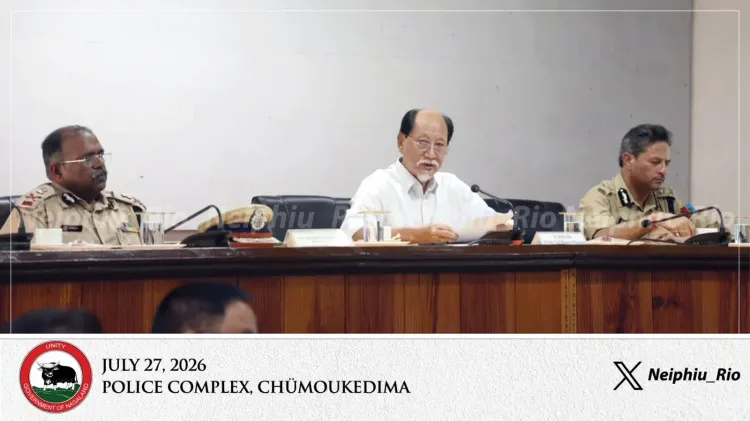
Nagaland Chief Minister Neiphiu Rio on July 27, 2026, called on police officers to embrace community policing, respect citizens' rights and dignity, and remain sensitive to the state's unique tribal social fabric, describing a people-oriented police force as indispensable to Nagaland's progress.
Key Takeaways
CM Neiphiu Rio on July 27, 2026 , publicly urged Nagaland Police officers to strengthen community policing and serve with fairness, impartiality, and humility.
The call specifically references Nagaland's 'unique social fabric,' acknowledging the role of tribal customs and traditional governance structures.
Nagaland operates under Article 371A , which protects customary Naga laws, making police sensitivity toward local institutions a constitutional as well as a policy imperative.
The statement aligns with the 2006 Supreme Court mandate in Prakash Singh v.
Union of India directing states to implement community policing and accountability reforms.
The directive reflects a broader Northeast India trend of transitioning from militarised law enforcement to community-based policing as peace processes advance.
Follow-up action on police training modules and potential budget allocations for formalising community policing mechanisms will be key indicators of implementation.
Nagaland Chief Minister Neiphiu Rio on Monday, July 27, 2026, called on state police officers and personnel to strengthen community policing, uphold citizens' rights and dignity, and serve with fairness, impartiality, and humility, underlining that a professional, people-oriented police force is essential to the state's progress.
Context
Posting on X, CM Rio urged officers to 'remain sensitive to our unique social fabric' — a pointed reference to Nagaland's distinct cultural and tribal identity. He emphasised that policing must be grounded in respect for citizens rather than coercion, stating that 'a professional, people-oriented police force is indispensable to our progress.'
The appeal comes against the backdrop of Nagaland's long history of insurgency and its gradual transition toward peace, during which the role of the police has evolved from a largely counter-insurgency function to one increasingly focused on civil governance and community trust.
Policy Backdrop
The call resonates with the landmark 2006 Supreme Court judgment in Prakash Singh v. Union of India, which directed states to implement police reforms including community policing frameworks and stronger accountability mechanisms. Most states, including those in the Northeast, have faced persistent pressure to translate that ruling into practice.
Nagaland operates under Article 371A of the Constitution, which protects customary Naga laws and traditional institutions. Successive governments have therefore stressed that police personnel must demonstrate sensitivity toward local social structures, including village councils and customary bodies that exercise parallel governance authority in many areas.
Across the broader Northeast India region, there has been a deliberate policy shift away from militarised responses toward community-based law enforcement, as prolonged insurgencies have given way to negotiated peace processes. CM Rio's statement fits squarely within this regional pattern.
Stakeholders and Impact
Nagaland Police personnel are the direct audience for the Chief Minister's directive. The force operates in a complex environment where tribal customary law, constitutional provisions, and formal state law often intersect, making sensitivity and impartiality not merely aspirational values but operational necessities.
Tribal communities across Nagaland's 16 districts stand to benefit most from a police force that actively builds trust rather than relying on authority alone. Village councils and traditional bodies — which retain significant social legitimacy — are key intermediaries through which community policing can be most effectively delivered.
For ordinary citizens, the Chief Minister's emphasis on 'dignity' and 'humility' signals an expectation that police interactions be conducted without harassment or discrimination, a concern that has historically been raised in conflict-affected areas of the state.
What's Next
The statement is likely to prompt scrutiny of whether Nagaland Police training modules are updated to formally incorporate community policing principles and engagement with customary governance bodies. Any follow-up in the form of state budget allocations or policy circulars would indicate whether the call translates into institutional change.
Observers will also watch for legislative or administrative steps to formalise the relationship between the police and village councils — a move that could set a precedent for other states in the Northeast navigating similar transitions from conflict to civilian-led governance.
Point of View
' he is effectively asking the force to subordinate its coercive authority to the legitimacy of traditional governance structures that predate the state itself. This fits a deliberate long-term strategy by successive Nagaland governments to build civilian trust as a complement to the ongoing Naga political talks. The real test will be whether the statement is followed by structural reforms — training, budgets, and formal protocols — or remains aspirational rhetoric in a state where parallel power structures still shape daily life.
NationPress
26 Oct 2026
Frequently Asked Questions
What did Nagaland CM Neiphiu Rio say about community policing?
CM Neiphiu Rio urged Nagaland Police officers and personnel to strengthen community policing, respect citizens' rights and dignity, remain sensitive to the state's unique social fabric, and serve with fairness, impartiality, and humility, calling a people-oriented police force indispensable to Nagaland's progress.
Why is community policing important in Nagaland?
Nagaland has a unique social fabric shaped by tribal customs, traditional village councils, and special constitutional protections under Article 371A. After decades of insurgency, building community trust is central to the state's transition to civilian-led governance, making community policing a priority.
What is Article 371A and how does it affect Nagaland Police?
Article 371A of the Indian Constitution protects Naga customary laws and traditional institutions from parliamentary legislation without the Nagaland Legislative Assembly's consent. This means Nagaland Police must operate with sensitivity toward these parallel governance structures, which retain strong social legitimacy in many areas.
What is the Prakash Singh judgment and its relevance to Nagaland?
The 2006 Supreme Court judgment in Prakash Singh v. Union of India directed all Indian states to implement police reforms, including community policing frameworks and accountability measures. CM Rio's call aligns with the spirit of that ruling, which remains only partially implemented across most states.
Who are the key stakeholders affected by Nagaland's community policing push?
The primary stakeholders are Nagaland Police personnel, tribal communities across the state's districts, and traditional bodies like village councils that exercise parallel governance authority. Citizens in areas historically affected by conflict stand to benefit most from a more trust-based, people-oriented police approach.