CM Rio flags off 549 new vehicles for Nagaland Police
Synopsis
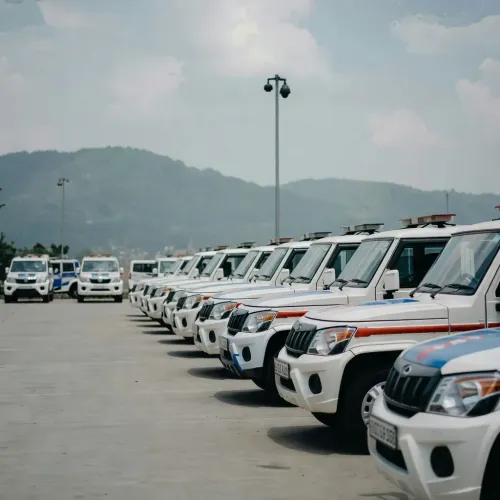
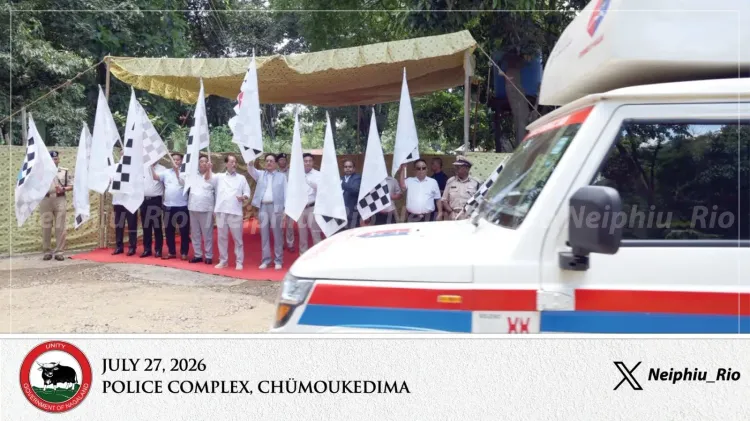
Nagaland Chief Minister Neiphiu Rio on 27 July 2026 flagged off 549 new police vehicles alongside Deputy CM Yanthungo Patton and the DGP, in a significant push to strengthen the Nagaland Police's operational and mobility capabilities across the state's challenging terrain.
Key Takeaways
549 new police vehicles were flagged off by Nagaland CM Neiphiu Rio on 27 July 2026 .
Deputy CM Yanthungo Patton , the DGP Nagaland , and senior officers attended the ceremony.
The induction is framed as part of 'continued efforts to strengthen the operational capability of the Nagaland Police.' Such procurements in Nagaland are typically supported through the central government's Modernisation of Police Forces scheme .
The upgrade is expected to improve police mobility and response times across Nagaland 's difficult mountainous terrain.
The government has signalled further phases of modernisation in coming fiscal cycles.
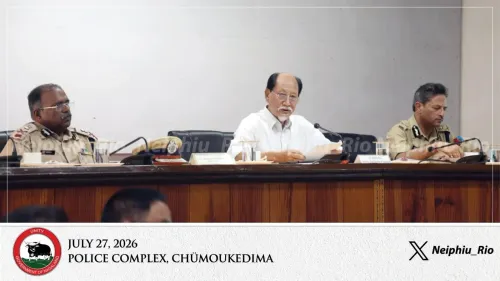
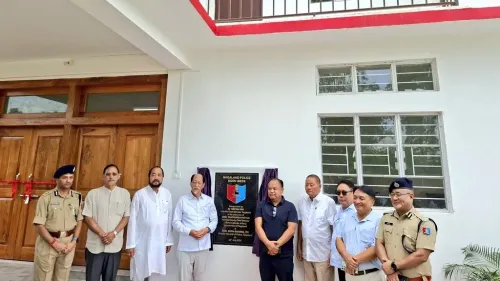
Nagaland Chief Minister Neiphiu Rio on Monday, 27 July 2026, flagged off 549 new police vehicles in a ceremony attended by Deputy Chief Minister Yanthungo Patton, the Director General of Police, senior officers, and other distinguished guests, marking a significant upgrade to the state's law-enforcement mobility.
Context
Chief Minister Rio described the induction as part of 'continued efforts to strengthen the operational capability of the Nagaland Police.' The flag-off ceremony brought together the state's top political and police leadership, underscoring the government's emphasis on security modernisation as a policy priority.
Nagaland is a northeastern Indian state with a complex security landscape shaped by decades of insurgency, multiple ceasefire agreements with armed factions, and the continued application of special laws. Improving police mobility in its mountainous and difficult terrain has long been a stated administrative need.
Policy Backdrop
Vehicle and equipment procurement of this scale for state police forces typically draws on central government support under the Modernisation of Police Forces (MPF) scheme, which has channelled resources to state constabularies — including those in special-category northeastern states — since the 1960s and 1970s. Nagaland, as a special-category state, has historically been eligible for a higher share of centrally sponsored assistance under such frameworks.
Successive state governments in Kohima have periodically inducted vehicles and communication equipment to address the operational challenges posed by the state's terrain and its dispersed population centres. The addition of 549 vehicles in a single induction represents a notable step in that continuing effort.
Stakeholders and Impact
Deputy Chief Minister Yanthungo Patton, who is closely associated with the state's home and security portfolios, was prominently present at the ceremony, signalling bipartisan political commitment within the ruling alliance to the initiative. The Nagaland Police stands as the primary beneficiary, with field units expected to gain significantly improved response and patrol capacity across the state's districts.
For communities in remote districts, enhanced police mobility can translate into faster emergency response times and more consistent law-enforcement presence — factors that matter acutely in areas historically affected by insurgent activity and inter-tribal tensions.
What's Next
The state government's framing of this induction as part of 'continued efforts' suggests that further phases of equipment modernisation may follow in coming fiscal cycles. Analysts tracking Northeast India security will watch for any integration of the newly inducted fleet with central paramilitary coordination mechanisms, as well as for announcements on complementary infrastructure — training, communication systems, and outpost upgrades — that would maximise the operational value of the new vehicles.
The induction also arrives at a moment when the broader peace process in Nagaland, involving negotiations with multiple factions, remains an active diplomatic and security priority for both New Delhi and the state government, making a capable and well-equipped police force a key variable in sustaining stability.
Point of View
And its public staging — with both the Chief Minister and Deputy Chief Minister present — signals that security modernisation is being positioned as a visible governance deliverable ahead of potential electoral cycles. For CM Rio, whose Nationalist Democratic Progressive Party leads a coalition government, demonstrating tangible improvements to law-enforcement infrastructure serves a dual purpose: reinforcing administrative credibility and addressing long-standing demands from police personnel and civil society for better operational resources. The move also fits a broader pattern of the central government and northeastern state administrations co-investing in security capacity as peace negotiations with armed groups remain unresolved, using infrastructure upgrades to signal state presence and intent in contested areas.
NationPress
26 Oct 2026
Frequently Asked Questions
How many vehicles did Nagaland CM Rio flag off for the police?
Nagaland Chief Minister Neiphiu Rio flagged off 549 new police vehicles on 27 July 2026 to strengthen the operational capability of the Nagaland Police.
Who attended the Nagaland police vehicle flag-off ceremony?
The ceremony was attended by Deputy Chief Minister Yanthungo Patton , the Director General of Police Nagaland , senior officers, and distinguished guests, alongside Chief Minister Rio.
What scheme funds police vehicle procurement in Nagaland?
Vehicle and equipment upgrades for state police forces in Nagaland are typically supported through the central government's Modernisation of Police Forces (MPF) scheme , which provides resources to state constabularies including in special-category northeastern states.
Why does Nagaland need more police vehicles?
Nagaland 's mountainous and difficult terrain, combined with its complex security environment involving multiple insurgent factions and ceasefire agreements, makes police mobility a critical operational requirement for effective law enforcement and emergency response.
What is Yanthungo Patton's role in Nagaland?
Yanthungo Patton is the Deputy Chief Minister of Nagaland and is closely associated with the state's home and security portfolios within the ruling coalition government.