Nagaland CM Rio flags off 549 police vehicles, ₹150 crore modernisation push

Synopsis
Nagaland's police modernisation just shifted gears. Chief Minister Rio flagged off 549 new vehicles and 12 Mobile Forensic Vans in Chumoukedima, backed by nearly ₹150 crore secured under ASUMP — a jump from the usual ₹5-20 crore annual allocation to ₹155 crore in a single year. The scale signals a rare policy win for a northeastern state navigating complex terrain and multi-layered security threats.
Key Takeaways
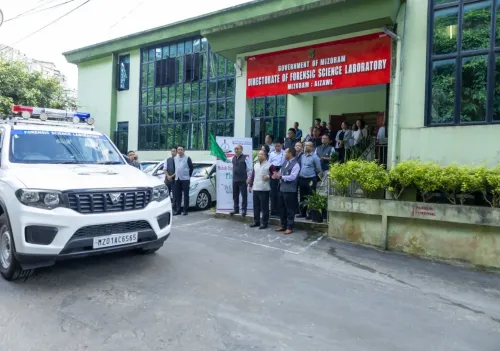
Nagaland CM Neiphiu Rio flagged off 549 police vehicles and 12 Mobile Forensic Vans at Chumoukedima on 27 July .
Vehicles procured under the ASUMP scheme for 2025-26 at an approximate cost of ₹81.65 crore .
The fleet will replace 35–40% of Nagaland's ageing police vehicles; nearly half the existing fleet was unserviceable.
Nagaland secured nearly ₹150 crore under the broader modernisation programme, covering CCTV, ANPR, and Smart Police Suite.
Annual police modernisation funding jumped from ₹5–20 crore in previous years to nearly ₹155 crore in 2025-26 .
DGP Rupin Sharma flagged ongoing gaps in police stations, outposts, and residential infrastructure.
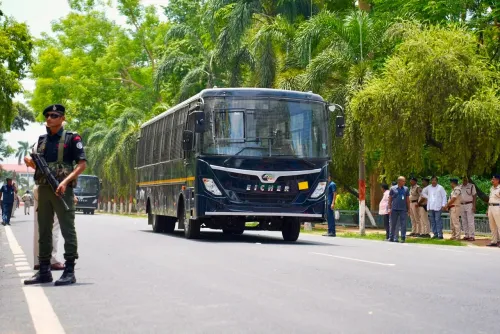
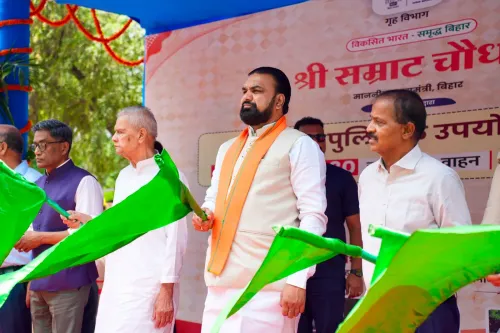
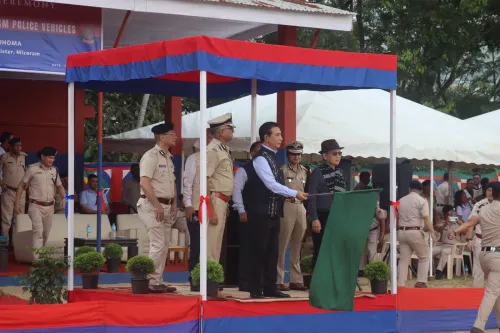
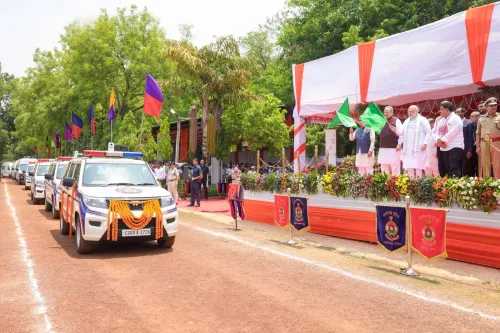
Nagaland Chief Minister Neiphiu Rio on Monday, 27 July called for specialised investigation and advanced technological capability to counter growing security threats, stressing that organised extortion, drug trafficking, cybercrime, financial fraud, human trafficking, and crimes against women and children require a more modern and coordinated policing approach. The remarks came as he flagged off 549 new police vehicles and 12 Mobile Forensic Vans at the Police Complex in Chumoukedima, marking the first major outcome of Nagaland's broader police modernisation programme.
Scale of the Modernisation Drive
The 549 vehicles and 12 Mobile Forensic Vans were procured under the Assistance to States and Union Territories for Modernisation of Police (ASUMP) scheme for the financial year 2025-26, at an approximate cost of ₹81.65 crore. The fleet — which includes ambulances and water tankers — will replace 35 to 40 per cent of the ageing police fleet, significantly improving operational readiness. Chief Minister Rio noted that nearly half of the existing fleet had become old, unserviceable, or had crossed its permissible service life, hampering policing across districts, police stations, IRB battalions, highway patrols, and investigation units.
Unprecedented Funding Under ASUMP
Nagaland has secured nearly ₹150 crore under the broader police modernisation programme for upgrading infrastructure including mobility, CCTV surveillance, Automatic Number Plate Recognition (ANPR) systems, and the Smart Police Suite. Director General of Police Rupin Sharma revealed that funding under the Police Modernisation Scheme surged from the usual annual allocation of ₹5 crore to ₹20 crore in previous years to nearly ₹155 crore in 2025-26 — an outcome he attributed to extensive scrutiny by the Ministry of Home Affairs and persistent efforts by Nagaland Police officers in preparing and defending proposals.
What the Chief Minister Said
Rio emphasised that mobility is critical for effective policing in Nagaland's difficult terrain, where timely emergency response, crime prevention, and disaster management all depend on reliable transportation. He called for continuous professional training in cyber forensics, digital evidence, financial intelligence, and data analysis, urging the Nagaland Police to transition towards investigation-oriented and community-centred policing grounded in integrity, professionalism, and public trust. He also appealed to citizens to cooperate with police by reporting crimes promptly and assisting lawful investigations.
Rio thanked Prime Minister Narendra Modi, Union Home Minister Amit Shah, the Ministry of Home Affairs, Deputy Chief Minister Yanthungo Patton, and the state Home Department for their support in making the modernisation initiative a reality.
DGP's Assessment and Gaps Ahead
DGP Sharma described the vehicle induction as a major milestone in improving Nagaland Police's operational and forensic capabilities. He acknowledged the Chief Minister for consistently pursuing the state's proposals with the Union Home Minister, which he said enabled Nagaland to secure 'unprecedented financial assistance.' However, Sharma pointed out that police infrastructure — including police stations, outposts, and residential accommodation — still requires greater investment. He stressed that future modernisation must increasingly focus on technology, cybercrime, forensic science, intelligence gathering, and investigative capabilities. Deputy Chief Minister Yanthungo Patton also addressed the gathering.
What Comes Next
Sharma underlined the importance of timely release and utilisation of both Central assistance and the state's matching share to maintain eligibility for higher allocations in future years. Rio urged police personnel to deploy vehicles strictly on operational requirements, prioritise district executive forces and remote areas, and ensure regular maintenance. With the first major tranche now delivered, Nagaland's police modernisation programme is expected to expand further in the coming financial years.
Point of View
And Nagaland's ability to defend its proposals in New Delhi deserves credit. But the DGP's own admission that police stations, outposts, and housing remain underfunded exposes a familiar pattern: mobility and equipment get attention, while the human and physical backbone of policing lags. Cybercrime and financial fraud do not yield to vehicles alone. The real test of this modernisation will be whether the training investments in cyber forensics and digital evidence actually translate into conviction rates — a metric that rarely features in flagging-off ceremonies.
NationPress
26 Oct 2026
Frequently Asked Questions
What was flagged off by Nagaland CM Neiphiu Rio on 27 July?
Chief Minister Neiphiu Rio flagged off 549 new police vehicles and 12 Mobile Forensic Vans at the Police Complex in Chumoukedima on 27 July. The vehicles were procured under the ASUMP scheme for the financial year 2025-26 at an approximate cost of ₹81.65 crore.
What is the ASUMP scheme?
ASUMP stands for Assistance to States and Union Territories for Modernisation of Police, a Central scheme that funds upgrades in police mobility, forensic capability, surveillance, and infrastructure. Nagaland secured nearly ₹150 crore under this programme for 2025-26.
How much has Nagaland's police modernisation funding increased?
Funding under the Police Modernisation Scheme rose from the usual annual allocation of ₹5 crore to ₹20 crore in previous years to nearly ₹155 crore in the financial year 2025-26, according to DGP Rupin Sharma.
Why does Nagaland need new police vehicles urgently?
Nearly half of Nagaland's existing police fleet had become old, unserviceable, or had crossed its permissible service life, hampering policing across districts, police stations, IRB battalions, highway patrols, and investigation units. The 549 new vehicles will replace 35–40% of the ageing fleet.
What security challenges did CM Rio highlight?
Rio cited organised extortion, drug trafficking, cybercrime, financial fraud, human trafficking, and crimes against women and children as emerging threats requiring specialised investigation, cyber forensics training, digital evidence handling, and a community-centred policing approach.