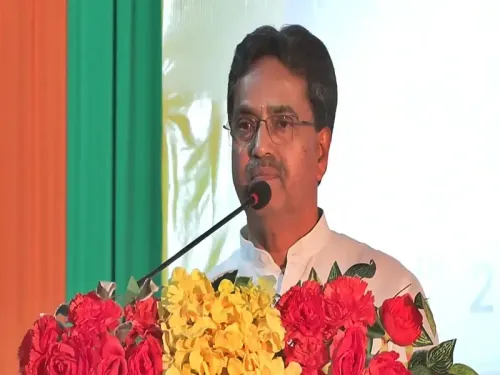
CM Manik Saha calls for grassroots action on World Environment Day

Synopsis
Tripura Chief Minister Dr. Manik Saha marked World Environment Day on 5 June 2026 by calling for grassroots collective action over grand promises, urging communities to restore ecosystems, cut waste, and adopt sustainable practices — anchoring his appeal in India's broader climate and forest conservation commitments.
Key Takeaways
Manik Saha , Chief Minister of Tripura , posted a World Environment Day message on 5 June 2026 calling for grassroots environmental action.
He urged restoration of local ecosystems, waste reduction, resource conservation, and sustainable daily practices.
Tripura has over 70 per cent forest cover, making it one of India's most forested states and a key site for biodiversity conservation.
His appeal aligns with national frameworks including the Green India Mission , Swachh Bharat Mission , and India's Paris Agreement commitments.
The statement follows a federal pattern of state leaders reinforcing central environmental schemes without announcing new fiscal outlays.
Focus will shift to Tripura 's state-level progress under the Green India Mission and any updates ahead of future climate negotiations.
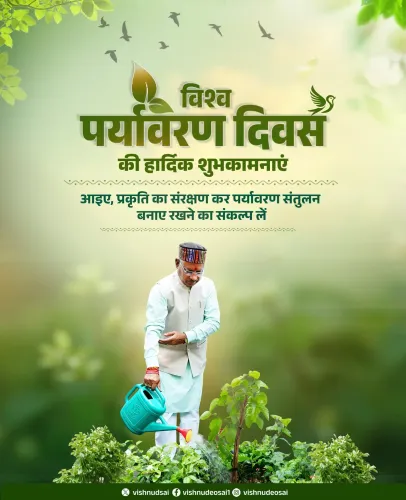
Tripura Chief Minister Dr. Manik Saha on Friday, 5 June 2026, marked World Environment Day by calling for collective, ground-level action to protect nature, urging citizens to restore local ecosystems, reduce waste, conserve resources, and adopt sustainable daily practices.
Context
World Environment Day, observed every year on 5 June, was established by a UN General Assembly resolution in 1972 to promote global environmental awareness. This year, Dr. Saha used the occasion to move beyond ceremonial messaging, stating plainly: 'Our planet doesn't need grand promises, it needs collective action and consistent efforts at the grassroots level.'
The appeal reflects a growing emphasis among Indian state leaders on translating national environmental commitments into community-level behaviour, rather than relying solely on top-down policy mandates.
Policy Backdrop
India has anchored its environmental agenda in a series of long-standing frameworks. The National Action Plan on Climate Change, launched in 2008, outlines eight national missions covering sustainable development and climate adaptation. India joined the Paris Agreement in 2015, committing to reduced emission intensity and increased forest and tree cover through its Nationally Determined Contributions.
The Green India Mission, approved in 2014, specifically targets expansion of forest and tree cover across states, with Tripura among the northeastern states prioritised for implementation. The Swachh Bharat Mission, also launched in 2014, addresses waste reduction across urban and rural areas — both themes echoed directly in Dr. Saha's post.
Tripura carries particular ecological weight in this conversation: the state has over 70 per cent forest cover, making it one of the most forested states in India and giving local conservation efforts outsized national significance.
Stakeholders and Impact
The primary audience for Dr. Saha's appeal is local communities and state forest department personnel who are the frontline implementers of ecosystem restoration and waste management programmes. Northeastern states like Tripura are especially vulnerable to climate impacts given their biodiversity-rich but fragile landscapes, making grassroots participation critical.
The message also lands within a federal pattern where state leaders reinforce central environmental schemes — without announcing new fiscal commitments — to sustain public awareness and behavioural change between major policy cycles. By invoking 'greener, cleaner, and more resilient communities for future generations,' Dr. Saha frames environmental responsibility as a civic, not merely governmental, obligation.
What's Next
Attention will now turn to state-level progress reports under the Green India Mission and whether Tripura tables any specific ecosystem or waste-management updates ahead of the next international climate negotiations. Dr. Saha's call for 'consistent efforts' signals that sustained implementation, rather than event-driven announcements, will be the benchmark against which the state's environmental record is measured going forward.
Point of View
He positions Tripura's high forest cover as an asset that requires citizen stewardship, not just government budgets. The framing fits a broader BJP-governed state pattern of aligning with central environmental missions — Paris Agreement, Green India Mission, Swachh Bharat — while keeping the messaging apolitical and civic in tone. For a northeastern state acutely exposed to climate variability, the emphasis on 'consistent efforts' over 'grand promises' also serves as an implicit accountability standard. Whether the rhetoric translates into measurable state-level progress under existing missions will be the real test.
NationPress
21 Oct 2026
Frequently Asked Questions
Why did Tripura CM Manik Saha post about World Environment Day?
Dr. Manik Saha posted on World Environment Day, observed on 5 June each year, to call for grassroots collective action on ecosystem restoration, waste reduction, and sustainable practices rather than relying on large-scale promises alone.
What is World Environment Day and when is it observed?
World Environment Day is an annual global observance held on 5 June, established by a UN General Assembly resolution in 1972 to promote environmental awareness and action worldwide.
What is Tripura's forest cover?
Tripura has over 70 per cent forest cover, making it one of the most forested states in India and a significant site for biodiversity conservation and climate resilience efforts.
What national environmental schemes are relevant to Tripura?
Key schemes include the Green India Mission, which targets expansion of forest and tree cover across states including Tripura, and the Swachh Bharat Mission, which addresses waste reduction — both themes highlighted in Dr. Saha's message.
What is India's commitment under the Paris Agreement?
India joined the Paris Agreement in 2015 and submitted Nationally Determined Contributions targeting reduced emission intensity and increased forest and tree cover, with northeastern states like Tripura playing a role in meeting forest-cover goals.