CM Sai: 73 Lakh Chhattisgarh Families Get Free Grain
Synopsis
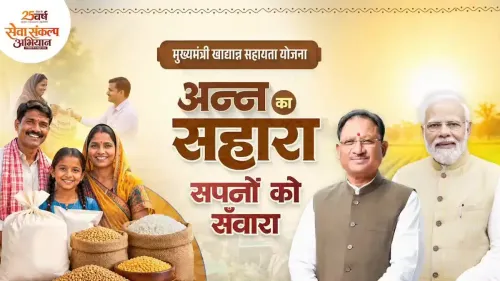
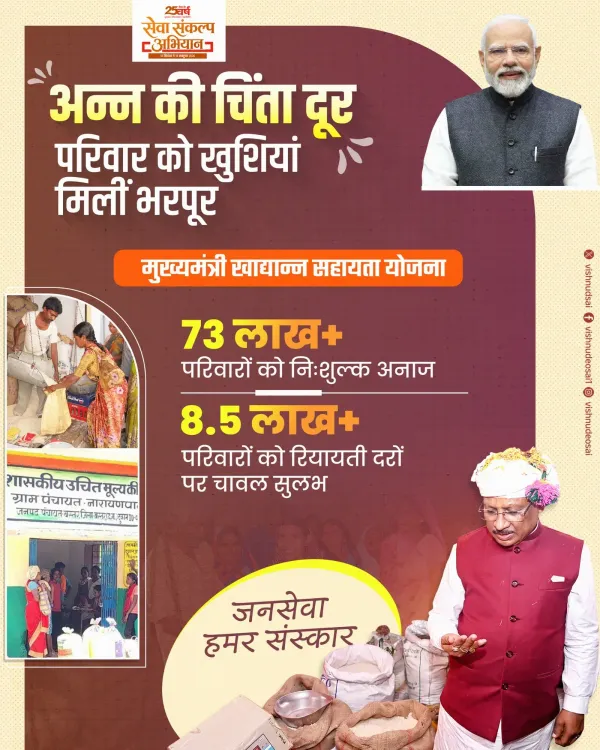
Chhattisgarh Chief Minister Vishnu Deo Sai has highlighted the Mukhya Mantri Khadyann Sahayata Yojana, stating that over 73 lakh families receive free food grains and more than 8 lakh families get subsidised rice, reaffirming the state's food security commitment.
Key Takeaways
73 lakh-plus families in Chhattisgarh are receiving free food grains under the Mukhya Mantri Khadyann Sahayata Yojana.
Over 8 lakh additional families are being supplied rice at subsidised rates through the state's public distribution system.
CM Vishnu Deo Sai , who took office in December 2023 , is continuing the state's long-standing emphasis on food security welfare delivery.
Chhattisgarh's PDS network builds on the National Food Security Act 2013 and central PMGKAY extensions, adding state-level coverage on top.
The state has a decade-plus legacy of strong PDS reforms, including near-free rice introduced during the Raman Singh era .
Food on every plate, dignity in every home — that is the promise Chhattisgarh Chief Minister Vishnu Deo Sai is staking his government's welfare record on. On 30 September 2026, the Chief Minister took to X to reaffirm the state's commitment to food security, detailing how the Mukhya Mantri Khadyann Sahayata Yojana is reaching millions of families across Chhattisgarh.
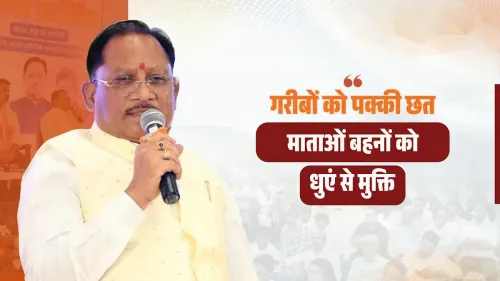
In his post, CM Sai wrote: 'हर परिवार की थाली में अन्न हो, जीवन में सम्मान हो और चेहरे पर खुशहाली हो' — 'Every family's plate should have food, life should have dignity, and faces should carry happiness — this is our government's resolve.' The statement was not rhetorical flourish. It came attached to concrete numbers.
What the Mukhya Mantri Khadyann Sahayata Yojana delivers
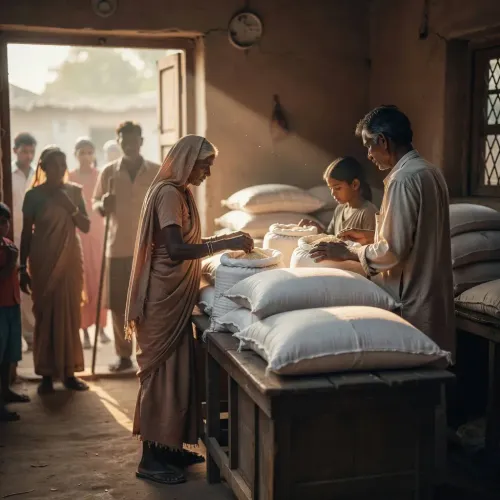
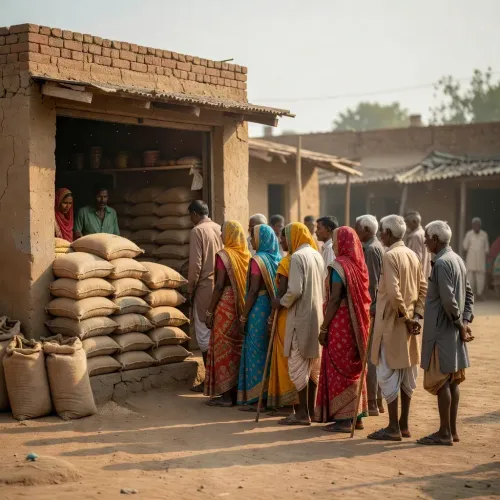
Under the scheme, more than 73 lakh families across Chhattisgarh are receiving free food grains, while over 8 lakh additional families are being supplied rice at subsidised rates through the public distribution system. Together, that is a food security net stretched across a significant share of the state's population — one that skews heavily rural and tribal.
Chhattisgarh has maintained one of India's stronger state-level PDS networks for well over a decade. The architecture dates back to the Raman Singh-era reforms of the 2000s and 2010s, when the state pioneered near-free rice at one rupee per kilogram — a model that drew national attention and set a benchmark other states scrambled to match. Successive governments, regardless of party, have built on that foundation rather than dismantled it.
From NFSA to PMGKAY — the policy ladder Chhattisgarh climbs
The national scaffolding matters here. The National Food Security Act of 2013 established legal entitlements to subsidised grains for priority households, giving states the statutory backing to expand coverage. When the central government's Pradhan Mantri Garib Kalyan Anna Yojana (PMGKAY) extended free rations post-2020, states including Chhattisgarh layered their own schemes on top — plugging gaps and extending reach beyond what the central programme alone covered.
The BJP government that took office in December 2023 under CM Sai has continued this emphasis, positioning food assistance as a visible, tangible proof-point of governance — the kind of welfare delivery that is felt at the kitchen table, not just announced in budget speeches.
Why food security stays at the centre of Chhattisgarh politics
Chhattisgarh's large tribal and rural populations make food access a live political variable, not a settled one. Across India, state governments compete on the breadth and generosity of their PDS coverage — it is welfare as electoral currency, but also as genuine need. CM Sai's post signals that the current administration has no intention of stepping back from that competition.
His closing line in the post — that no family in Chhattisgarh should struggle with the worry of food, and every family should move forward with 'samman, suraksha evam samriddhi' (dignity, security, and prosperity) — frames the scheme not merely as a ration programme, but as a social contract. Whether the budget allocations in the next fiscal cycle can sustain that contract at scale is the question that will define the scheme's next chapter.
Point of View
Where impact is immediate and visible. By citing specific beneficiary numbers, the Chief Minister is doing more than celebrating a scheme — he is drawing a direct line between the 2023 election mandate and tangible delivery, ahead of future budget cycles where scheme funding will face scrutiny. Chhattisgarh's PDS legacy cuts across party lines, which means the current government must not merely maintain coverage but visibly expand it to claim political differentiation. The framing of food assistance as 'dignity and prosperity' — not charity — also reflects a broader national shift in how welfare schemes are communicated to beneficiaries.
NationPress
30 Sept 2026
Frequently Asked Questions
What is the Mukhya Mantri Khadyann Sahayata Yojana in Chhattisgarh?
The Mukhya Mantri Khadyann Sahayata Yojana is a Chhattisgarh state scheme that provides free food grains to priority households and subsidised rice to additional families through the public distribution system, aiming to ensure food security across the state.
How many families benefit from free grain in Chhattisgarh?
According to CM Vishnu Deo Sai's post, more than 73 lakh families in Chhattisgarh are receiving free food grains under the scheme, while over 8 lakh additional families receive rice at subsidised rates.
Who is Vishnu Deo Sai and when did he become Chhattisgarh CM?
Vishnu Deo Sai is a BJP leader who became Chief Minister of Chhattisgarh in December 2023 following the party's victory in the state assembly elections.
How does Chhattisgarh's food scheme relate to the central PMGKAY?
Chhattisgarh's state scheme layers on top of the central Pradhan Mantri Garib Kalyan Anna Yojana and the National Food Security Act 2013, extending coverage to households and providing benefits beyond what the central programme alone offers.
What is Chhattisgarh's history with the public distribution system?
Chhattisgarh has maintained one of India's stronger state-level PDS networks for over a decade, with reforms under the Raman Singh government in the 2000s and 2010s introducing near-free rice at one rupee per kilogram — a model widely noted at the national level.