CM Sai adds 360 paddy centres, boosts farmer input aid in CG
Synopsis
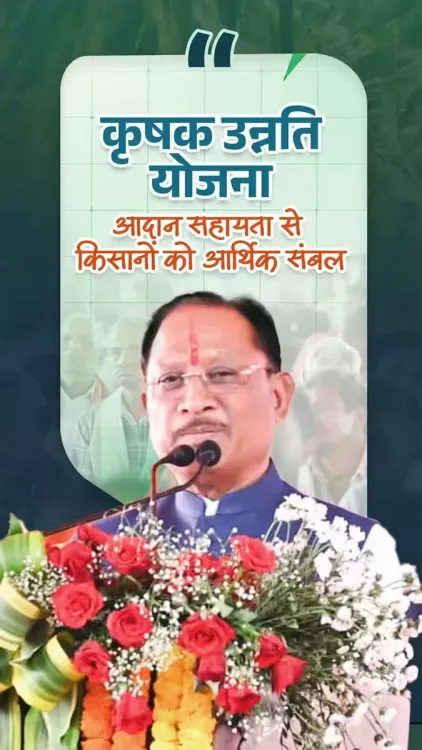
Chief Minister Vishnu Dev Sai announced 360 additional paddy procurement centres and supplementary input-assistance payments for farmers at a Bhoomi Pujan event in Balodabazar on 19 November 2026, bolstering Chhattisgarh's 2026 paddy procurement season under the Krishak Unnati Yojana.
Key Takeaways
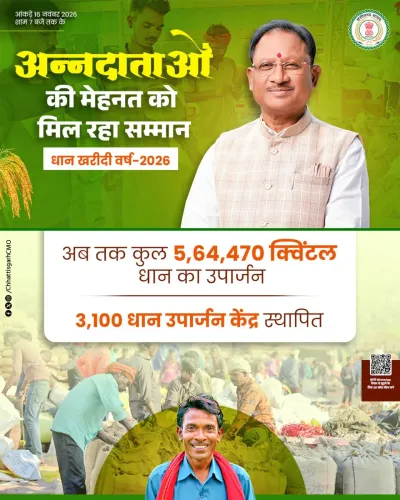
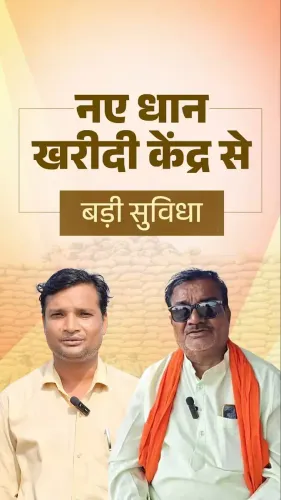
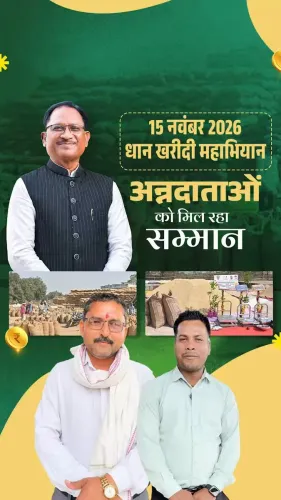
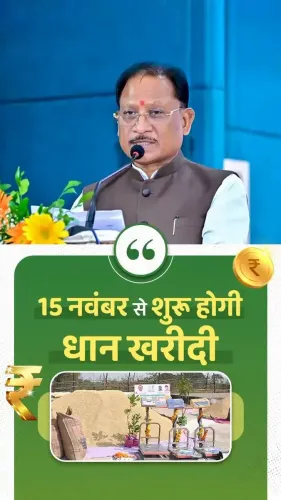
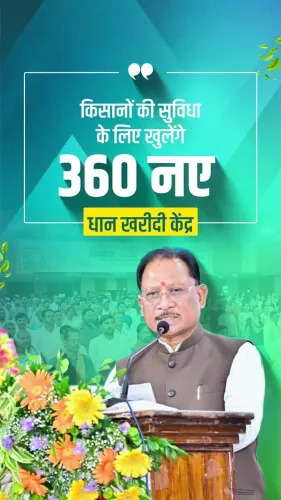
360 new paddy procurement centres have been added in Chhattisgarh for the 2026 procurement season.
Farmers will receive a 'difference amount' as additional input support assistance under the Krishak Unnati Yojana .
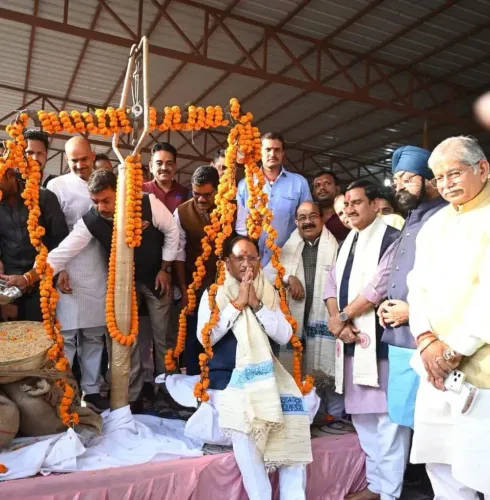
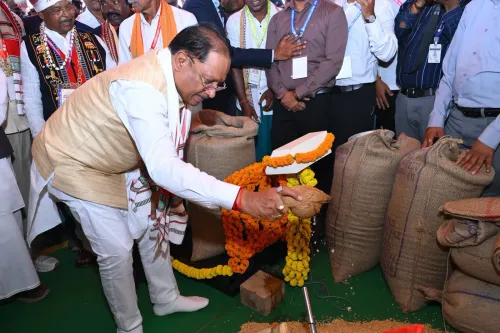
The announcement was made by Chief Minister Vishnu Dev Sai at a Bhoomi Pujan evam Lokarpan event in Durgoutsav Maidan, Suhela, Balodabazar .
Chhattisgarh is a leading paddy-producing state; expanded procurement infrastructure is a long-standing pillar of its agricultural policy.
The BJP government under Sai has been in office since December 2023 and frames farm welfare as a core governance priority.
Chhattisgarh's paddy farmers are walking into the 2026 procurement season with a significantly wider safety net. At a Bhoomi Pujan evam Lokarpan (foundation-laying and inauguration) programme at Durgoutsav Maidan, Suhela, Balodabazar on Thursday, 19 November 2026, Chief Minister Vishnu Dev Sai announced that 360 new paddy procurement centres have been added this year, alongside a promise of supplementary input assistance payments to cover price-gap shortfalls for cultivators.
360 new centres and what that means on the ground
Speaking at the event, CM Sai said, 'This year 360 new paddy procurement centres have been added. Along with this, the difference amount will be given to farmers as additional input support assistance. This will provide economic strength to cultivators and help make farming more profitable.' The expansion directly addresses a perennial friction point in the state's procurement architecture — long queues and distant collection points that eat into small farmers' margins before a single grain is weighed.
Chhattisgarh has operated a paddy-MSP procurement network since the early 2000s, and successive administrations have treated centre-count as a live metric of farmer outreach. The BJP government under Sai, which took office in December 2023, has framed agricultural expansion as the centrepiece of its governance pitch under the #SushasanSarkar banner.
Krishak Unnati Yojana: the scheme behind the support payments
The supplementary 'difference amount' payment is routed through the state's Krishak Unnati Yojana, a flagship welfare scheme designed to top up effective farmer realisations beyond the base MSP. By channelling the gap payment as aadan sahayata (input assistance), the government keeps the disbursement outside headline price-support optics while still placing cash directly with growers.
Chhattisgarh is one of India's leading paddy-producing states, and the combination of expanded physical infrastructure and income-bridging payments is a proven lever for lifting procurement volumes and reducing distress sales in village mandis. The key question for the season ahead: how quickly the 360 new centres become operational and when the input-assistance disbursements hit farmer accounts.
Balodabazar as the stage, statewide as the story
The choice of Balodabazar district — a rice-belt constituency in central Chhattisgarh — as the venue for today's announcement was deliberate. Ground-level inauguration events anchor state-level policy in local soil, and the dual Bhoomi Pujan evam Lokarpan format signals that some infrastructure is being inaugurated while other projects are just breaking ground, stretching the government's visibility across multiple development cycles.
For the paddy farmer standing in a Suhela field right now, the arithmetic is simple: more centres mean shorter travel, the input-assistance top-up means a fatter cheque at the end of the season. Whether the administrative machinery delivers on both counts will define the scheme's legacy well before the next harvest.
Point of View
The Sai administration keeps flexibility intact while still advertising tangible benefit. The Balodabazar venue choice suggests deliberate constituency-level signalling in a paddy-belt district. The real test will be whether the 360 centres are operationalised in time for the peak procurement window — and whether disbursement timelines match the political calendar.
NationPress
19 Nov 2026
Frequently Asked Questions
How many new paddy procurement centres have been added in Chhattisgarh in 2026?
360 new paddy procurement centres have been added in Chhattisgarh for the 2026 season, as announced by CM Vishnu Dev Sai at Balodabazar on 19 November 2026.
What is the Krishak Unnati Yojana in Chhattisgarh?
The Krishak Unnati Yojana is a Chhattisgarh state scheme focused on farmer welfare, used to provide supplementary input-assistance payments that top up farmers' realisations beyond the base MSP.
What is the 'difference amount' or additional input assistance announced for Chhattisgarh farmers?
CM Sai announced that the gap between the MSP and the effective price farmers receive will be paid to them as additional input support assistance ( aadan sahayata ) under the Krishak Unnati Yojana, providing direct income support.
Where was CM Vishnu Dev Sai's paddy procurement announcement made?
The announcement was made at a Bhoomi Pujan evam Lokarpan programme at Durgoutsav Maidan, Suhela in Balodabazar district , Chhattisgarh, on 19 November 2026 .
When did Vishnu Dev Sai become Chief Minister of Chhattisgarh?
Vishnu Dev Sai became Chief Minister of Chhattisgarh in December 2023 , heading the BJP government in the state.