CM Sai Links 15,000+ Autos, E-Rickshaws to QR Code System
Synopsis
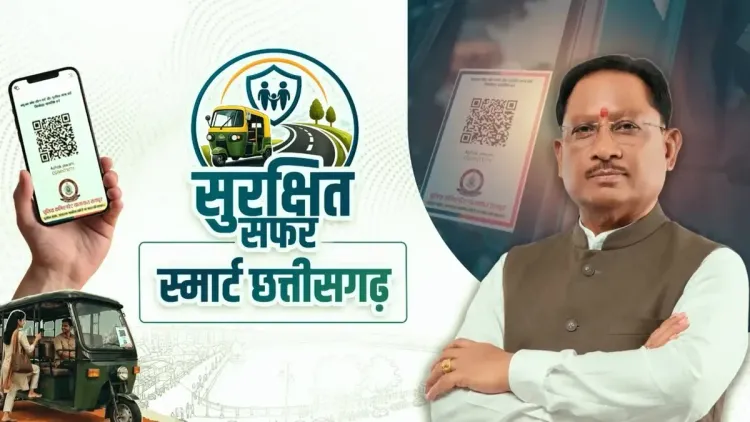
Chhattisgarh CM Vishnu Deo Sai announced the integration of over 15,000 autos and e-rickshaws into a QR code system, allowing passengers to instantly access vehicle and driver details. The initiative aims to improve safety, transparency, and convenience in public transport across the state.
Key Takeaways
Chhattisgarh CM Vishnu Deo Sai announced the QR code initiative on 27 July 2026 .
More than 15,000 autos and e-rickshaws have been enrolled in the QR code system.
A single scan gives passengers access to essential vehicle and driver information.
The scheme targets improved safety, transparency, and convenience for public transport users.
The initiative aligns with the national Digital India programme and the BJP government's e-governance agenda in Chhattisgarh.
Possible future extensions include taxis, buses, and linkage with police databases for driver background checks.
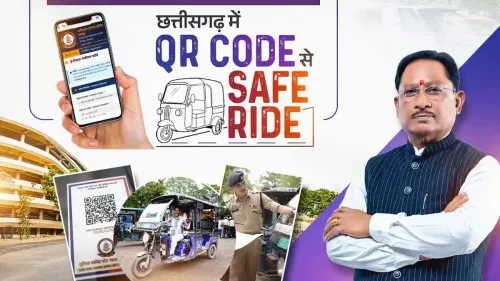
Chhattisgarh Chief Minister Vishnu Deo Sai announced on Monday, 27 July 2026 that the state government has integrated more than 15,000 autos and e-rickshaws into a QR code-based identification system, enabling passengers to instantly retrieve vehicle and driver details with a single scan.
Posting on X, CM Sai wrote: 'तकनीक आधारित नवाचार सुशासन का सशक्त आधार है' ('Technology-based innovation is the strong foundation of good governance'), adding that the government is using information technology to make public transport safer, more transparent, and more convenient for citizens.
Context
The initiative covers the informal last-mile transport segment — autorickshaws and electric rickshaws — which millions of daily commuters in Chhattisgarh depend on. Under the scheme, each enrolled vehicle is assigned a QR code that, when scanned by a passenger, displays essential information about the vehicle and its driver. The move is aimed at building passenger confidence and improving accountability in a sector that has historically operated with limited formal oversight.
Policy Backdrop
The QR code rollout aligns with the national Digital India programme, launched in 2015, which encourages states to adopt information technology for transparent governance and citizen-facing service delivery. Chhattisgarh, under the BJP government that took office in December 2023 following state assembly elections, has emphasised technology integration as a pillar of its governance agenda. Indian states have progressively adopted digital tracking and identification tools for last-mile transport to increase operator accountability.
Stakeholders and Impact
The primary beneficiaries are daily passengers — particularly women and senior citizens — who can now verify a driver's credentials before or during a journey without relying on manual checks. Auto and e-rickshaw operators who comply with the registration requirement gain a formal digital identity, which may ease future access to government schemes and financial services. Transport regulators gain a real-time, scannable record of vehicles operating on state roads.
What's Next
Officials and observers will watch whether the state extends QR-based verification to taxis, city buses, or other vehicle categories, and whether the system is eventually linked with state police databases for driver background verification. A wider rollout could position Chhattisgarh as a reference model for digitising informal transport across central India. Sustained enforcement of registration compliance among operators will be critical to the scheme's long-term effectiveness.
Point of View
Low-friction digital intervention that the BJP government in Chhattisgarh can point to as a tangible governance delivery. It fits a broader pattern of state governments using citizen-facing technology to build trust in informal transport — a sector that national safety frameworks have long struggled to regulate. The scheme's real test will be adoption depth: whether operators comply uniformly and whether passengers actually use the scan feature. If the system is extended to police-linked background verification, it could mark a meaningful step up from symbolic digitisation to substantive safety reform.
NationPress
26 Oct 2026
Frequently Asked Questions
What is the QR code system for autos in Chhattisgarh?
The Chhattisgarh government has linked over 15,000 autos and e-rickshaws to QR codes. Passengers can scan the code to instantly view vehicle and driver details, improving safety and transparency.
How many vehicles are covered under the Chhattisgarh QR code transport scheme?
More than 15,000 autos and e-rickshaws in Chhattisgarh have been integrated into the QR code system as announced by CM Vishnu Deo Sai on 27 July 2026.
Who announced the QR code initiative for public transport in Chhattisgarh?
Chhattisgarh Chief Minister Vishnu Deo Sai announced the initiative, stating that technology-based innovation is the foundation of good governance.
How does the QR code help passengers in Chhattisgarh?
By scanning the QR code displayed on an auto or e-rickshaw, a passenger can retrieve essential information about the vehicle and its driver without any manual process, aiding safety and trust.
Is the Chhattisgarh QR transport scheme linked to Digital India?
Yes, the initiative aligns with the national Digital India programme, which encourages states to use information technology for transparent, citizen-friendly governance and service delivery.