CM Sai's Chhattisgarh fits 15,000 autos with QR safety codes
Synopsis
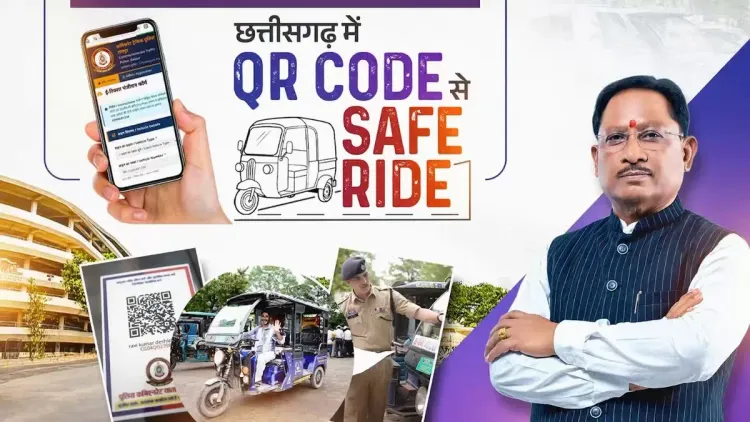
The Chhattisgarh CMO announced that over 15,000 autos and e-rickshaws in the state now carry QR codes under CM Vishnu Deo Sai's digital governance drive, allowing passengers to verify driver and vehicle details instantly. The initiative has earned recognition from the Golden Book of World Records.
Key Takeaways
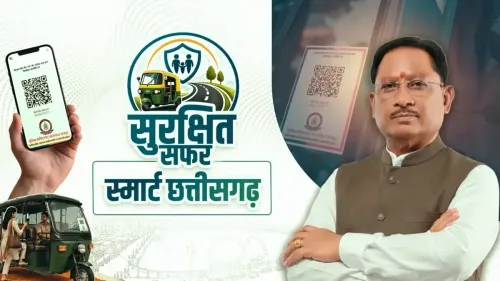
The Vishnu Deo Sai government has installed QR codes on more than 15,000 autos and e-rickshaws across Chhattisgarh.
Passengers can scan the QR code to instantly access vehicle registration and driver identity details.
The programme is a joint effort involving the Women and Child Development Department and Raipur City Police .
The initiative has been recognised by the Golden Book of World Records .
The scheme is primarily aimed at improving safety for women commuters using last-mile informal transport.
The rollout aligns with the national Digital India framework and positions Chhattisgarh as a model for tech-driven public transport safety.
The Chief Minister's Office of Chhattisgarh announced on Saturday, 4 July 2026 that the Vishnu Deo Sai government has installed QR codes on more than 15,000 autos and e-rickshaws across the state, enabling passengers to instantly verify vehicle and driver details before or during a ride. The initiative, flagged under the hashtags #SafeTravel and #WomenSafety, has also been recognised by the Golden Book of World Records.
Context
The CMO's post, written in Hindi, states: 'Sushasan sarkar mein takneek ke saath surakshit yatra' ('Safe travel with technology under good governance'). Passengers can now scan a QR code affixed to any enrolled vehicle to retrieve the driver's identity and registration details, reducing the information asymmetry that has historically made informal public transport less safe, particularly for women travellers. The post tags the Women and Child Development Department of Chhattisgarh and the Raipur City Police, signalling a multi-agency rollout.
Policy Backdrop
The deployment sits within the broader Digital India framework launched in 2015, which encouraged state governments to embed e-governance tools into everyday citizen services. Chhattisgarh's QR-code programme extends that mandate to informal public transport — a segment that had largely remained outside the digital safety net. Several Indian states have experimented with driver-verification systems on app-based cabs, but extending the model to street-level autos and e-rickshaws at scale is a less common step, and the state government is positioning this rollout as a record-setting achievement.
The initiative is administratively anchored in the Women and Child Development Department, underscoring that the primary intended beneficiaries are women commuters who rely on last-mile connectivity in cities and semi-urban areas. Raipur City Police's involvement suggests the backend database links to law-enforcement records, adding a layer of accountability for drivers.
Stakeholders and Impact
For women commuters, the QR scan offers an immediate, low-friction way to share ride details — vehicle number, driver name and licence information — with family or emergency contacts. Auto and e-rickshaw drivers who comply with the scheme gain a visible trust signal that could translate into higher passenger confidence. The Golden Book of World Records recognition, cited in the CMO's post, lends the programme reputational weight and may encourage other states to replicate the model.
Informal transport operators — many of whom are small earners — stand to benefit from the formalisation that QR registration brings, potentially easing future access to government welfare schemes tied to verified driver databases.
What's Next
The state government's own framing points toward deeper digital integration: the CMO's use of #DigitalChhattisgarh and #GoodGovernance suggests the QR programme is intended as a flagship plank of Chief Minister Vishnu Deo Sai's administrative identity ahead of the next electoral cycle. Analysts tracking the initiative will watch whether coverage is expanded to taxis and city buses, and whether a grievance-redressal or real-time tracking layer is added through a state app. The involvement of the Women and Child Development Department also raises the possibility of linking the system to existing women's helpline infrastructure for emergency response.
Point of View
The Sai administration is building a cross-agency safety architecture that could outlast any single political cycle. The Golden Book of World Records citation, while not a policy metric, serves a clear communication purpose: it converts a governance programme into a shareable, pride-inducing milestone that travels well on social media. The real test will be whether the backend database is kept current and whether a grievance channel is added, transforming a one-way information tool into a two-way safety net.
NationPress
3 Oct 2026
Frequently Asked Questions
What is the Chhattisgarh QR code scheme for autos and e-rickshaws?
The Chhattisgarh government under Chief Minister Vishnu Deo Sai has fitted more than 15,000 autos and e-rickshaws with QR codes that passengers can scan to view driver and vehicle details, improving commuter safety.
How does the QR code help women passengers in Chhattisgarh?
Women commuters can scan the QR code on any enrolled auto or e-rickshaw to instantly retrieve the driver's name, licence information, and vehicle registration, making it easier to share ride details and verify the operator's identity before travelling.
Has Chhattisgarh's QR code transport initiative won any award or record?
Yes, the initiative has been recognised by the Golden Book of World Records, according to the official Chief Minister's Office post dated 4 July 2026.
Which departments are involved in Chhattisgarh's safe travel QR code programme?
The programme involves the Women and Child Development Department of Chhattisgarh and the Raipur City Police, alongside the Chief Minister's Office.
Will the QR code scheme be expanded to taxis and buses in Chhattisgarh?
The state government has not officially announced an expansion to taxis or buses yet, but the Digital Chhattisgarh framing of the initiative suggests broader coverage and app-based integration could be considered in future phases.