CM Sai joins 139th Mann Ki Baat listen-in at Abhanpur-Raipur
Synopsis
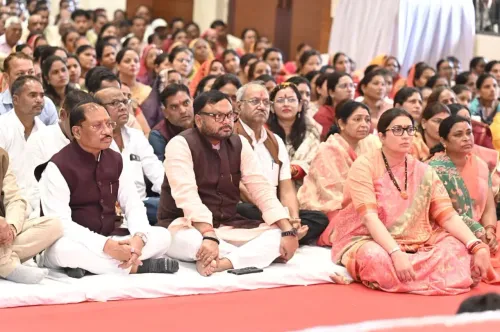
Chhattisgarh CM Vishnu Deo Sai joined Smriti Irani and Siddharth Shambhu at Alka Ashutosh Aggarwal Bhavan, Abhanpur-Raipur, to listen to the 139th edition of PM Modi's Mann Ki Baat on 25 October 2026, reflecting BJP's grassroots communication drive.
Key Takeaways
CM Vishnu Deo Sai attended the 139th Mann Ki Baat listen-in on 25 October 2026 at Alka Ashutosh Aggarwal Bhavan, Abhanpur-Raipur .
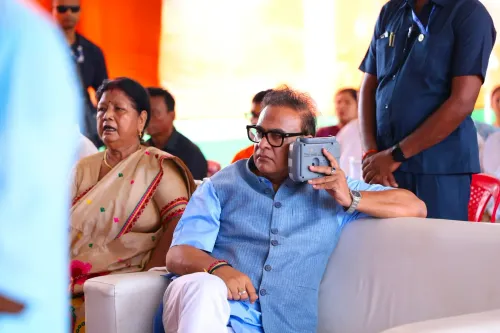
BJP National General Secretary Smriti Irani , the state in-charge, and National Secretary Siddharth Shambhu , co-in-charge, were present at the same session.
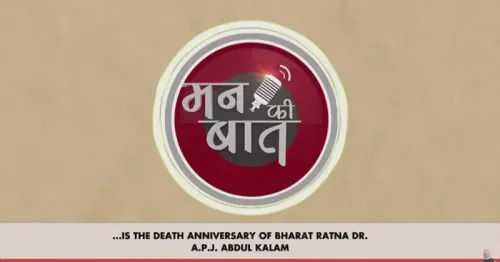
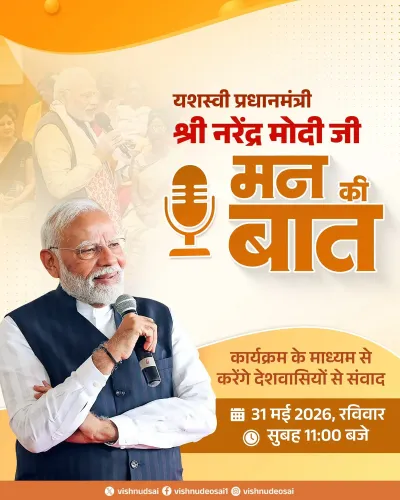
Mann Ki Baat was launched by PM Narendra Modi in October 2014 and has now completed 139 editions .
The programme focuses on grassroots citizen stories — innovators, community workers, and local achievers — to inspire public participation in national development.
State BJP units routinely organise collective listen-ins as part of organisational outreach, reinforcing party cohesion at the ground level.
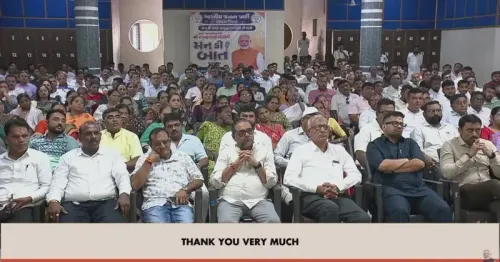
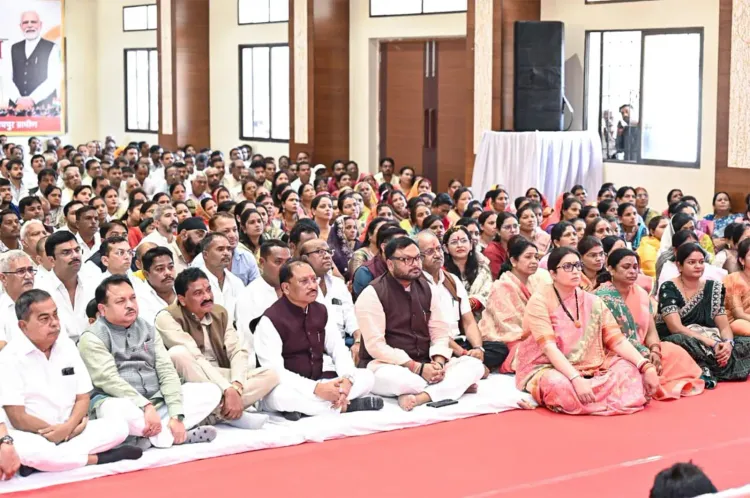
A radio programme launched in a small studio in October 2014 has now completed 139 editions — and on Sunday, 25 October 2026, Chhattisgarh Chief Minister Vishnu Deo Sai was among those listening, joining BJP colleagues for a collective session at Alka Ashutosh Aggarwal Bhavan, Abhanpur-Raipur.
Seated alongside BJP National General Secretary and Chhattisgarh state in-charge Smriti Irani and BJP National Secretary and state co-in-charge Siddharth Shambhu, the Chief Minister joined senior party workers for the broadcast. The gathering underscored the BJP's longstanding practice of organising collective listen-ins as an organisational outreach exercise — turning a radio address into a party-wide event.
What Mann Ki Baat's 139 editions represent
Prime Minister Narendra Modi launched Mann Ki Baat in October 2014 as a direct, unmediated channel to citizens — bypassing press conferences for the intimacy of radio. Over 139 episodes, the programme has consistently spotlighted ordinary Indians making extraordinary contributions: village-level innovators, women self-help groups, young athletes, and community conservation efforts. Its reach into rural and semi-urban India, where radio still commands daily attention, has made it a cornerstone of the BJP-led government's grassroots communication strategy.
CM Sai's post captured that spirit directly: 'Mann Ki Baat salutes that priceless strength of the country which exists in the form of service, dedication, and creation in every village and every home. This dialogue honours the extraordinary efforts in ordinary lives and awakens hope and the belief to achieve something in every heart.'
Chhattisgarh BJP's ground-level mobilisation
The Abhanpur venue — a district on the outskirts of the state capital Raipur — signals deliberate outreach beyond the city centre. State-level BJP units across India routinely convert each Mann Ki Baat broadcast into a local event, with party workers, elected representatives, and community leaders gathering to listen together. Having both the state in-charge and the Chief Minister present at the same venue amplifies the signal: organisational cohesion ahead of what remains a politically active period for Chhattisgarh's ruling dispensation.
The post also gestures at the programme's aspiration beyond partisan lines — 'the echo of the dreams of crores of Indians, the inspiration to learn from one another, and the sacred resolve to contribute in service of Mother India' — framing Mann Ki Baat as a national-cultural exercise rather than a political one.
Point of View
State leadership, and central functionaries around a shared symbolic moment. Having both the state in-charge Smriti Irani and CM Sai at the same Abhanpur venue is a visible demonstration of alignment between Delhi and Raipur at a time when state governments are measured partly on their coordination with the Centre. At 139 editions, Mann Ki Baat has outlasted multiple electoral cycles, evolving from a novel communication experiment into an institutionalised pillar of the BJP's outreach architecture. The programme's framing as a celebration of 'ordinary extraordinary Indians' also gives state leaders a ready platform to anchor local identity to a national narrative without direct political messaging.
NationPress
25 Oct 2026
Frequently Asked Questions
What is Mann Ki Baat and when did it start?
Mann Ki Baat is a monthly radio programme hosted by Prime Minister Narendra Modi, launched in October 2014, in which he highlights inspiring citizen stories and grassroots initiatives from across India.
Which edition of Mann Ki Baat was broadcast on 25 October 2026?
The 139th edition of Mann Ki Baat was broadcast on 25 October 2026.
Where did CM Vishnu Deo Sai listen to Mann Ki Baat?
CM Vishnu Deo Sai listened to the 139th Mann Ki Baat at Alka Ashutosh Aggarwal Bhavan in Abhanpur, near Raipur, Chhattisgarh.
Who was present with CM Sai at the Mann Ki Baat event?
BJP National General Secretary and Chhattisgarh state in-charge Smriti Irani, BJP National Secretary and state co-in-charge Siddharth Shambhu, and senior party workers attended alongside CM Sai.
Why does BJP organise group Mann Ki Baat listen-ins?
BJP state units organise collective listening sessions to use the Prime Minister's broadcast as an organisational touchpoint, reinforcing party cohesion and extending the programme's reach to local workers and communities.