CM Sai backs Modi govt's fast-track courts for paper leaks

Synopsis
Chhattisgarh Chief Minister Vishnu Deo Sai endorsed PM Narendra Modi's decision to set up fast-track courts for paper leak cases on 23 July 2026, framing it as a decisive step to deliver swift justice to exam aspirants and deter examination fraud across India.
Key Takeaways
CM Vishnu Deo Sai publicly backed the central government's fast-track court decision for paper leak cases on 23 July 2026 .
PM Narendra Modi is credited with the decision to constitute dedicated fast-track courts to try examination fraud cases.
The move follows the Public Examinations (Prevention of Unfair Means) Act, 2024 , which introduced stringent criminal penalties for paper leaks and related malpractices.
India saw repeated paper leak scandals in national and state exams between 2022 and 2024 , including in NEET-UG , affecting lakhs of aspirants.
Fast-track courts are intended to address judicial delays and strengthen the deterrent effect of existing anti-cheating legislation.
State-level operationalisation, including in Chhattisgarh , and caseload outcomes in upcoming 2026–27 recruitment cycles will be the key test of the policy's effectiveness.
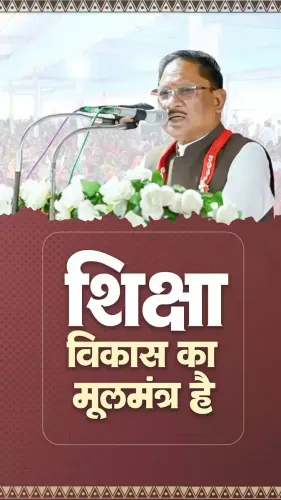
Chhattisgarh Chief Minister Vishnu Deo Sai on Thursday, 23 July 2026, praised the central government's decision to constitute fast-track courts to try paper leak cases, calling it proof of the Modi government's unwavering commitment to protecting the futures of India's youth and ensuring fairness in competitive examinations.
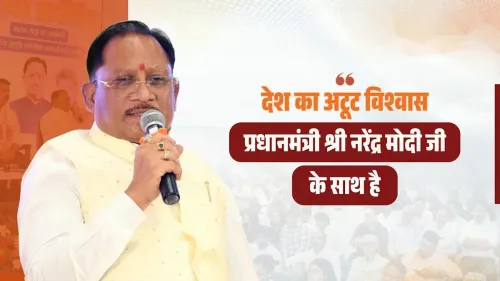
Posting in Hindi on X, CM Sai said: 'युवाओं के सपनों की रक्षा और उनके उज्ज्वल भविष्य का निर्माण मोदी सरकार की सर्वोच्च प्राथमिकताओं में शामिल है' — 'Protecting the dreams of youth and building their bright future is among the topmost priorities of the Modi government.' He specifically credited Prime Minister Narendra Modi with the decision to set up fast-track courts for paper leak matters, describing it as a step toward swift justice and stringent punishment for those who 'play with the futures of young people through grave incidents like paper leaks.'
Context
India witnessed a surge in examination fraud between 2022 and 2024, with high-profile paper leak controversies in national-level tests including NEET-UG and multiple state recruitment examinations. These incidents triggered widespread protests by aspirants, demands for re-tests, and intense political debate over the integrity of public examination systems. The scale and frequency of leaks exposed systemic vulnerabilities across both central and state exam-conducting bodies.
The controversy placed lakhs of students — many of whom had spent years and significant resources preparing — in a state of uncertainty. The demand for accountability and structural reform became a dominant youth issue heading into subsequent electoral cycles.
Policy Backdrop
The central government responded legislatively with the Public Examinations (Prevention of Unfair Means) Act, 2024, which introduced stringent penalties for malpractices including paper leaks, impersonation, and tampering with answer sheets. The law marked a significant escalation from earlier, piecemeal administrative measures and signalled an intent to treat examination fraud as a serious criminal offence.
The latest decision — to establish fast-track courts specifically for paper leak cases — builds on that legislative foundation by addressing the judicial bottleneck. Dedicated courts are intended to ensure that prosecutions move quickly rather than languishing in an already overburdened general court system, strengthening the deterrent effect of the 2024 law.
Stakeholders and Impact
The primary beneficiaries of this mechanism are exam aspirants and young job-seekers who compete in public recruitment examinations for positions in central and state services, teaching posts, and professional courses. Faster adjudication is expected to reduce the window during which accused persons can evade consequences and to restore confidence among students that the system is capable of delivering accountability.
State governments, including Chhattisgarh, will play a role in operationalising fast-track courts within their jurisdictions, making the political buy-in signalled by CM Sai's statement practically significant. Exam-conducting bodies and investigative agencies are also key stakeholders, as effective prosecution depends on timely and thorough chargesheet filing.
What's Next
The immediate question is the pace of notification and operationalisation of the fast-track court framework ahead of major 2026–27 recruitment cycles. Observers will watch whether states align their own judicial infrastructure with the central initiative and whether early prosecutions under the 2024 Act are fast-tracked in practice, not just in policy. The credibility of the mechanism will ultimately be tested by the speed and outcomes of its first high-profile cases.
Point of View
The statement positions the BJP as a proactive guardian of meritocracy rather than a reactive damage-controller. The move also signals that state leaders are expected to publicly amplify central policy wins, particularly on issues with cross-state electoral salience. The real political dividend, however, will depend on whether the courts deliver visible convictions before the next major election cycle.
NationPress
23 Jul 2026
Frequently Asked Questions
What are fast-track courts for paper leaks in India?
Fast-track courts for paper leaks are dedicated judicial bodies set up to expedite trials in examination fraud cases, ensuring quicker convictions and punishments compared to the regular court system. The central government announced their formation to complement the Public Examinations (Prevention of Unfair Means) Act, 2024.
What did CM Vishnu Deo Sai say about paper leaks?
On 23 July 2026, Chhattisgarh CM Vishnu Deo Sai said that protecting the dreams and futures of youth is among the Modi government's top priorities, and praised PM Modi's decision to form fast-track courts for paper leak cases as proof of the government's commitment to exam aspirants.
What is the Public Examinations (Prevention of Unfair Means) Act, 2024?
It is a central law that introduced strict criminal penalties for malpractices in public examinations, including paper leaks, impersonation, and tampering with answer sheets. It was enacted in response to widespread exam fraud controversies across India.
Which exams were affected by paper leaks in India?
Between 2022 and 2024, several high-profile examinations were affected, most notably NEET-UG and various state-level recruitment tests, triggering protests and demands for systemic reform in India's public examination infrastructure.
How will fast-track courts help students affected by paper leaks?
Fast-track courts are designed to reduce judicial delays, ensuring that those responsible for paper leaks face swift punishment. This is expected to deter future fraud, restore confidence in the examination system, and provide faster closure for aspirants whose exams were compromised.