CM Shivakumar Inaugurates Strategic Electronics Summit in Bengaluru
Synopsis
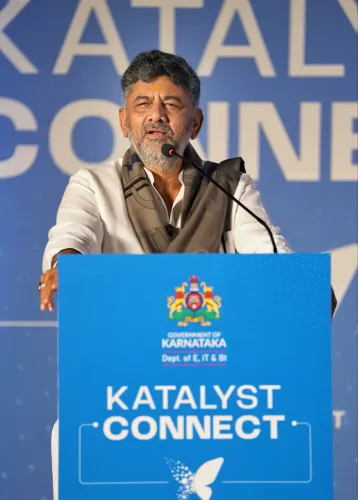
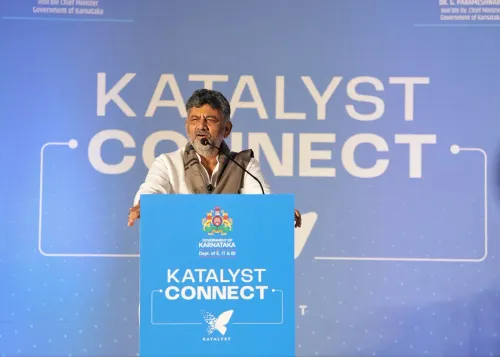
Chief Minister D.K. Shivakumar inaugurated the 15th Strategic Electronics Summit 2026 in Bengaluru on 23 July, calling for government-industry-defence collaboration and outlining a Liquidity, Land and Labour framework to make Karnataka the hub of India's strategic electronics ecosystem.
Key Takeaways
Shivakumar inaugurated the 15th Strategic Electronics Summit 2026 in Bengaluru on 23 July 2026 .
Karnataka's strengths in software, semiconductor design, advanced engineering and research were cited as the foundation for its defence and aerospace ambitions.
The state government's policy focus rests on three pillars: Liquidity, Land and Labour .
The CM called for collaboration among government, industry, defence PSUs, MSMEs, startups, academia and the armed forces .
The summit aligns with India's Atmanirbhar Bharat drive to build domestic strategic electronics and defence manufacturing capacity.
Potential MoUs and follow-up incentive schemes for semiconductor and defence electronics clusters are expected outcomes to watch.
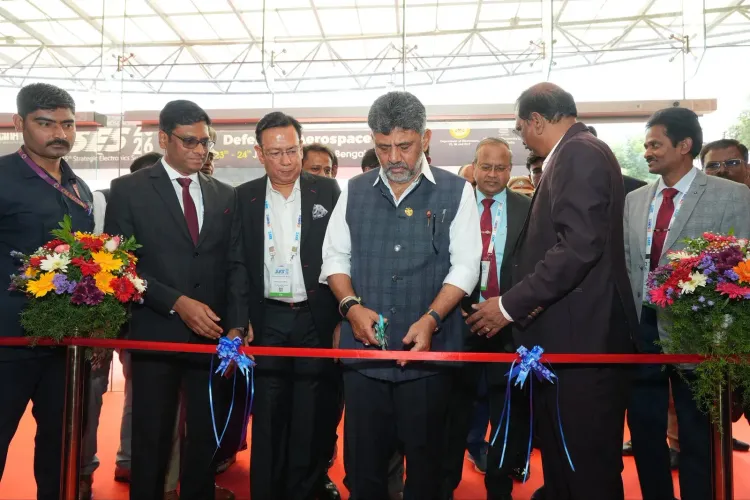
The Chief Minister's Office of Karnataka announced on Thursday, 23 July 2026 that Chief Minister Shri D.K. Shivakumar inaugurated the 15th Strategic Electronics Summit 2026 in Bengaluru, underscoring the state's ambition to lead India's defence manufacturing and aerospace sectors.
Context
Speaking at the summit, CM Shivakumar highlighted Karnataka's established strengths in software, semiconductor design, advanced engineering and research. He positioned the state as a natural launchpad for strategic electronics, defence manufacturing and aerospace — sectors the Centre has flagged as priorities under its indigenisation drive. The summit, now in its 15th edition, serves as a recurring platform bringing together government, industry and defence establishments to coordinate on supply-chain and technology goals.
The Chief Minister called for stronger collaboration between government agencies, industry players, defence public-sector undertakings, MSMEs, startups, academia and the armed forces. His appeal framed such collaboration as essential to building what he described as 'a resilient, self-reliant and globally competitive strategic electronics ecosystem for India.'
Policy Backdrop
Karnataka's push into defence electronics and aerospace is consistent with the Government of India's Atmanirbhar Bharat initiative, announced in 2020, which sought to reduce import dependence in strategic sectors and grow a domestic manufacturing base. Bengaluru already hosts a dense cluster of aerospace and electronics firms, making it a logical anchor for this national objective.
At the summit, CM Shivakumar outlined the state government's focus on three pillars — Liquidity, Land and Labour — as the levers through which Karnataka intends to support innovation, research, manufacturing, skill development and ease of doing business. These are standard but significant state-level policy levers that directly affect the cost and speed of setting up high-technology facilities.
Stakeholders and Impact
The summit's audience and call-to-action span a wide ecosystem: defence PSUs, MSMEs, startups, academia and the armed forces. For MSMEs and startups in particular, state-level commitments on liquidity and land access can meaningfully lower barriers to entry in a sector that has historically been dominated by large public-sector players.
Karnataka has leveraged its IT and engineering talent base to attract semiconductor design and aerospace firms over the past two decades. A sustained state focus on strategic electronics could deepen that specialisation, creating high-skill employment and anchoring supply chains that feed into national defence programmes.
What's Next
Observers will watch for follow-up state budget allocations or new incentive schemes targeting semiconductor and defence electronics clusters in Karnataka. Potential memoranda of understanding between industry participants and defence establishments, often a tangible output of such summits, will also be closely tracked. Whether the 'Liquidity, Land and Labour' framework translates into specific policy notifications or dedicated industrial zones will determine the summit's lasting impact.
Point of View
Land and Labour' framing is a deliberate signal to private capital and defence OEMs that Karnataka is competing aggressively for anchor investments. By explicitly naming MSMEs, startups and academia alongside defence PSUs, the state is trying to broaden the beneficiary base of what has traditionally been a large-firm, public-sector domain. The real test will come in whether these commitments are backed by specific budgetary provisions or zoning decisions in the months ahead.
NationPress
23 Jul 2026
Frequently Asked Questions
What is the Strategic Electronics Summit in Bengaluru?
The Strategic Electronics Summit is a recurring industry forum held in Bengaluru that brings together government agencies, defence PSUs, private industry, startups, academia and the armed forces to advance India's defence electronics, aerospace manufacturing and related supply chains. The 2026 edition was its 15th iteration.
What did CM D.K. Shivakumar announce at the summit?
CM Shivakumar outlined the Karnataka government's focus on three pillars — Liquidity, Land and Labour — to support innovation, manufacturing, skill development and ease of doing business. He also called for stronger collaboration across government, industry, defence PSUs, MSMEs, startups and academia to build a self-reliant strategic electronics ecosystem.
Why is Karnataka important for India's defence electronics sector?
Karnataka, and Bengaluru in particular, hosts a dense cluster of software, semiconductor design and aerospace firms. This established engineering talent base makes the state a natural hub for defence electronics and aerospace manufacturing aligned with India's Atmanirbhar Bharat self-reliance goals.
What is Atmanirbhar Bharat and how does it relate to this summit?
Atmanirbhar Bharat, announced by the Government of India in 2020, is a policy initiative aimed at reducing import dependence and building domestic manufacturing capacity in strategic sectors including defence and electronics. Karnataka's strategic electronics push is consistent with this national framework.
What should we watch for after the Strategic Electronics Summit 2026?
Key developments to track include follow-up state budget allocations for semiconductor and defence electronics clusters, new incentive schemes or industrial zone notifications, and any memoranda of understanding signed between industry participants and defence establishments as outcomes of the summit.