CM Himanta Meets Assam Flood-Hit Families, Vows Relief
Synopsis
Assam Chief Minister Himanta Biswa Sarma visited flood-affected families on 23 July 2026, vowing to ensure timely relief reaches every household as the state battles its annual monsoon flooding crisis along the Brahmaputra river system.
Key Takeaways
CM Himanta Biswa Sarma personally met flood-affected families in Assam on 23 July 2026 .
He pledged that 'timely support, care and relief' will reach every affected household.
Assam faces annual flooding from the Brahmaputra river and its tributaries during the monsoon season.
The Assam State Disaster Management Authority (ASDMA) is expected to conduct damage surveys to assess relief requirements.
Central government assistance through the National Disaster Response Fund may be sought depending on the scale of damage.
The monsoon season extends through August and September , meaning flood risks remain elevated.
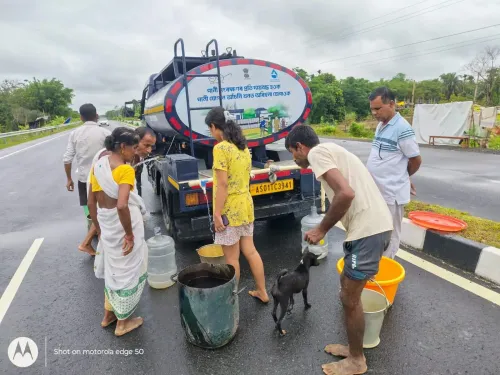
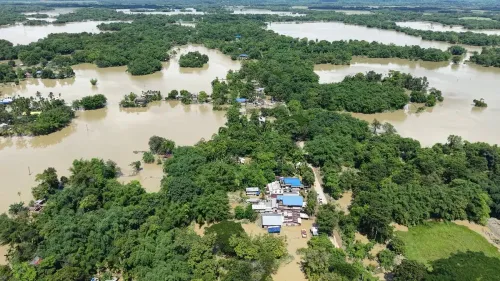
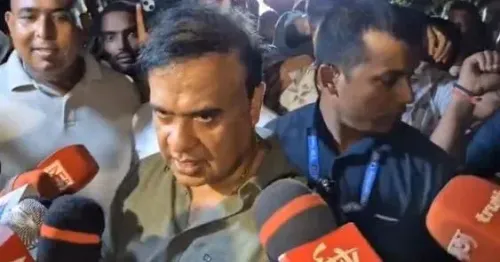
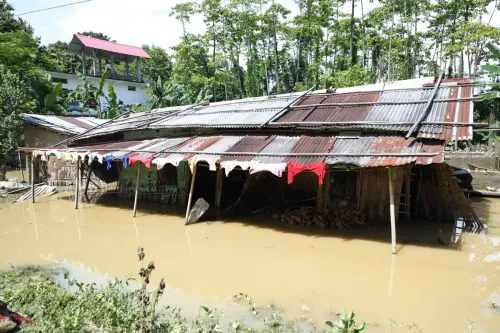
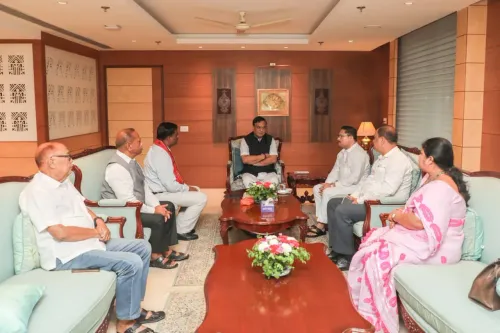
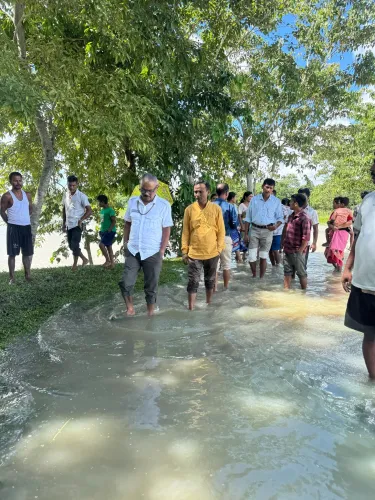
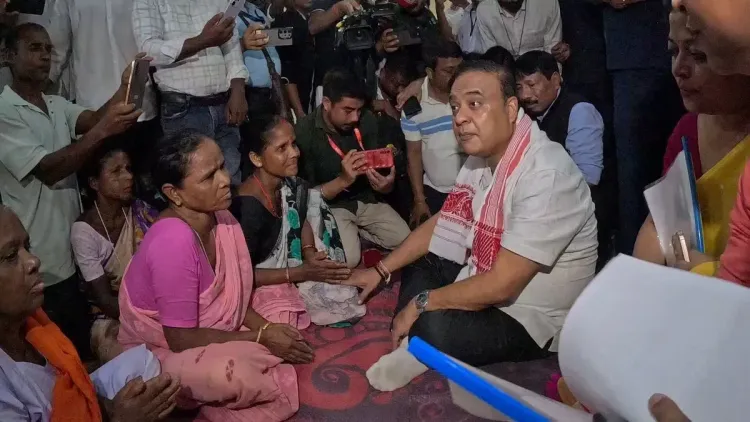
Assam Chief Minister Himanta Biswa Sarma on Thursday, 23 July 2026, met families displaced and affected by the ongoing floods in Assam, pledging to ensure timely support and relief reaches every household during what he called a 'difficult hour.'
Context
Posting on X, CM Sarma wrote that he 'met families affected by the floods and saw their strength in the face of hardship,' adding, 'I stand with them as their own and will do everything possible to ensure timely support, care and relief reaches every household.' The visit underscores the scale of the crisis gripping Assam during the 2026 monsoon season.
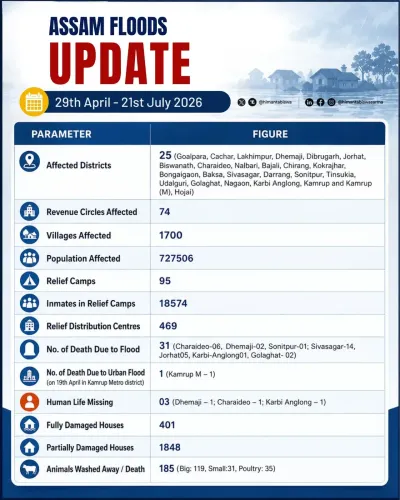
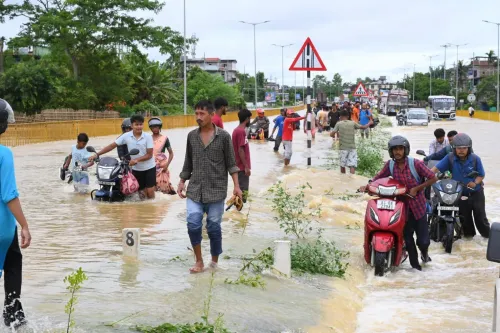
Assam is one of India's most flood-prone states, battered annually by the Brahmaputra river and its tributaries as monsoon rains swell water levels across the northeastern plains. The flooding typically displaces hundreds of thousands of residents, inundates agricultural land, and strains state emergency infrastructure.
Policy Backdrop
Successive Assam governments have institutionalised flood-season protocols combining immediate relief visits by senior officials with ex-gratia payments and deployment of the National Disaster Response Force (NDRF). The Assam State Disaster Management Authority (ASDMA) coordinates damage surveys, relief camp operations, and fund disbursement during each annual flood cycle.
Longer-term interventions have included embankment reinforcement and river-dredging projects, though experts have long noted that the Brahmaputra basin's hydrology makes complete flood prevention impractical. State administrations routinely seek supplementary allocations from the central government under the National Disaster Response Fund to bridge resource gaps during severe flood years.
Stakeholders and Impact
Flood-affected families across Assam are the immediate stakeholders, facing displacement, loss of crops, livestock, and property. Agricultural communities in low-lying districts along the Brahmaputra corridor bear the heaviest burden, with livelihoods disrupted for weeks or months at a stretch.
As convenor of the North-East Democratic Alliance (NEDA) and the state's chief executive, CM Sarma holds both administrative and political responsibility for the relief response. His ground visit signals direct executive attention to the crisis and is likely to be followed by formal assessments by district administrations and the ASDMA.
What's Next
The immediate priority will be the rollout of relief packages — food, shelter, and medical assistance — to affected households, with damage surveys expected to determine the scale of compensation and reconstruction support required. Any request for additional central government assistance, including NDRF deployments or supplementary financial allocations, will be watched closely.
As the monsoon season continues through August and September, the situation in Assam could evolve further. The Chief Minister's public commitment to ensuring relief 'reaches every household' sets a benchmark against which the administration's delivery will be measured in the weeks ahead.
Point of View
Where annual flooding makes disaster optics as important as disaster management. By framing his presence in personal terms — 'I stand with them as their own' — he is reinforcing a paternalistic governance narrative that has served him politically in a state where flood relief is a perennial electoral touchstone. The visit also signals that the administration is aware of the reputational cost of delayed relief, particularly as social media enables real-time accountability. Whether the ground-level delivery of support matches the public commitment will determine how this episode registers with voters in flood-prone constituencies.
NationPress
23 Jul 2026
Frequently Asked Questions
What did Assam CM Himanta Biswa Sarma do during the 2026 floods?
CM Himanta Biswa Sarma personally visited flood-affected families in Assam on 23 July 2026 and pledged to ensure timely support, care, and relief reaches every affected household.
Why does Assam flood every year?
Assam floods annually because the Brahmaputra river and its tributaries overflow during the monsoon season, inundating low-lying plains across the state and displacing large numbers of residents.
Which agency manages flood relief in Assam?
The Assam State Disaster Management Authority (ASDMA) coordinates flood relief operations, damage surveys, and relief camp management, often working alongside the National Disaster Response Force (NDRF).
Can the central government provide flood relief funds to Assam?
Yes, the central government can release funds to Assam through the National Disaster Response Fund (NDRF) to supplement state resources during severe flood events.
What is NEDA and what is Himanta Biswa Sarma's role in it?
NEDA, or the North-East Democratic Alliance, is a political alliance of BJP and allied parties in northeastern India. Himanta Biswa Sarma serves as its convenor alongside his role as Assam Chief Minister.