CM Fadnavis Reviews Maharashtra's SDG India Index Progress
Synopsis
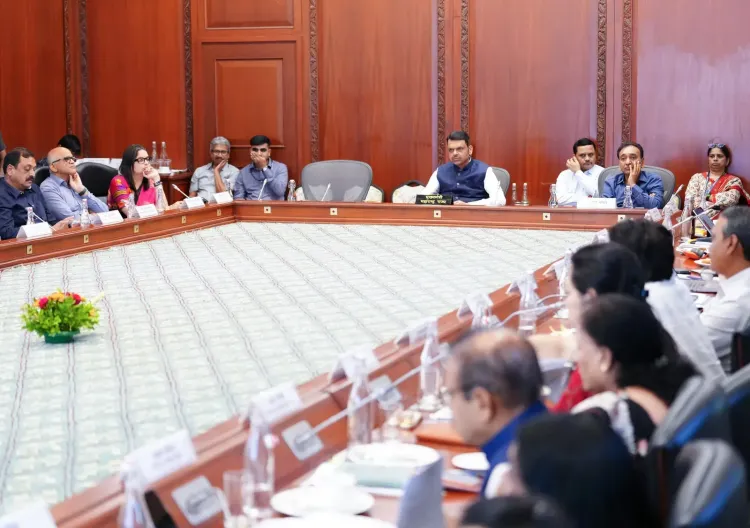
Chief Minister Devendra Fadnavis on 23 July 2026 chaired a review of Maharashtra's performance in the NITI Aayog SDG India Index under the Social Sector War Room at Sahyadri Guest House, Mumbai, with senior officials present, signalling a focused state push on sustainable development targets.
Key Takeaways
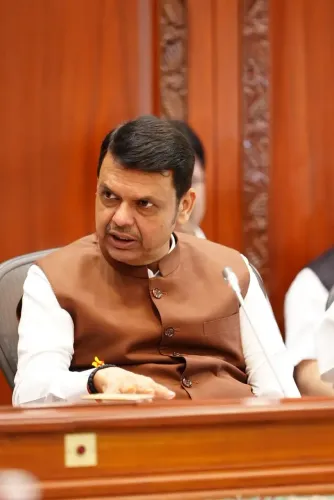
Chief Minister Devendra Fadnavis chaired the review meeting on 23 July 2026 at Sahyadri Guest House, Mumbai at 2:25 PM .
The meeting was held under the Social Sector War Room framework established to monitor and accelerate social sector delivery in Maharashtra.
The focus was Maharashtra's performance in the NITI Aayog SDG India Index , which benchmarks states on the UN's 17 Sustainable Development Goals.
Senior state officials across relevant departments were present at the review.
The SDG India Index was first published by NITI Aayog in 2018 and tracks state-level progress toward the UN 2030 Agenda .
Outcomes of the review are expected to inform departmental action plans ahead of the next edition of the index.
The Chief Minister's Office of Maharashtra announced on 23 July 2026 that Chief Minister Devendra Fadnavis chaired a high-level review meeting focused on the state's performance in the NITI Aayog Sustainable Development Goals (SDG) India Index, held under the framework of the Social Sector War Room at Sahyadri Guest House, Mumbai, at 2:25 PM. Senior state officials were in attendance.
Context
The meeting, convened under Maharashtra's Social Sector War Room mechanism, brought together senior bureaucrats to assess where the state stands on the NITI Aayog SDG India Index. The official post stated: 'CM Devendra Fadnavis chairs a review meeting on Maharashtra's progress in the NITI Aayog Sustainable Development Goals (SDGs) India Index as part of the Social Sector War Room.' The trilingual announcement — in English, Marathi (नीती आयोगाच्या शाश्वत विकास उद्दिष्टांच्या इंडिया इंडेक्समधील महाराष्ट्राच्या कामगिरीसंदर्भात आढावा बैठक), and Hindi — underscores the state government's intent to communicate this exercise broadly.
Policy Backdrop
NITI Aayog, India's premier policy think tank established in 2015, released the first SDG India Index in 2018 to rank states and union territories on their progress toward the United Nations 2030 Agenda for Sustainable Development. The index measures performance across social, economic, and environmental parameters, covering goals that range from poverty elimination and quality education to climate action and reduced inequalities. Indian states have increasingly used such rankings as benchmarks within the framework of competitive federalism, aligning state-level social sector schemes with national and global targets.
Maharashtra, as one of India's most economically significant states with Mumbai as its capital, has historically featured among the higher-ranked states in national development indices, given its economic scale and institutional capacity. Regular review meetings of this kind are part of the state's effort to identify gaps and accelerate implementation of schemes tied to SDG outcomes across health, education, and poverty metrics.
Stakeholders and Impact
The primary stakeholders of this review are Maharashtra's residents, particularly those in districts that lag on specific SDG parameters such as nutrition, maternal health, school enrolment, and access to clean energy. Senior state officials present at the meeting are expected to carry forward directives to their respective departments for course correction or acceleration of scheme delivery. The Social Sector War Room structure is designed to enable real-time monitoring and rapid response on social sector metrics, making such reviews operationally significant beyond their symbolic value.
For the broader national picture, a high-level state review of SDG performance signals Maharashtra's active participation in India's commitment to meeting its 2030 Agenda targets — a commitment that carries weight in India's multilateral engagements on sustainable development.
What's Next
The immediate follow-up will likely involve departmental action plans emerging from the review, with officials directed to address specific SDG indicators where Maharashtra may be underperforming or at risk of slipping. The next edition of the NITI Aayog SDG India Index will serve as the formal scorecard for whether today's review translates into measurable improvement. Any state announcements on scheme adjustments, budget reallocations, or targeted social sector interventions in the coming weeks may be traced directly to the outcomes of this Social Sector War Room session.
Point of View
Such high-visibility reviews serve a dual purpose: demonstrating administrative rigour domestically and signalling Maharashtra's alignment with India's international sustainable development commitments. The Social Sector War Room mechanism, if used consistently, could become a meaningful accountability tool rather than a ceremonial exercise — but its impact depends entirely on the departmental follow-through that emerges from meetings like this one. Analysts will watch whether concrete scheme adjustments or budget reallocations follow, which would distinguish this review from routine bureaucratic optics.
NationPress
23 Jul 2026
Frequently Asked Questions
What is the NITI Aayog SDG India Index?
The NITI Aayog SDG India Index is a tool published by India's policy think tank NITI Aayog, first released in 2018, that ranks all Indian states and union territories on their progress toward the United Nations' 17 Sustainable Development Goals covering health, education, poverty, environment, and more.
What is Maharashtra's Social Sector War Room?
Maharashtra's Social Sector War Room is a government mechanism designed to enable real-time monitoring and rapid response on social sector performance, allowing senior officials and the Chief Minister to review progress and identify gaps in scheme delivery.
Why did CM Devendra Fadnavis hold this SDG review meeting?
CM Devendra Fadnavis chaired the meeting on 23 July 2026 at Sahyadri Guest House, Mumbai, to assess Maharashtra's current standing in the NITI Aayog SDG India Index and to direct officials on improving the state's performance on sustainable development parameters.
How does Maharashtra perform in the NITI Aayog SDG India Index?
Maharashtra, as one of India's largest and most economically significant states, has generally featured among the higher-ranked states in national development indices, though specific performance figures from the 2026 review have not been publicly disclosed.
What are the UN Sustainable Development Goals relevant to this review?
The UN's 17 Sustainable Development Goals, adopted in 2015 as part of the 2030 Agenda, cover areas including no poverty, zero hunger, good health, quality education, clean energy, reduced inequalities, and climate action — all of which are tracked in the NITI Aayog SDG India Index for Indian states.