Owaisi Slams NSA Use Against NEET Protesters at Jantar Mantar
Synopsis
AIMIM president Asaduddin Owaisi condemned the reported use of the National Security Act against students protesting the NEET paper leak at Jantar Mantar, warning that the law allows detention for months without trial and calling the government incompetent and arrogant for silencing dissent.
Key Takeaways
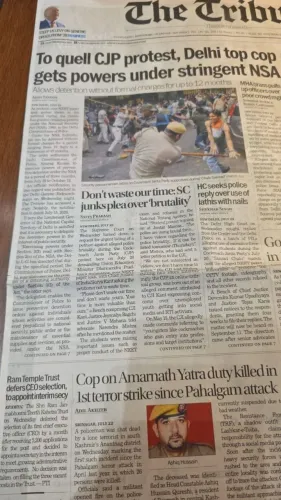
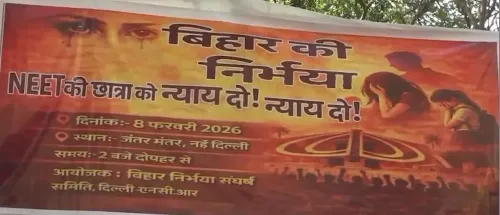
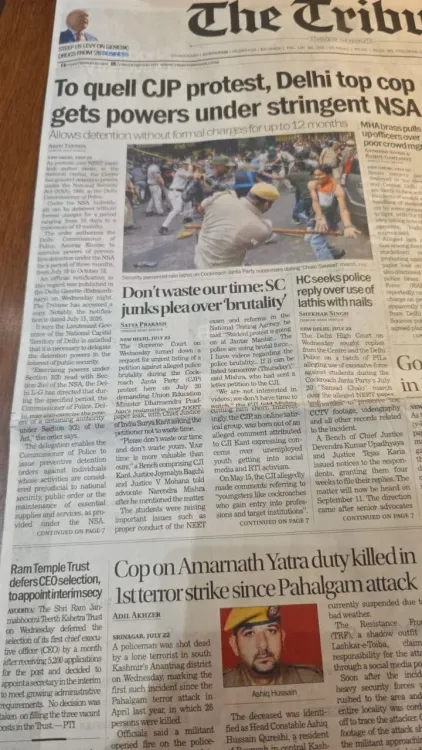
Asaduddin Owaisi on 23 July 2026 alleged that the National Security Act (NSA) will be used against NEET paper-leak protesters at Jantar Mantar, Delhi .
The NSA, 1980 permits preventive detention for up to 12 months without trial, appeal, or legal representation.
Owaisi declared that student protesters are 'not a threat to national security' and blamed the government for hiding its failures through repression.
NEET , introduced in 2013 and made the sole medical entrance test from 2016 , has faced repeated allegations of paper leaks and irregularities.
The Supreme Court is hearing NEET-related petitions, and parliamentary questions on NSA usage are anticipated during the monsoon session.
Governance researchers note a recurring pattern of preventive detention being used to contain student protests over examination failures across multiple states and parties.
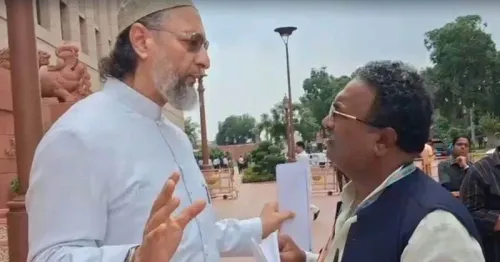
AIMIM president Asaduddin Owaisi on Thursday, 23 July 2026, sharply criticised the reported invocation of the National Security Act (NSA) against students protesting the NEET paper leak at Jantar Mantar, New Delhi, calling it an attempt by the government to suppress legitimate dissent and conceal its own failures.
Opening with an Urdu couplet — 'Aqabi ruh jab bedar hoti hai jawanon mein, nazar aati hai usko apni manzil aasmano mein' ('When the spirit of the eagle awakens in the youth, they begin to see their destination in the skies') — Owaisi framed the student protesters as a generation aspiring for accountability, not a national security threat.
Context
Students have been gathering at Jantar Mantar, the designated protest site in central Delhi, to demand action over alleged irregularities in the National Eligibility cum Entrance Test (NEET). The NEET paper-leak controversy has drawn widespread anger from aspirants who spent years preparing for the exam, which serves as the sole gateway to undergraduate medical and dental admissions across India.
Owaisi alleged that authorities plan to use the NSA to detain protesters. 'Under the NSA, the government can keep you in jail for months without trial — without appeal, lawyer, or argument,' he wrote, quoting the law's provisions in stark terms.
Policy Backdrop
The National Security Act, 1980 is a central preventive detention law that allows authorities to detain individuals for up to 12 months without trial, charge, or access to legal counsel, on grounds of national security or public order. Originally enacted to consolidate earlier detention statutes, it has periodically been invoked during periods of civil unrest.
NEET was introduced in 2013 and became the sole undergraduate medical entrance examination following a 2016 Supreme Court order. Allegations of paper leaks and irregularities have dogged the examination in multiple cycles, fuelling demands for systemic reform or the test's replacement.
Researchers tracking governance patterns note that central and state governments — across party lines — have repeatedly reached for preventive detention or similar legal instruments when student protests threaten to spotlight administrative failures in high-stakes examinations, prioritising containment over structural reform.
Stakeholders and Impact
The primary stakeholders are lakhs of NEET aspirants whose academic futures hinge on the integrity of the examination. Any NSA detention of student protesters would mark a significant escalation, transforming an education-policy dispute into a civil-liberties controversy.
Owaisi was direct in his assessment: 'Our young people are not a threat to the country's national security. The threat is an incompetent and arrogant government that wants to silence the voice of protest to hide its own failures.' The statement positions the AIMIM chief as a vocal opposition voice on youth and civil-liberties issues ahead of what could be a charged monsoon parliamentary session.
What's Next
The Supreme Court is expected to continue hearing petitions related to the NEET paper-leak controversy, and opposition MPs — including Owaisi — may raise questions about NSA usage in Parliament during the ongoing monsoon session. Any confirmed detention of student protesters under the NSA would likely intensify judicial scrutiny and parliamentary debate simultaneously.
If the government proceeds with NSA detentions at Jantar Mantar, it risks converting a localised education protest into a broader national conversation about the limits of preventive detention law — a conversation that opposition parties appear prepared to amplify.
Point of View
A pre-trial detention law with no provision for legal challenge, is a politically combustible move that risks uniting student groups, legal activists, and opposition parties against the Centre. This fits a broader pattern in Indian governance where high-stakes examination failures trigger protests that are met with security-law responses rather than systemic fixes, deepening public distrust in institutions. With the Supreme Court already seized of NEET petitions and Parliament in session, the government faces simultaneous pressure on judicial, legislative, and street-level fronts.
NationPress
23 Jul 2026
Frequently Asked Questions
What is the National Security Act and why is it controversial?
The National Security Act, 1980 allows the government to detain any person for up to 12 months without filing charges, conducting a trial, or permitting access to a lawyer. It is controversial because it bypasses ordinary judicial safeguards and has historically been used against political activists and protesters.
Why are students protesting at Jantar Mantar over NEET?
Students are protesting alleged paper leaks and irregularities in the NEET examination, which is the sole entrance test for undergraduate medical and dental admissions in India. Aspirants who spent years preparing for the exam are demanding accountability and systemic reform.
What did Owaisi say about the NEET protest and NSA?
Owaisi alleged that the government plans to use the NSA to detain NEET paper-leak protesters at Jantar Mantar, warning that the law allows imprisonment for months without trial, appeal, or legal counsel. He said the real threat is an 'incompetent and arrogant government' hiding its failures.
Can NSA be used against student protesters in India?
Legally, the NSA can be invoked against any person deemed a threat to national security or public order, but its use against student protesters over an examination controversy would be highly unusual and is likely to face legal and parliamentary challenge.
What happens next in the NEET paper-leak case?
The Supreme Court is hearing petitions related to the NEET paper leak, and opposition MPs are expected to raise questions about NSA usage during the ongoing monsoon parliamentary session. Any confirmed detention under the NSA would likely accelerate judicial scrutiny.