Iran's Interior Minister in New Delhi for BRICS Disaster Risk Meet
Synopsis
Iran's Interior Minister Eskandar Momeni has landed in New Delhi for the BRICS Ministerial Meeting on Disaster Risk Reduction — a gathering of delegates from 10 member states chaired by India's MoS Home Nityanand Rai. The meeting, anchored in a decade of evolving BRICS DRR frameworks from Udaipur to Kazan, signals India's intent to use its 2026 BRICS Chairmanship to push climate resilience and multilateral security cooperation to the top of the bloc's agenda.
Key Takeaways
Eskandar Momeni , Iran's Minister of Interior, arrived in New Delhi on 23 July for the BRICS Ministerial Meeting on Disaster Risk Reduction .
The meeting is scheduled for 24 July and is chaired by Minister of State (Home) Nityanand Rai .
Delegates from 10 BRICS member countries are attending under India's 2026 BRICS Chairmanship .
Momeni is also set to hold bilateral talks on counter-terrorism, border security, and organised crime with counterparts on the sidelines.
BRICS DRR cooperation traces back to the Udaipur Declaration (2016) and was further institutionalised by the Kazan Declaration (2024) , which adopted the DRR Work Plan (2025–2028) .
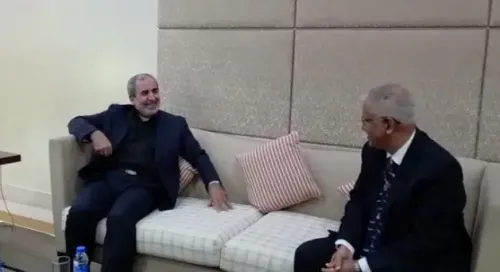
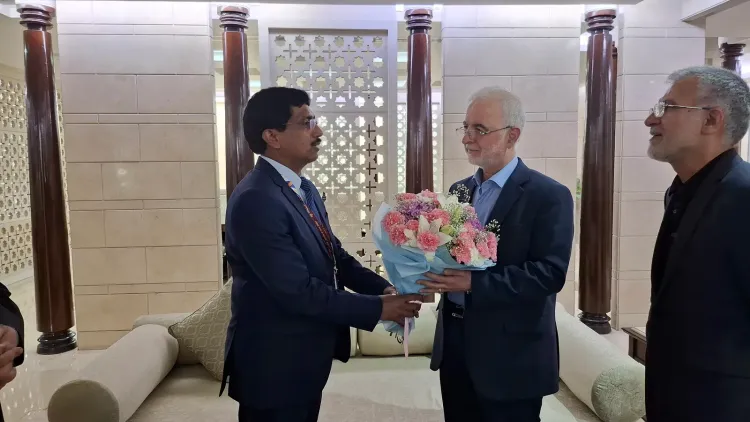
Eskandar Momeni, Minister of Interior of the Islamic Republic of Iran, arrived in New Delhi on Thursday evening, 23 July to attend the BRICS Ministerial Meeting on Disaster Risk Reduction (DRR) scheduled for 24 July at the Indian capital. Momeni was received at Indira Gandhi International Airport by the Director General of India's Ministry of Home Affairs, signalling the diplomatic weight attached to the visit.
Key Developments
According to the Embassy of Iran in India, which confirmed the arrival in a post on X, Minister Momeni is scheduled to address the BRICS meeting and hold bilateral discussions with counterparts from several BRICS member states. The talks are expected to cover internal security, counter-terrorism, organised crime, disaster management, and border security cooperation.
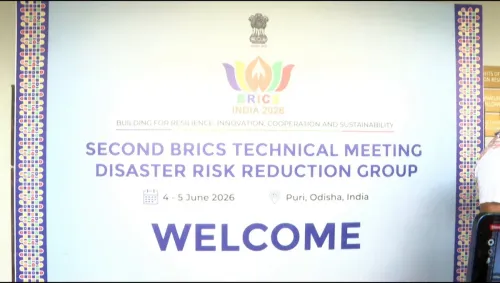
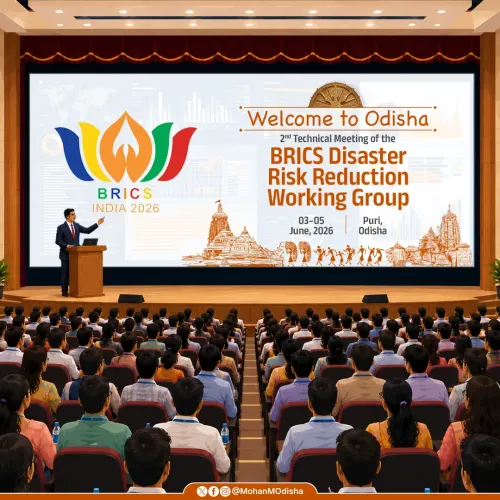
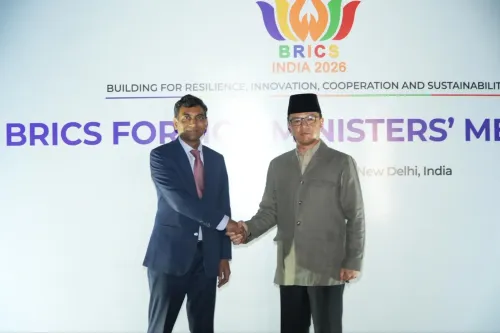
The ministerial meeting is being hosted by the National Disaster Management Authority (NDMA) under the Ministry of Home Affairs, Government of India, as part of India's BRICS Chairmanship in 2026. Ministers and heads of delegations from 10 BRICS member countries are participating.
India's Role as BRICS Chair
The meeting will be chaired by Minister of State (Home) Nityanand Rai. It marks a significant step in the evolution of BRICS cooperation on disaster risk reduction, reflecting the bloc's growing recognition that disasters pose systemic risks to sustainable development, climate resilience, economic stability, and human security.
The session's overarching theme is 'Building for Resilience, Innovation, Cooperation and Sustainability', and it culminates a year-long process of technical consultations among BRICS nations. A High-Level Policy Dialogue on Advancing Climate-Smart and Disaster Resilient Infrastructure Systems — covering partnerships, innovation, and financing — will also be conducted during the meeting.
How BRICS DRR Cooperation Has Evolved
BRICS cooperation on disaster risk reduction has been progressively institutionalised over the past decade. The Udaipur Declaration (2016) established a Joint Task Force on Disaster Risk Management, while the Kazan Declaration (2024) formalised the BRICS Disaster Risk Reduction Group (DRRG) and adopted the BRICS DRR Work Plan (2025–2028). The New Delhi meeting represents the next milestone in that trajectory.
What This Means for India-Iran Ties
Momeni's visit comes at a time when India and Iran maintain active diplomatic engagement despite the broader geopolitical pressures surrounding Tehran. Bilateral meetings on the sidelines of the BRICS gathering could provide an opportunity to advance cooperation on border security and law enforcement — areas of mutual interest given shared concerns over narcotics trafficking and cross-border crime in the region.
The outcomes of the ministerial meeting and any bilateral agreements reached on the sidelines are expected to feed into the broader BRICS leaders' agenda later in the year.
Frequently Asked Questions
Why is Iran's Interior Minister visiting New Delhi in July 2026?
Iran's Interior Minister Eskandar Momeni is in New Delhi to attend the BRICS Ministerial Meeting on Disaster Risk Reduction on 24 July, hosted by India as the 2026 BRICS Chair. He is also scheduled to hold bilateral meetings with counterparts from other BRICS states on security and law enforcement cooperation.
What is the BRICS Ministerial Meeting on Disaster Risk Reduction?
It is a high-level meeting of ministers and heads of delegations from 10 BRICS member countries focused on strengthening cooperation in disaster risk reduction, climate resilience, and sustainable development. The meeting is hosted by India's National Disaster Management Authority (NDMA) under the Ministry of Home Affairs.
Who is chairing the BRICS DRR Ministerial Meeting in New Delhi?
The meeting is being chaired by Minister of State for Home Affairs Nityanand Rai, as part of India's 2026 BRICS Chairmanship.
How has BRICS cooperation on disaster risk reduction evolved?
BRICS DRR cooperation began with the Udaipur Declaration in 2016, which set up a Joint Task Force on Disaster Risk Management. The Kazan Declaration in 2024 formalised the BRICS Disaster Risk Reduction Group and adopted the DRR Work Plan covering 2025 to 2028.
What topics will Iran's minister discuss in bilateral meetings?
Minister Momeni is expected to discuss internal security, counter-terrorism, combating organised crime, disaster management, and border security cooperation with his counterparts from BRICS member states during sideline bilateral meetings.