Uttarakhand CMO: Rudraprayag Monsoon Prep Complete, 3-Month Ration Stocked
Synopsis
The Uttarakhand CMO confirmed on 23 July 2026 that Rudraprayag district has completed monsoon preparations, with three months of advance ration secured and additional food-grain pre-positioned in sensitive, landslide-prone areas ahead of the southwest monsoon peak.
Key Takeaways
The Chief Minister's Office of Uttarakhand declared monsoon preparedness in Rudraprayag complete as of 23 July 2026 .
Three months of advance ration supplies have been made available in the district.
Additional food-grain has been stored specifically in sensitive areas identified as high-risk during the monsoon.
The policy framework stems from the 2013 Kedarnath disaster , which mandated district-level monsoon action plans with advance buffer stocks.
Rudraprayag encompasses the Kedarnath pilgrimage corridor , making uninterrupted food supply critical for both residents and seasonal pilgrims.
Measures align with NDMA national disaster-risk-reduction guidelines followed by the state government.
The Chief Minister's Office of Uttarakhand announced on Thursday, 23 July 2026 that monsoon preparedness in Rudraprayag district is complete, with three months of advance ration supplies secured and additional food-grain stocks pre-positioned in sensitive areas.
Context
The CMO posted in Hindi: 'मानसून को लेकर रुद्रप्रयाग में तैयारी पूरी, तीन माह का राशन अग्रिम उपलब्ध और संवेदनशील क्षेत्रों में अतिरिक्त खाद्यान्न का भंडारण' — ('Preparations for the monsoon in Rudraprayag are complete; three months of ration is available in advance, and additional food-grain has been stored in sensitive areas.')
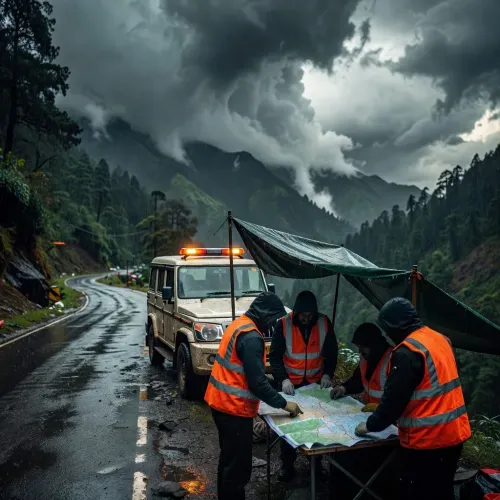
Rudraprayag is a Himalayan district that encompasses the Kedarnath pilgrimage corridor — one of the most topographically vulnerable zones in the state, repeatedly battered by monsoon-triggered landslides, cloudbursts, and flash floods.
Policy Backdrop
The three-month advance stocking directive traces its origins to the catastrophic 2013 Kedarnath disaster, after which the state institutionalised district-level monsoon action plans requiring buffer food-grain stocks in remote and landslide-prone blocks well before the southwest monsoon peaks.
These measures are embedded within Uttarakhand's disaster-risk-reduction framework, which is aligned with national NDMA (National Disaster Management Authority) guidelines. Annual pre-monsoon logistics reviews — covering advance ration deployment, emergency supply chains, and buffer stocks — have since become a standard governance cycle across high-risk districts in the Garhwal and Kumaon divisions.
Stakeholders and Impact
The primary beneficiaries are Rudraprayag's remote hill communities — villages perched along river valleys and ridge lines that become inaccessible for days or weeks once heavy rainfall triggers road-blocking landslides. For these populations, advance stocking is not a logistical convenience but a lifeline.
Seasonal pilgrims on the Kedarnath Yatra route and local residents alike depend on uninterrupted food supply chains during the June-September monsoon window, when arterial roads along the Mandakini and Alaknanda river valleys are at highest risk of disruption.
The pre-positioning of 'additional food-grain in sensitive areas' signals that the district administration has identified specific high-risk micro-zones and taken proactive steps beyond baseline stocking norms.
What's Next
Attention will now shift to district-level stock verification reports and the potential activation of emergency supply chains as the 2026 southwest monsoon advances deeper into the Garhwal hills. The state's ability to sustain supply lines without disruption will be the true test of this preparedness round.
If the monsoon intensifies as forecast, the pre-positioned stocks and the administration's stated readiness will be put under real-world scrutiny — making transparent public reporting on stock utilisation and distribution a critical next step.
Point of View
Which represents a maturation of the disaster-logistics approach. However, the real test lies not in the announcement but in post-monsoon audit trails showing whether stocks reached intended communities without leakage or delay. For a government that has staked credibility on Kedarnath's revival as a pilgrimage and tourism brand, any supply-chain failure during the 2026 monsoon would carry significant political cost.
NationPress
22 Oct 2026
Frequently Asked Questions
Why is Rudraprayag stocking three months of ration before the monsoon?
Rudraprayag is a high-risk Himalayan district on the Kedarnath pilgrimage route where landslides and flash floods routinely cut road access for extended periods during the monsoon. Three months of advance ration ensures that remote communities have food security even if supply lines are disrupted for weeks.
What triggered Uttarakhand's policy of advance monsoon food stocking?
The catastrophic 2013 Kedarnath disaster exposed severe gaps in disaster logistics. After that, the state mandated district-level monsoon action plans requiring buffer food-grain stocks in remote and landslide-prone blocks to be secured before the monsoon peaks.
Which areas in Rudraprayag are considered 'sensitive' for monsoon stocking?
The Uttarakhand CMO's post refers to 'sensitive areas' where additional food-grain has been stored, indicating zones identified by the district administration as especially vulnerable to road blockages or flash floods. Specific village lists are determined at the district level as part of the monsoon action plan.
How does Uttarakhand's monsoon preparedness align with NDMA guidelines?
Uttarakhand's pre-monsoon logistics reviews — including advance ration deployment and buffer stocks — are part of its disaster-risk-reduction framework aligned with the National Disaster Management Authority's national guidelines for high-risk states.
What happens if the food stocks run out during a prolonged monsoon disruption in Rudraprayag?
If pre-positioned stocks are exhausted, the state is expected to activate emergency supply chains, including helicopter airlifts and alternative mule-track routes, as part of the district's contingency plan. The adequacy of the current stocking level will be assessed once the 2026 southwest monsoon fully advances into the Garhwal hills.