Owaisi on PM Modi's Fast-Track Courts: 'Today's Youth Is Not Afraid'
Synopsis
AIMIM president Asaduddin Owaisi hit back at PM Modi's announcement of fast-track courts for paper-leak cases on 23 July 2026, declaring that today's youth is not one to be intimidated, framing the move as reactive rather than a genuine remedy for exam malpractice.
Key Takeaways
Asaduddin Owaisi responded on 23 July 2026 to PM Modi 's announcement of fast-track courts for paper-leak cases.
Owaisi's statement — 'Today's youth is not afraid' — signals opposition scepticism about the announcement's impact.
Fast-track courts in India were first established in 2001 and expanded in 2019 for POCSO and rape cases via the Nirbhaya Fund .
Parliament enacted the Public Examinations (Prevention of Unfair Means) Act, 2024 to criminalise paper leaks in public exams.
Millions of competitive exam aspirants — including NEET and state PSC candidates — are the primary stakeholders affected by paper-leak scandals.
The rollout of dedicated fast-track benches in affected states and any parliamentary follow-up remain key milestones to watch.
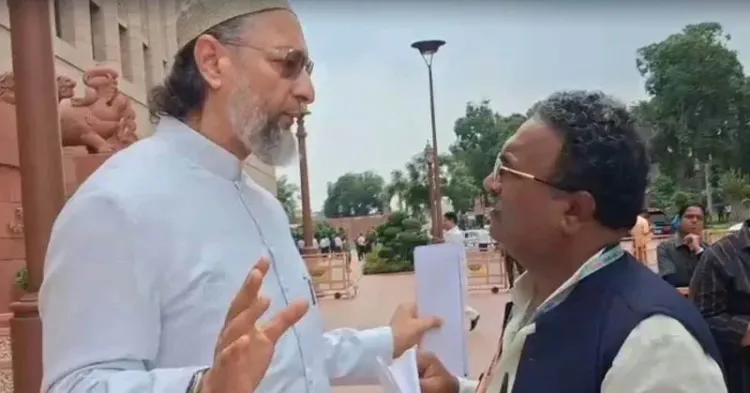
AIMIM president Asaduddin Owaisi responded sharply on Thursday, 23 July 2026, to Prime Minister Narendra Modi's announcement of fast-track courts to deal with paper-leak cases, saying that today's youth is not one to be intimidated. Owaisi, the Lok Sabha MP from Hyderabad, posted his reaction on X, signalling that competitive exam aspirants would not be placated by institutional announcements alone.
Context
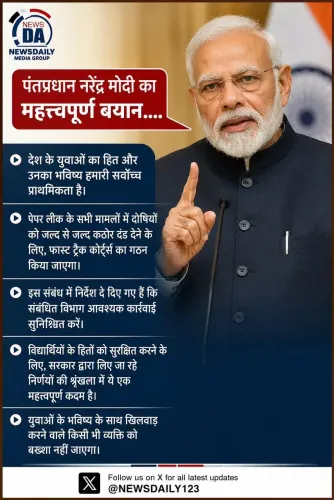
The AIMIM chief's post came hours after PM Modi announced the creation of dedicated fast-track courts to expedite trials in cases involving paper leaks and unfair means in public examinations. Owaisi's response — 'डरने वाला नहीं है आज का युवा' ('Today's youth is not one to be afraid') — framed the government's move as an attempt to contain student unrest rather than deliver substantive justice.
Owaisi, who frequently uses social media to hold the central government accountable on governance and minority issues, cast the announcement as reactive rather than preventive, implicitly questioning whether fast-track courts address the root cause of recurring leaks.
Policy Backdrop
Fast-track courts are not a new instrument in India's judicial architecture. They were first established nationwide in 2001 on the recommendation of the 11th Finance Commission to reduce mounting case pendency. A second wave came in 2019, when the central government sanctioned additional fast-track courts specifically for POCSO and rape cases using Nirbhaya Fund allocations.
Parliament passed the Public Examinations (Prevention of Unfair Means) Act, 2024, criminalising paper leaks and related malpractice in public exams. PM Modi's July 2026 announcement of fast-track courts for such offences is positioned as the judicial complement to that legislative framework, intended to signal swift accountability.
Stakeholders and Impact
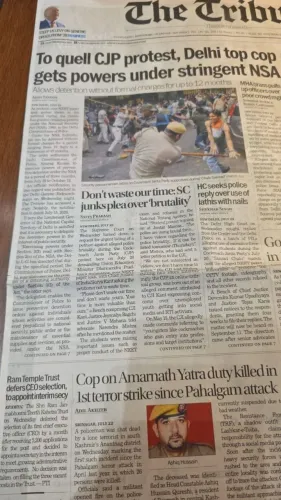
The primary stakeholders are millions of competitive exam aspirants — those preparing for national-level tests such as NEET, UPSC, and state PSC examinations — who have been directly harmed by repeated paper-leak scandals. Student protests have erupted across multiple states in recent years, with demonstrators demanding not just punishment for culprits but structural reforms in exam administration.
State judiciaries will bear the operational burden of constituting and staffing the new courts, raising questions about capacity, funding, and timelines. Opposition leaders, including Owaisi, are likely to track the pace of court operationalisation as a measure of the government's sincerity.
What's Next
Attention will now shift to whether the central government issues formal notifications constituting fast-track benches in states that have reported recent paper-leak incidents, and whether related amendments are tabled in the monsoon or winter parliamentary sessions. Owaisi's framing — centring youth agency and defiance rather than relief — suggests the opposition intends to keep student grievances at the forefront of political discourse well beyond this announcement.
Point of View
He signals that fast-track courts alone will not neutralise the political energy generated by repeated paper-leak scandals. This fits a broader pattern in which opposition leaders treat governance announcements as opportunities to reinforce narratives of government unresponsiveness rather than engage with policy specifics. The real test will be whether the courts are operationalised before the next major exam cycle, which will determine whether the announcement becomes a political asset or liability for the ruling establishment.
NationPress
23 Jul 2026
Frequently Asked Questions
What did Asaduddin Owaisi say about PM Modi's fast-track court announcement?
Owaisi said 'Today's youth is not afraid,' suggesting that students would not be appeased by institutional announcements and framing the government's move as reactive to ongoing exam-malpractice protests.
Why did PM Modi announce fast-track courts for paper-leak cases?
PM Modi announced fast-track courts to expedite trials in paper-leak and exam-malpractice cases, complementing the Public Examinations (Prevention of Unfair Means) Act, 2024, which Parliament passed to criminalise such offences.
What is the Public Examinations (Prevention of Unfair Means) Act, 2024?
It is a central law passed by Parliament in 2024 that criminalises paper leaks and unfair practices in public examinations such as NEET and state PSC tests, providing a legal basis for prosecuting those responsible.
What is the history of fast-track courts in India?
Fast-track courts were first set up across India in 2001 on the recommendation of the 11th Finance Commission to reduce case pendency. A second expansion in 2019 created dedicated courts for POCSO and rape cases funded through the Nirbhaya Fund.
Which exams have been affected by paper leaks in India?
Major paper-leak controversies have hit national exams including NEET (medical entrance) and various state Public Service Commission tests, triggering widespread student protests and demands for faster judicial accountability.