PM Modi announces fast-track courts for paper leak accused, warns offenders
Synopsis
Prime Minister Modi escalated the Centre's response to the paper leak crisis on 23 July by announcing fast-track courts for accused — a direct judicial intervention backed by a public warning that offenders 'will not be spared.' With protests still live and Parliament being flagged as the long-term policy arena, the government is simultaneously signalling deterrence and inviting structured dialogue.
Key Takeaways
PM Narendra Modi announced fast-track courts for exam paper leak accused on 23 July via a post on X.
Modi warned: 'Those who try to harm the future of our youth will not be spared.' Union Health Minister J.P.
Nadda confirmed the Centre met CJP representatives and urged activist Sonam Wangchuk to end his hunger strike.
The government has asked CJP representatives to submit their demands in writing; follow-up discussions are pending.
Nadda stated Parliament is the most appropriate forum for evolving long-term policy on examination integrity.
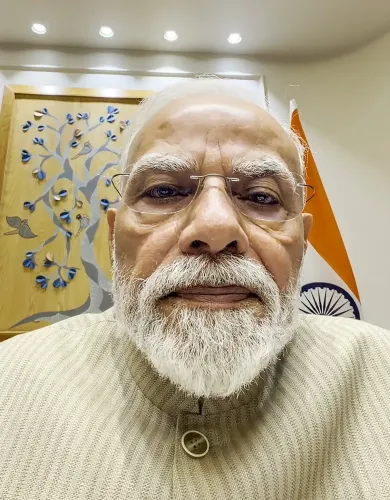
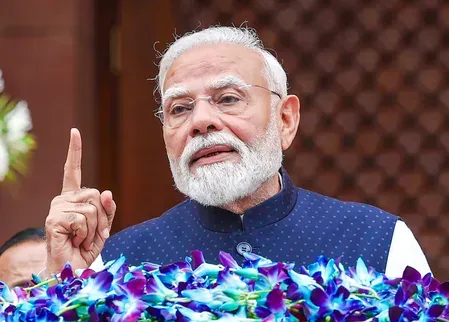
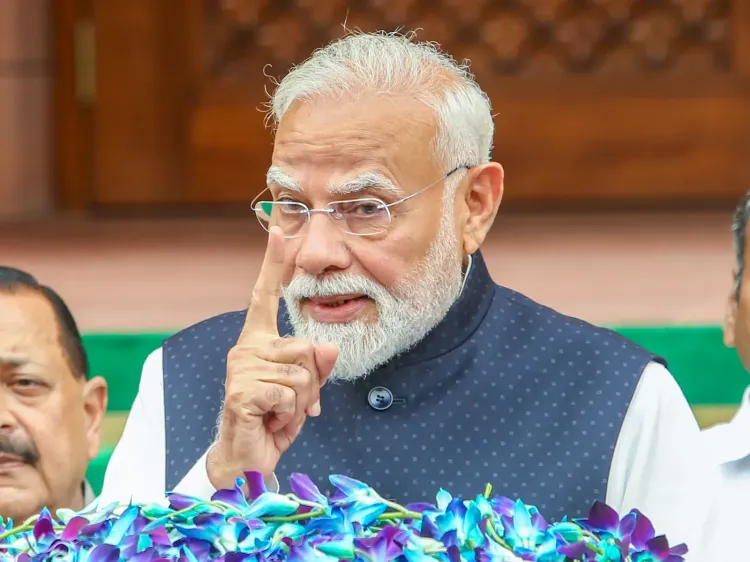
Prime Minister Narendra Modi on Thursday, 23 July announced that the Central government will establish fast-track courts to deliver swift and stringent punishment to those found guilty of examination paper leaks. The move comes amid sustained nationwide protests by students over a series of high-profile exam irregularities that have shaken public confidence in India's competitive examination system.
What Modi Announced
In a post on X, Prime Minister Modi stated: 'Nothing is more important than the welfare and future of our youth! We have decided to set up fast-track courts to ensure swift and stringent punishment for those involved in paper leaks. Have directed the concerned authorities and officials to take all necessary steps in this regard.'
Modi characterised the fast-track court initiative as part of a broader series of measures by the Centre aimed at 'safeguarding the interests of students.' He also issued a direct warning to those behind the leaks: 'Those who try to harm the future of our youth will not be spared. The welfare and future of the country's youth is our topmost priority.'
Government's Broader Response
The announcement follows remarks made a day earlier by Union Health Minister J.P. Nadda, who said the Centre remained open to discussions with all stakeholders on the paper leak controversy. Nadda also confirmed that government representatives had met with delegates from the CJP and had urged activist Sonam Wangchuk to end his hunger strike and engage in the 'mainstream dialogue process.'
Addressing a press conference, Nadda described the meeting with CJP representatives as having taken place 'in a very cordial atmosphere,' adding: 'We listened to their views very calmly. I told them it would be better if they submitted their points in writing, and they have done so. We are ready for discussions whenever they ask.' He clarified that no fresh meeting was held on Wednesday.
Parliament as the Policy Forum
Nadda reiterated the government's position that Parliament is the most appropriate forum for evolving a long-term policy on examination integrity. This signals that the Centre intends to pursue legislative or institutional remedies beyond the immediate fast-track court measure.
Context and What It Means for Students
The paper leak crisis has triggered protests across multiple states, with students demanding accountability and systemic reform of India's examination infrastructure. Notably, this is not the first time fast-track judicial mechanisms have been proposed in response to a public outcry — but the direct intervention of the Prime Minister via a public post on X marks an escalation in the government's visible engagement with the issue.
The fast-track courts, once operationalised, are expected to significantly reduce the time between arrest and conviction in paper leak cases, acting as a deterrent. How quickly the courts are set up and whether they are accompanied by structural reforms to examination conduct will determine the measure's real impact on student welfare.
Point of View
High-signal response — but the paper leak crisis is fundamentally a systemic failure in examination administration, not merely a law-enforcement gap. The Centre's pivot to judicial speed addresses punishment after the fact; it does not yet address the procurement, printing, and distribution vulnerabilities that allow leaks to happen in the first place. Invoking Parliament as the long-term policy forum is the right instinct, but only if it produces enforceable standards rather than another round of committee reports. Students protesting today will judge the government not by the announcement, but by the first conviction and the first structural reform that actually prevents the next leak.
NationPress
21 Oct 2026
Frequently Asked Questions
What did PM Modi announce regarding exam paper leaks?
PM Modi announced on 23 July that the Central government will set up fast-track courts to ensure swift and stringent punishment for those involved in examination paper leaks. He also issued a warning that offenders who harm the future of youth 'will not be spared.'
Why is the government setting up fast-track courts for paper leak cases?
The move comes amid widespread student protests over a series of examination paper leak incidents that have undermined confidence in India's competitive exam system. Fast-track courts are intended to speed up the judicial process and act as a stronger deterrent against future leaks.
What did Union Health Minister J.P. Nadda say about the paper leak protests?
Nadda said the Centre is open to discussions with all stakeholders and confirmed that government representatives met CJP delegates in a cordial atmosphere. He asked them to submit their demands in writing and indicated the government is ready for further dialogue when requested.
Who is Sonam Wangchuk and what is his role in the protests?
Sonam Wangchuk is an activist who is reportedly on a hunger strike in connection with the ongoing protests. The government, through Minister Nadda, urged him to end the strike and join the 'mainstream dialogue process.'
What is the government's long-term plan to address exam paper leaks?
According to Minister Nadda, Parliament is the most appropriate forum for evolving a long-term policy on examination integrity. The Centre has indicated it wants a detailed debate in Parliament alongside the immediate measure of fast-track courts.