PM Modi on exam paper leaks: Fast-track courts to punish culprits, youth welfare top priority
Synopsis
Amid escalating protests over exam paper leaks, PM Modi has moved beyond administrative fixes — announcing fast-track courts to criminally punish those who compromise examinations. The move signals a sharp shift in the government's posture from review to judicial deterrence, with millions of students' futures hanging in the balance.
Key Takeaways
PM Modi announced on 23 July that the Centre will establish fast-track courts to punish those involved in examination paper leaks.
Modi posted the announcement on X , warning that 'those who try to harm the future of our youth will not be spared.' Union Health Minister J.P.
Nadda confirmed the government met CJP representatives and urged activist Sonam Wangchuk to end his hunger strike.
Nadda identified Parliament as the most appropriate forum for framing a long-term policy on examination paper leaks.
The controversy has centred on alleged leaks in major national examinations, with widespread protests demanding accountability.
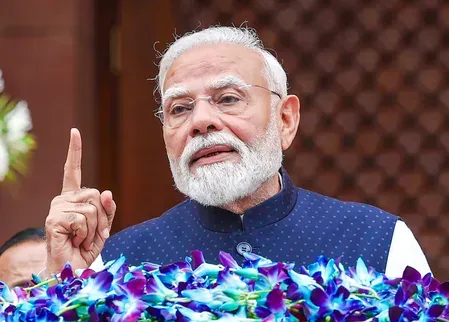
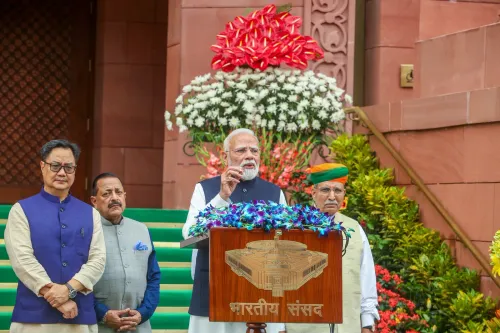
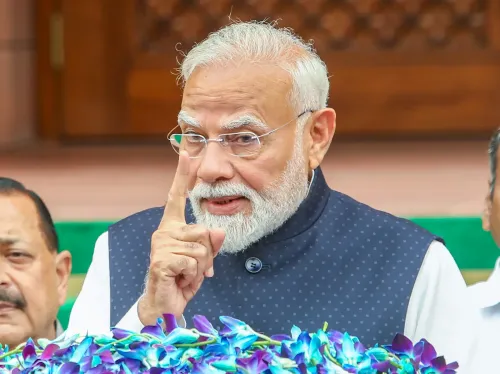
Prime Minister Narendra Modi on Thursday, 23 July declared that the welfare and future of India's youth remain the government's foremost priority, amid nationwide protests over recurring examination paper leaks. In a direct warning to those behind the leaks, Modi announced that the Centre has decided to establish fast-track courts to deliver swift and stringent punishment to the accused.
What PM Modi Said
Posting on social media platform X, Prime Minister Modi stated: 'Nothing is more important than the welfare and future of our youth! We have decided to set up fast-track courts to ensure swift and stringent punishment for those involved in paper leaks. Have directed the concerned authorities and officials to take all necessary steps in this regard.'
He added a pointed warning: 'Those who try to harm the future of our youth will not be spared.' Modi framed the fast-track court decision as part of a broader series of measures by the Central government to safeguard student interests.
Government's Broader Response to the Crisis
The Prime Minister's statement follows remarks made a day earlier by Union Health Minister J.P. Nadda, who said the Centre remained open to dialogue with all stakeholders on the paper leak issue. Nadda also confirmed that government representatives had met with delegates from the Council of Jammu and Kashmir People's Movement (CJP) in a cordial setting, and had urged activist Sonam Wangchuk to end his hunger strike and re-enter mainstream dialogue.
Addressing a press conference, Nadda said: 'The discussion took place in a very cordial atmosphere. We listened to their views very calmly. I told them it would be better if they submitted their points in writing, and they have done so. We are ready for discussions whenever they ask.' He clarified that no fresh meeting had taken place on Wednesday.
Parliament as the Forum for Long-Term Policy
Nadda reiterated that the government favours a detailed parliamentary debate on examination paper leaks, describing Parliament as the most appropriate platform for evolving a durable, long-term policy on the issue. This signals that legislative action — beyond executive orders — may be on the table.
Context and What Is at Stake
The protests have been triggered by a string of alleged paper leaks affecting high-stakes national examinations, shaking public confidence in India's examination infrastructure. The controversy has drawn particular scrutiny to the National Testing Agency (NTA) and raised questions about systemic vulnerabilities in how competitive exams are conducted and secured.
Notably, this is not the first time paper leak scandals have roiled India's examination ecosystem — similar controversies have surfaced repeatedly over the past decade, affecting aspirants preparing for medical, engineering, and government recruitment tests. The announcement of fast-track courts represents an escalation in the government's public posture, moving from administrative review to judicial deterrence.
With Parliament in session and opposition pressure mounting, the government's next steps — including the framing of fast-track court guidelines and any legislative amendment — will be closely watched by millions of students and their families across the country.
Point of View
But signals have been sent before. India's examination paper leak problem is structural — rooted in decentralised printing, distribution chains, and inadequate digital security — and no court can fix a broken process. The real accountability question is whether the National Testing Agency's oversight framework will be reformed, or whether the government is content with punishing individuals while leaving the system intact. With Parliament being positioned as the long-term forum, the risk is that legislative momentum dissipates once the protests ebb, as has happened after previous leak scandals.
NationPress
21 Oct 2026
Frequently Asked Questions
What action has PM Modi announced on exam paper leaks?
PM Modi announced on 23 July that the Centre will set up fast-track courts to ensure swift and stringent punishment for those involved in examination paper leaks. He also directed concerned authorities to take all necessary steps to safeguard student interests.
Why are there protests over exam paper leaks in India?
Protests have erupted across India following alleged leaks in major national examinations, undermining the credibility of the testing system and affecting millions of aspirants. The controversy has particularly focused on the National Testing Agency (NTA), which conducts several high-stakes competitive exams.
What did Union Health Minister J.P. Nadda say about the paper leak issue?
Nadda said the Centre is open to discussions with all stakeholders and confirmed a meeting with CJP representatives was held in a cordial atmosphere, with the government asking them to submit their demands in writing. He also urged activist Sonam Wangchuk to end his hunger strike and join the mainstream dialogue process.
Where will the long-term policy on paper leaks be decided?
According to J.P. Nadda, Parliament is the most appropriate forum for evolving a long-term policy on examination paper leaks, suggesting that legislative action may follow the current executive measures.
Who is Sonam Wangchuk and why is he on a hunger strike?
Sonam Wangchuk is a prominent activist who has been on a hunger strike in connection with ongoing protests. The government has urged him to end his fast and engage with the mainstream dialogue process, according to statements made by J.P. Nadda.