Amit Shah backs fast-track courts for paper-leak cases

Synopsis
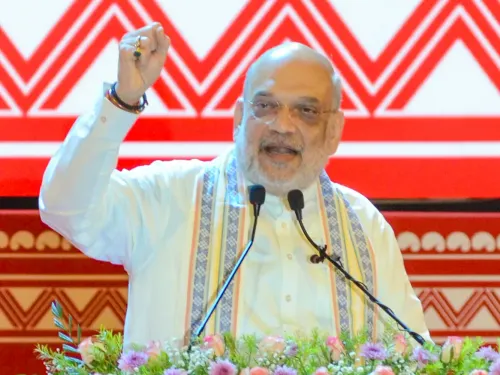
Union Home Minister Amit Shah on 23 July 2026 endorsed PM Modi's decision to set up fast-track courts for paper-leak cases, saying it reflects the government's highest priority of protecting youth futures and will prove to be a milestone in deterring examination fraud.
Key Takeaways
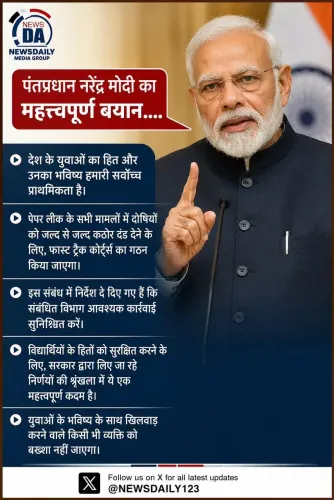
Amit Shah on 23 July 2026 publicly backed PM Narendra Modi 's decision to constitute fast-track courts for paper-leak prosecutions.
Shah described the welfare and bright future of youth as the 'highest priority and resolve' of the Modi government.
Fast-track courts are intended to enable swift hearings and strict action against those found guilty of leaking examination papers.
The fast-track court model has precedent in India, having been used since 2000 for long-pending criminal cases, and later for sexual-offence and corruption matters.
Key stakeholders include millions of competitive exam aspirants and state-level examination and law-enforcement authorities.
Operational guidelines from the Ministry of Law and Justice or Ministry of Home Affairs are awaited to detail scope and funding.
Union Home Minister Amit Shah on Thursday, 23 July 2026, praised Prime Minister Narendra Modi's decision to constitute fast-track courts to hear paper-leak cases, calling it a landmark step to protect the futures of India's youth and restore trust in the examination system.
Posting in Hindi on X, Shah wrote: 'युवाओं का हित और उनका उज्ज्वल भविष्य मोदी सरकार की सर्वोच्च प्राथमिकता भी है और संकल्प भी.' [The welfare of youth and their bright future is both the highest priority and the resolve of the Modi government.] He added that the Prime Minister's move to set up fast-track courts for swift hearings and strict action against those guilty of paper leaks 'will prove to be a milestone.'
Context
Paper-leak scandals have repeatedly shaken India's competitive examination ecosystem, affecting millions of aspirants who invest years preparing for national and state-level recruitment and entrance tests. When question papers are compromised, entire examination cycles are cancelled or re-conducted, causing financial and psychological harm to candidates and eroding public confidence in the credibility of merit-based selection.
The Modi government has framed examination integrity as a youth-welfare issue, arguing that those who profit from leaking papers are effectively stealing opportunities from honest aspirants.
Policy Backdrop
Fast-track courts as a judicial instrument are not new to India. They were first established nationally in 2000 to dispose of long-pending criminal cases through dedicated judicial infrastructure, and have since been deployed for sexual-offence cases and corruption matters. Applying the same model to paper-leak prosecutions extends this proven mechanism to a category of crime that has surged in public salience over the past several years.
The central government has previously enacted legislative measures to tighten penalties around examination fraud, and the addition of specialised courts is intended to ensure that prosecutions move to conclusion quickly rather than languishing in already overburdened district courts.
Stakeholders and Impact
The most direct beneficiaries are exam aspirants — students preparing for Union Public Service Commission, Staff Selection Commission, state public service commission, medical entrance, and other high-stakes tests. A credible deterrent against paper leaks could reduce the frequency of exam cancellations and the uncertainty that follows them.
State education boards and examination authorities will also be stakeholders, as fast-track proceedings will likely require coordination between central investigative agencies and state-level law-enforcement bodies. Conviction rates and the speed of sentencing will determine how effective the deterrent proves in practice.
What's Next
Operational details — including the number of courts to be constituted, their geographic spread, and the funding arrangement between the Centre and states — are expected to be notified by the Ministry of Law and Justice or the Ministry of Home Affairs. State governments will need to issue complementary implementation orders to bring cases within their jurisdiction under the fast-track framework.
If the courts are operationalised swiftly and early convictions follow, the move could set a precedent for treating examination fraud as a serious organised crime warranting dedicated judicial attention, potentially reshaping how India's legal system responds to threats against its meritocratic institutions.
Point of View
Linking judicial speed with governance credibility. By invoking fast-track courts — a mechanism already associated in public memory with sexual-offence cases — the government is deliberately elevating examination fraud to the same tier of social urgency. The move also shifts political responsibility squarely onto the Centre, which could be a double-edged posture if court operationalisation is delayed or conviction rates remain low. Nonetheless, the framing reinforces a broader pattern of the Modi administration using specialised judicial infrastructure to signal decisive action on high-visibility public grievances.
NationPress
21 Oct 2026
Frequently Asked Questions
What are fast-track courts for paper-leak cases in India?
Fast-track courts are specialised judicial bodies set up to hear specific categories of cases on an expedited basis. In the context of paper leaks, they are intended to ensure swift trials and strict sentencing for those accused of leaking examination question papers, reducing the delay that typically affects such cases in regular courts.
Why did Amit Shah praise PM Modi's fast-track court decision?
Amit Shah praised the decision on 23 July 2026, saying protecting the futures of India's youth is the highest priority of the Modi government. He called the fast-track court move a milestone in deterring those who compromise examination integrity and harm honest aspirants.
Which exams are affected by paper-leak scandals in India?
Paper-leak controversies have affected a range of high-stakes examinations in India, including national recruitment tests, state public service commission exams, and medical entrance tests, disrupting the careers of millions of aspirants who depend on these exams for government jobs and professional admissions.
How do fast-track courts work in India?
Fast-track courts are dedicated benches with a focused caseload, designed to dispose of cases faster than regular district courts. First introduced nationally in 2000, they have been used for long-pending criminal cases, sexual-offence matters, and corruption cases. They typically receive additional funding and resources to support quicker proceedings.
What happens next after the fast-track court announcement for paper leaks?
The Ministry of Law and Justice or the Ministry of Home Affairs is expected to issue operational guidelines specifying the number of courts, their locations, and funding arrangements. State governments will also need to coordinate to bring cases under their jurisdiction within the fast-track framework.